 the State Historical Society of Missouri
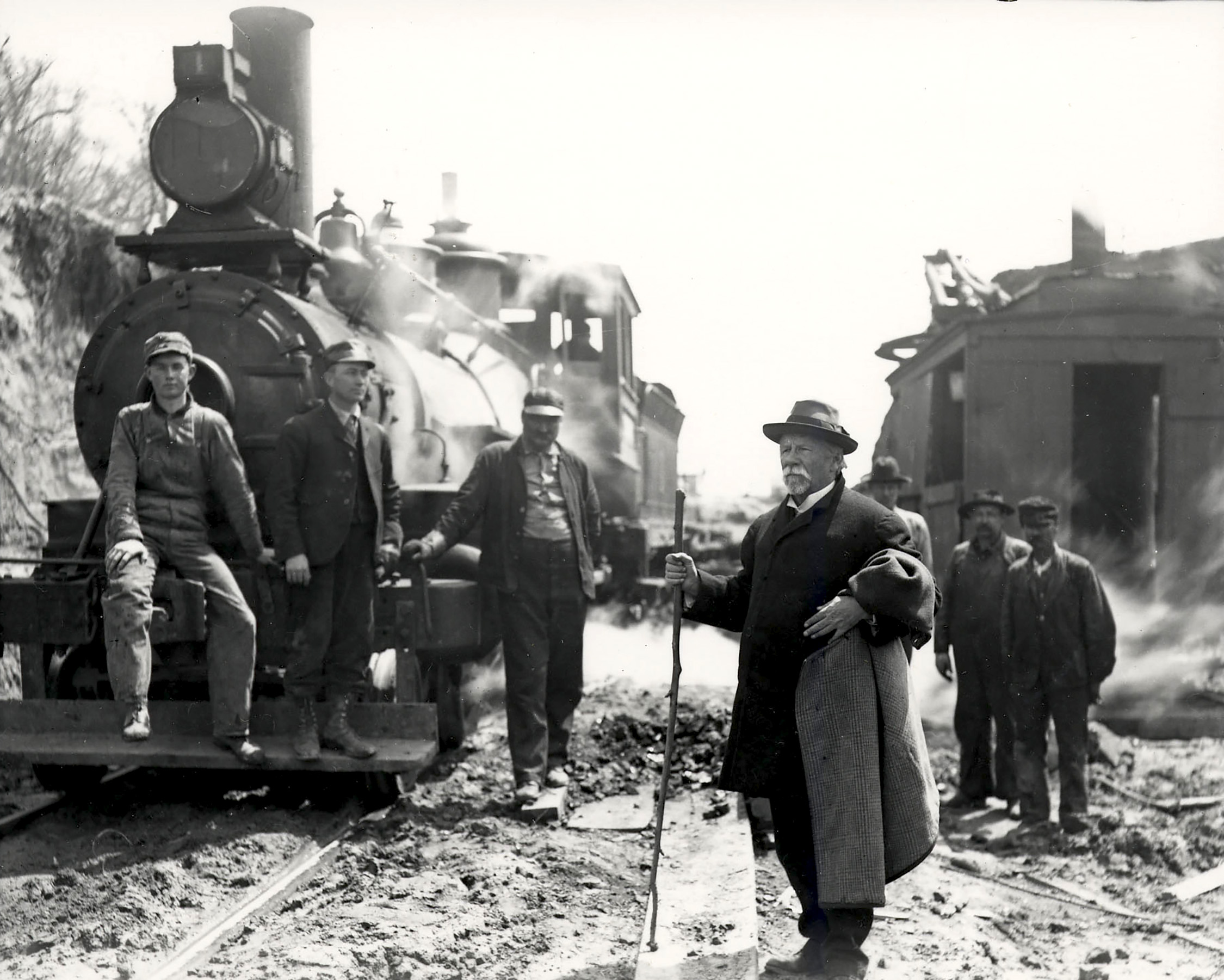
![Louis Houck visiting one of his rail lines. [Southeast Missouri State University, Special Collections]](/sites/default/files/styles/article_header_image/public/2026-01/1.-louis-houck.jpg?h=64cd13ab&itok=N9mOp8Ap "Louis Houck visiting one of his rail lines. [Southeast Missouri State University, Special Collections]")
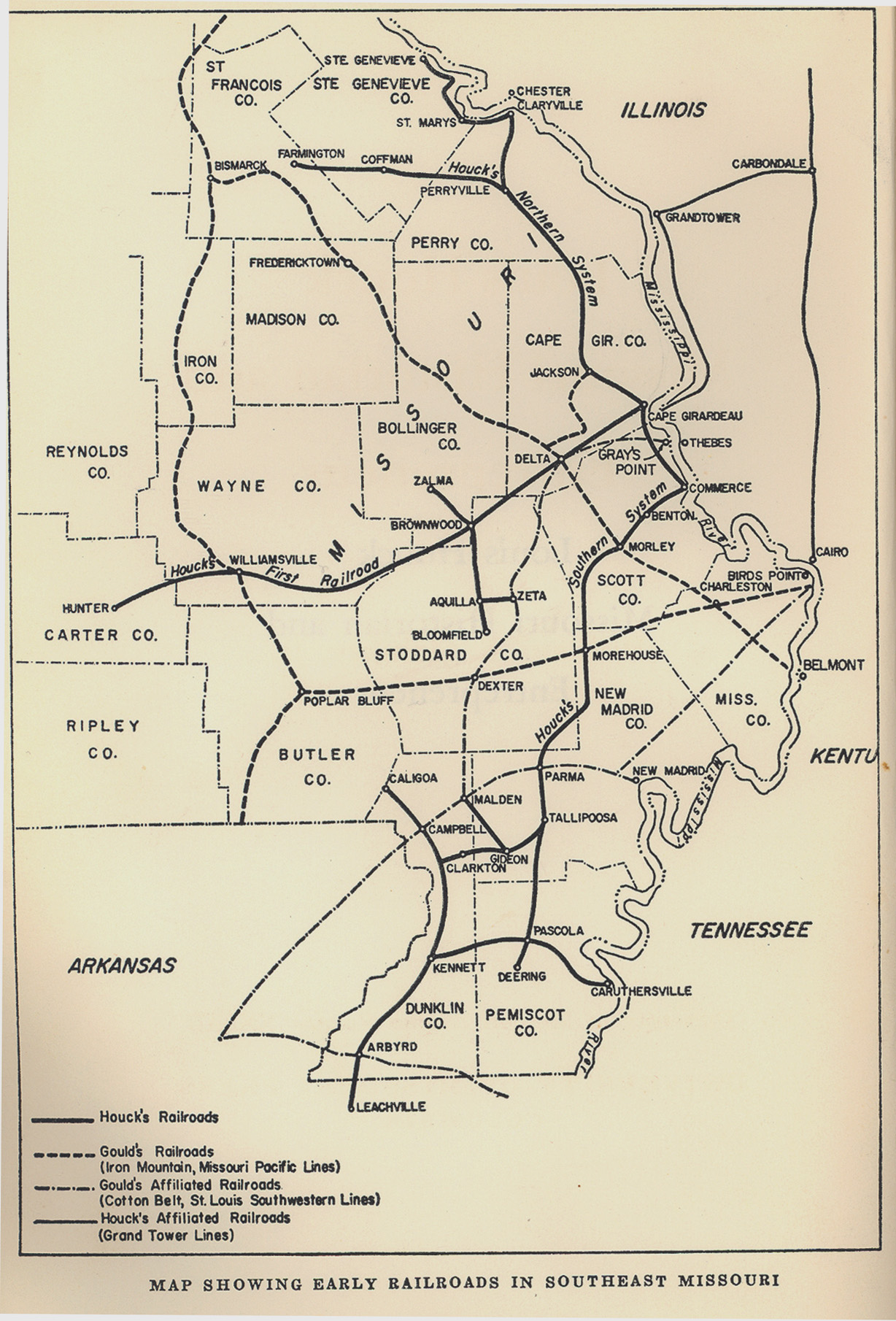
![Early railroads in southeast Missouri. [Courtesy of Joel P. Rhodes]](/sites/default/files/styles/article_header_image/public/2026-01/2.-louis-houck.jpg?itok=DxGIVZ17 "Early railroads in southeast Missouri. [Courtesy of Joel P. Rhodes]")
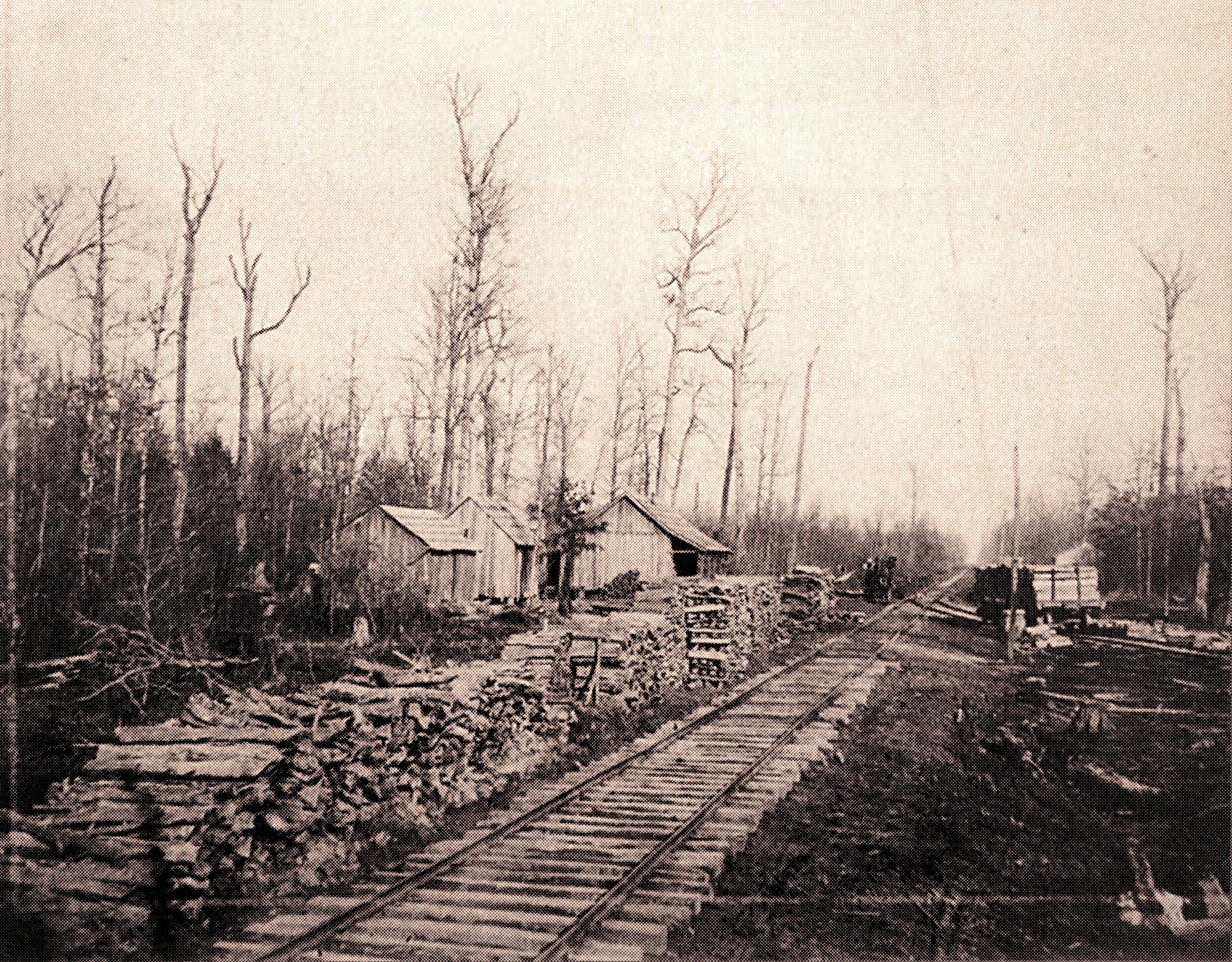
![The Houck line near Delta, Missouri, circa 1880s. [Courtesy of Joel P. Rhodes]](/sites/default/files/styles/article_header_image/public/2026-01/3.-louis-houck.jpg?itok=21l3mpmA "The Houck line near Delta, Missouri, circa 1880s. [Courtesy of Joel P. Rhodes]")
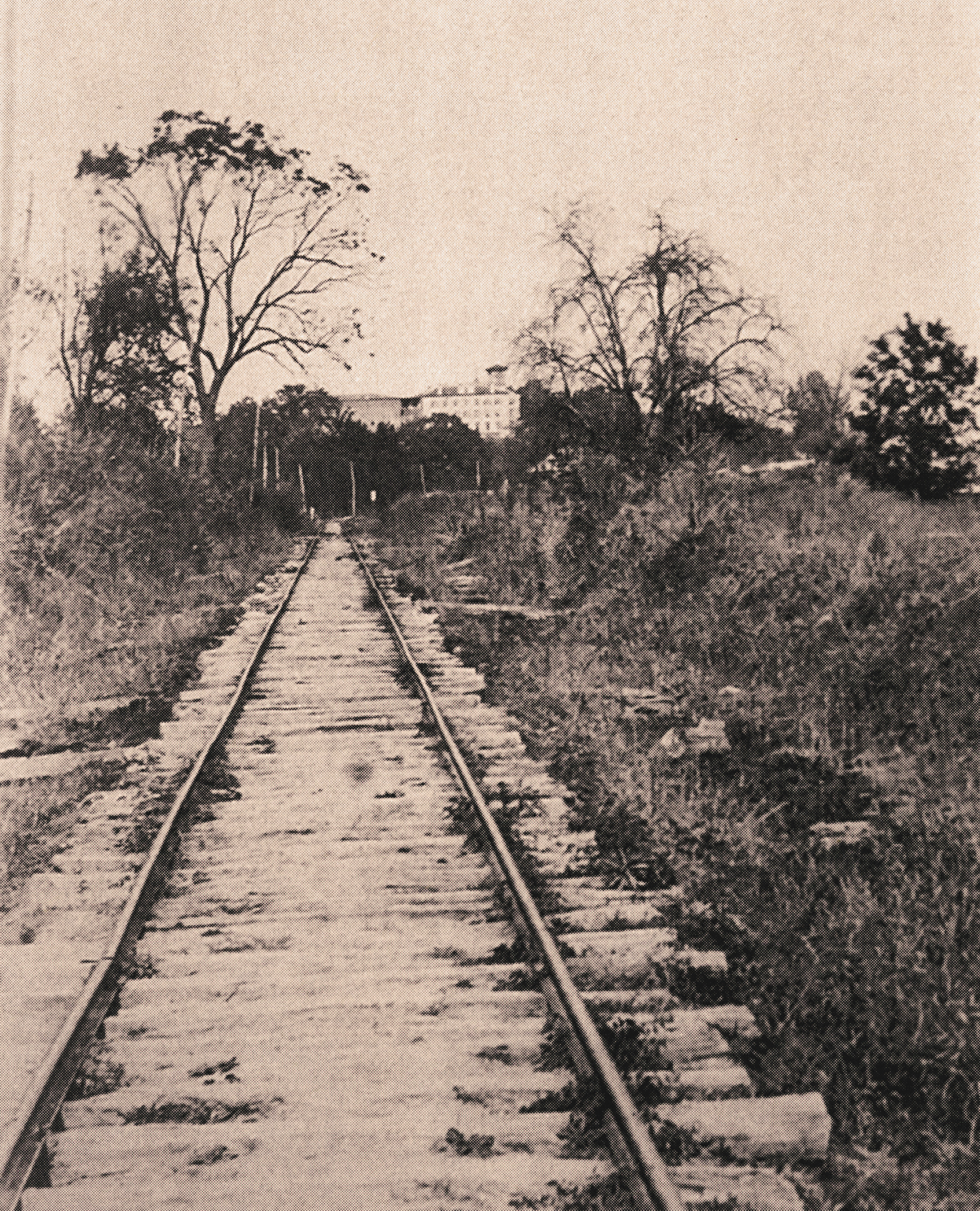
![A section of the fifteen-mile railway from Delta to Cape Girardeau, approaching St. Vincent’s College, circa 1880s. [Courtesy of Joel P. Rhodes]](/sites/default/files/styles/article_header_image/public/2026-01/4.-louis-houck.jpg?itok=KM4xATAM "A section of the fifteen-mile railway from Delta to Cape Girardeau, approaching St. Vincent’s College, circa 1880s. [Courtesy of Joel P. Rhodes]")
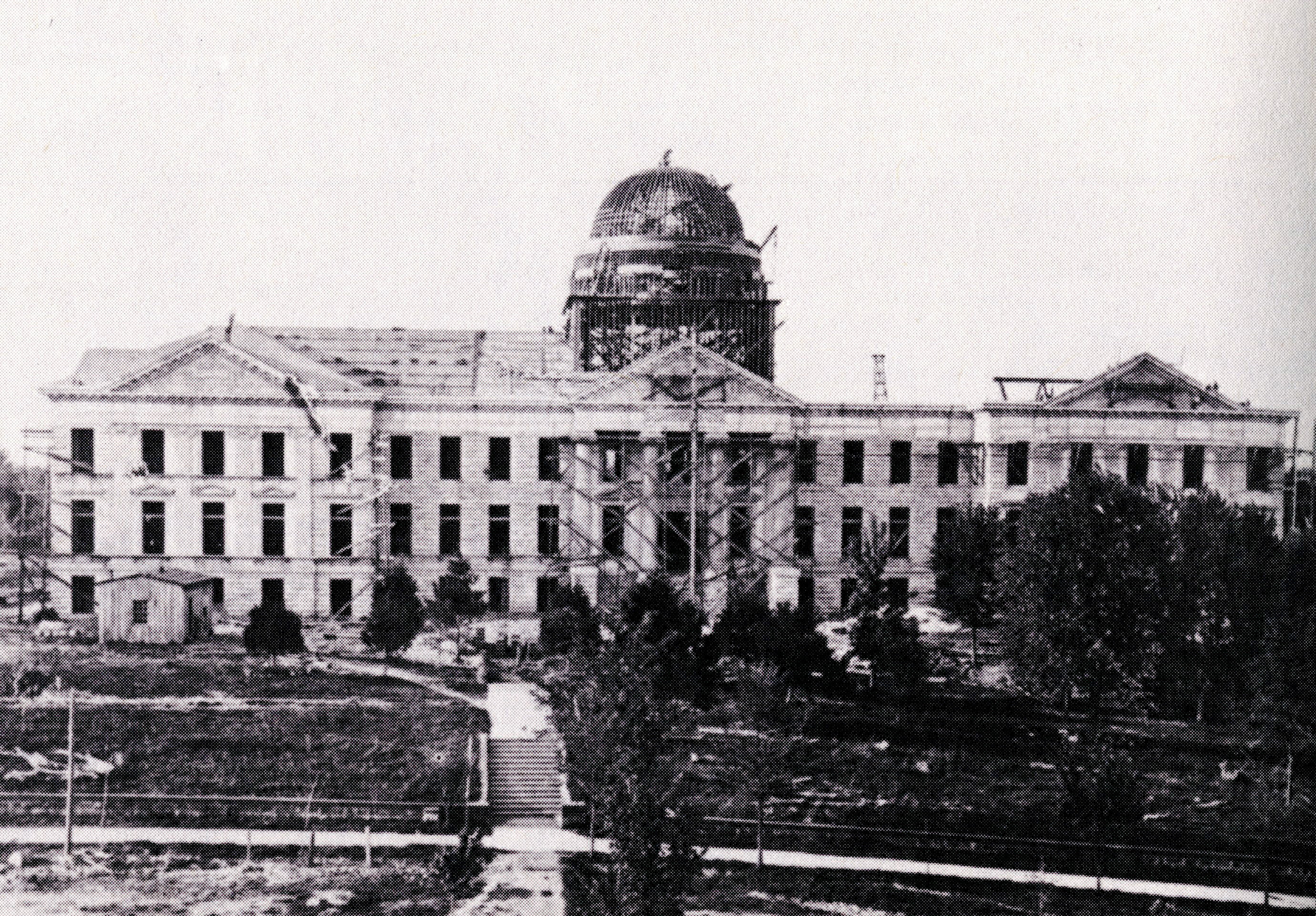
![Construction of Academic Hall on the campus of Southeast Missouri State Teacher’s College. [Southeast Missouri State University, Special Collections]](/sites/default/files/styles/article_header_image/public/2026-01/5.-louis-houck.jpg?itok=EBgQdmm7 "Construction of Academic Hall on the campus of Southeast Missouri State Teacher’s College. [Southeast Missouri State University, Special Collections]")
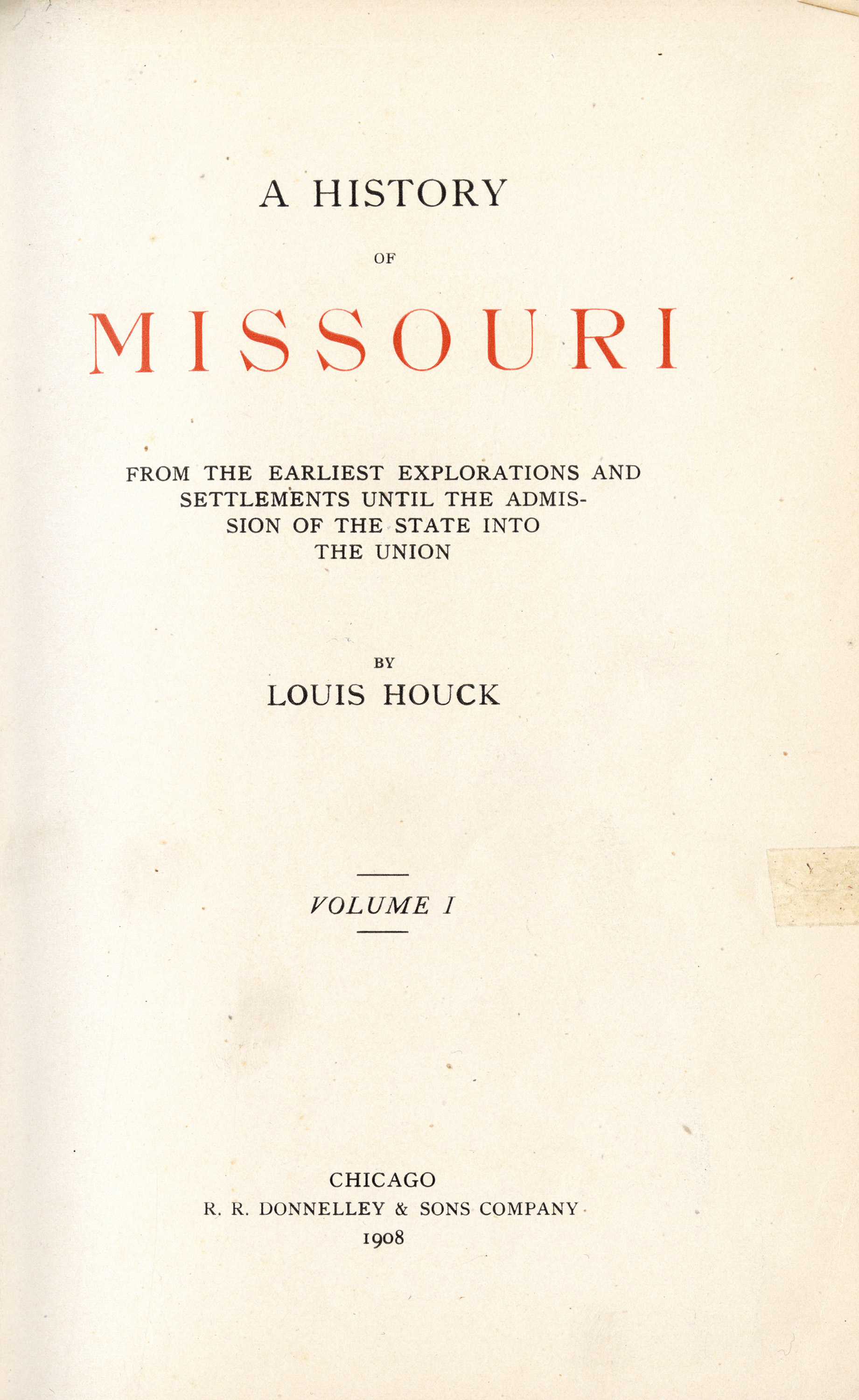
![The title page for volume 1 of Houck’s A History of Missouri. [State Historical Society of Missouri reference library]](/sites/default/files/styles/article_header_image/public/2026-01/6.-louis-houck.jpg?itok=Fw6ZgmAl "The title page for volume 1 of Houck’s A History of Missouri. [State Historical Society of Missouri reference library]")
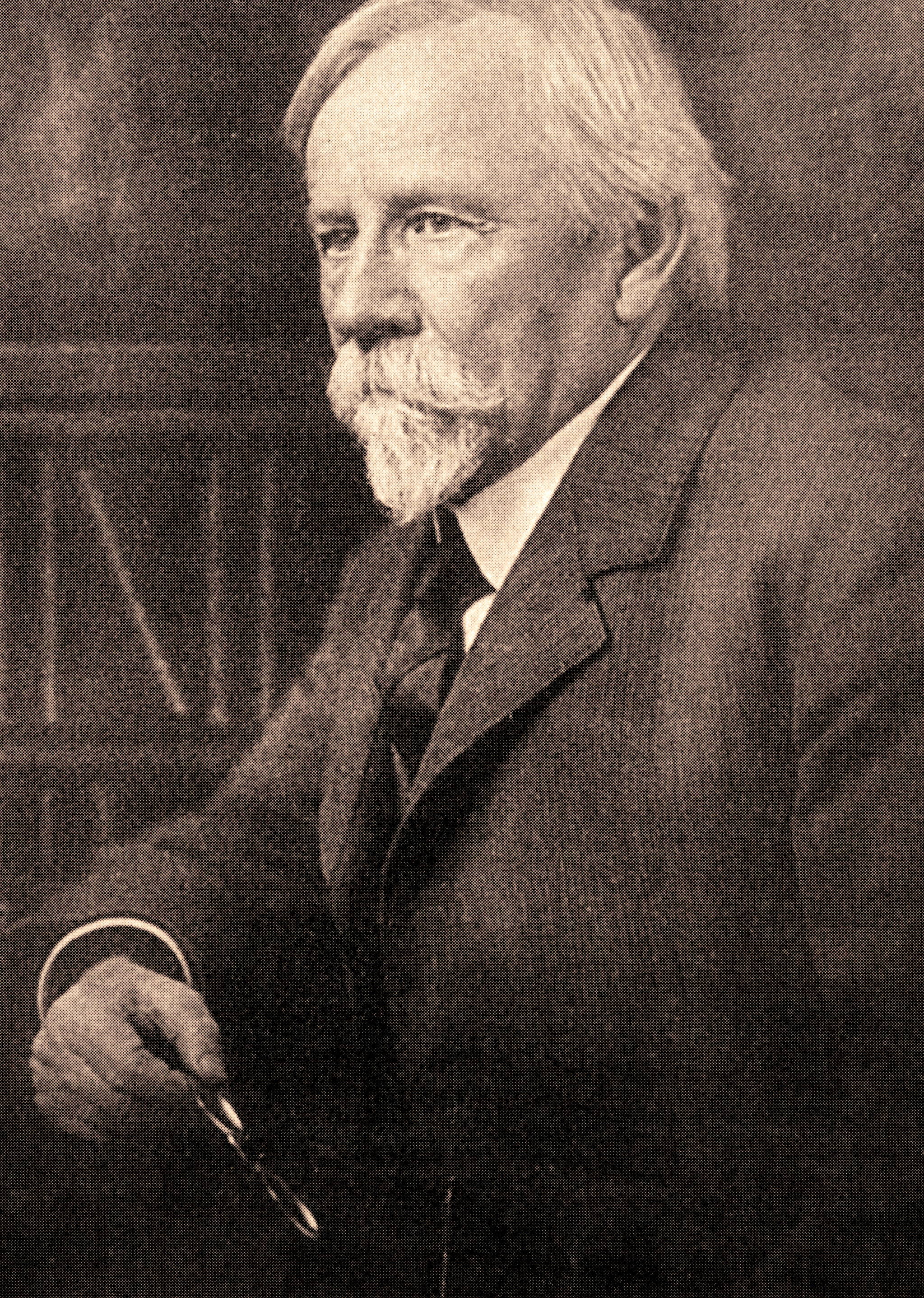
![Louis Houck. [Courtesy of Joel P. Rhodes]](/sites/default/files/styles/article_header_image/public/2026-01/7.-louis-houck.jpg?itok=Yi6ReITR "Louis Houck. [Courtesy of Joel P. Rhodes]")
Often credited as being the “Father of Southeast Missouri,” Louis Houck was a lawyer, journalist, entrepreneur, regent, philanthropist, and historian who brought railroading to the region, thus opening southeast Missouri to industrialization and modernization. From 1880 to 1920 the self-taught railroader constructed a provincial empire of roughly five hundred miles of track over and through the wilderness of small lakes, marshes, and wetlands covering “Swampeast Missouri.” These “Houck Roads,” as his railroad networks came to be known, and the accompanying Industrial Revolution helped transform southeast Missouri, ushering in a period of pronounced commercial, physical, and social development.
Born on April 1, 1840, in Mascoutah, Illinois, Houck initially followed the occupation of his father, a German-language newspaper publisher, before engaging in self-directed legal study and becoming a lawyer in St. Louis. After moving to Cape Girardeau in 1869, his remarkable career as a railroad man began with an unremarkable fifteen miles of track laid between Cape Girardeau and Delta, Missouri. A product of the state’s railroad mania in the last quarter of the nineteenth century, Houck’s railroad epiphany in the summer of 1880 remains a central part of the region’s folklore. Despite having little money, supplies, or knowledge of railroading, at forty years of age, he decided to take leave of his established law practice, read some books on railroad engineering, and start laying track.
Houck struck a deal to jump-start the defunct Cape Girardeau and State Line Railroad Company with a simple plan. If he could complete the company’s remaining fifteen miles of track to connect Cape Girardeau to the St. Louis and Iron Mountain line in Delta, he would get clear title to the railroad’s properties after the mortgage was paid off. The only catch: all work had to be completed by January 1, 1881, less than five months away. Working fast and furiously, Houck overcame each of his limitations and obstacles to meet the deadline, and at 2 a.m. on January 1, Houck’s first train rolled into Cape Girardeau from Delta, right on schedule.
Over the next forty years, the stern and tenacious Houck constructed roughly five hundred more miles of track in southeast Missouri from the Arkansas line to St. Francois County. In time, his Houck Roads consisted of three networks extending out north, west, and south from Cape Girardeau: the St. Louis, Cape Girardeau and Fort Smith (later sold to the Frisco); the St. Louis, Kennett and Southern and Allied Lines; and the Chester, Perryville, Ste. Genevieve and Farmington. Many small towns in the region got their start along these Houck lines, and he often named them after employees, friends, and backers; examples include such towns as Zalma, Blomeyer, and Sturdivant. In his eagerness to complete railroads quickly and cheaply, and owing to his own lack of experience in engineering, Houck’s railroads were legendary for their suspect quality and frequent derailments. But even though the Houck lines faced numerous legal, financial, and logistical challenges over the years, these roads were the major impetus for the region’s expanding population and agricultural, lumbering, and commercial growth.
While developing the region economically, Louis Houck also strove to make art, culture, and formal education available to all social classes in southeast Missouri. A self-taught historian, he wrote the three-volume A History of Missouri and two-volume The Spanish Regime in Missouri, the first published comprehensive histories of Missouri’s territorial period. From 1887 to 1925, Houck also served thirty-eight years (thirty-six as president) on the board of regents of Southeast Missouri State Teacher’s College (now Southeast Missouri State University), which had been founded in 1873. He presided over arguably the most dynamic period in the school’s history, as Southeast established its identity as an institution of higher education, which included rebuilding Academic Hall.
In 1872 Louis Houck married Mary Hunter Giboney, the only surviving daughter of Andrew Giboney and Mary Hunter, whose own marriage had brought together two of the wealthiest and largest land-owning families in southeast Missouri. Louis and Mary Houck raised three children—Irma, Giboney, and Rebecca—in the family estate Elmwood. Built on a 1797 Spanish land grant and completed around 1835, Elmwood is thought to be modeled after the Ramsay (Mary Houck’s maternal grandmother) family castle, Dalhousie, in Scotland. Louis Houck died at Elmwood on February 17, 1925.
Fisher, John C. Southeast Missouri from Swampland to Farmland: The Transformation of the Lowlands. Jefferson, NC: McFarland and Co., 2017.
Hansen, Peter A., Don L. Hofsommer, and Carlos Arnaldo Schwantes. Crossroads of a Continent: Missouri Railroads, 1851–1921. Bloomington: Indiana University Press, 2022.
Neumeyer, Tom, Frank Nickell, and Joel P. Rhodes. Historic Cape Girardeau: An Illustrated History. San Antonio, TX: Historical Publishing Network, 2004.
Rhodes, Joel P. A Missouri Railroad Pioneer: The Life of Louis Houck. Columbia: University of Missouri Press, 2008.
———. “The Father of Southeast Missouri: Louis Houck and the Coming of the Railroad.” Missouri Historical Review 100, no. 2 (January 2006): 72–86.
Published January 23, 2026; Last updated April 30, 2026
Creative Commons Attribution-NonCommerical-ShareAlike 4.0 International (CC BY-NC-SA 4.0)