 the State Historical Society of Missouri
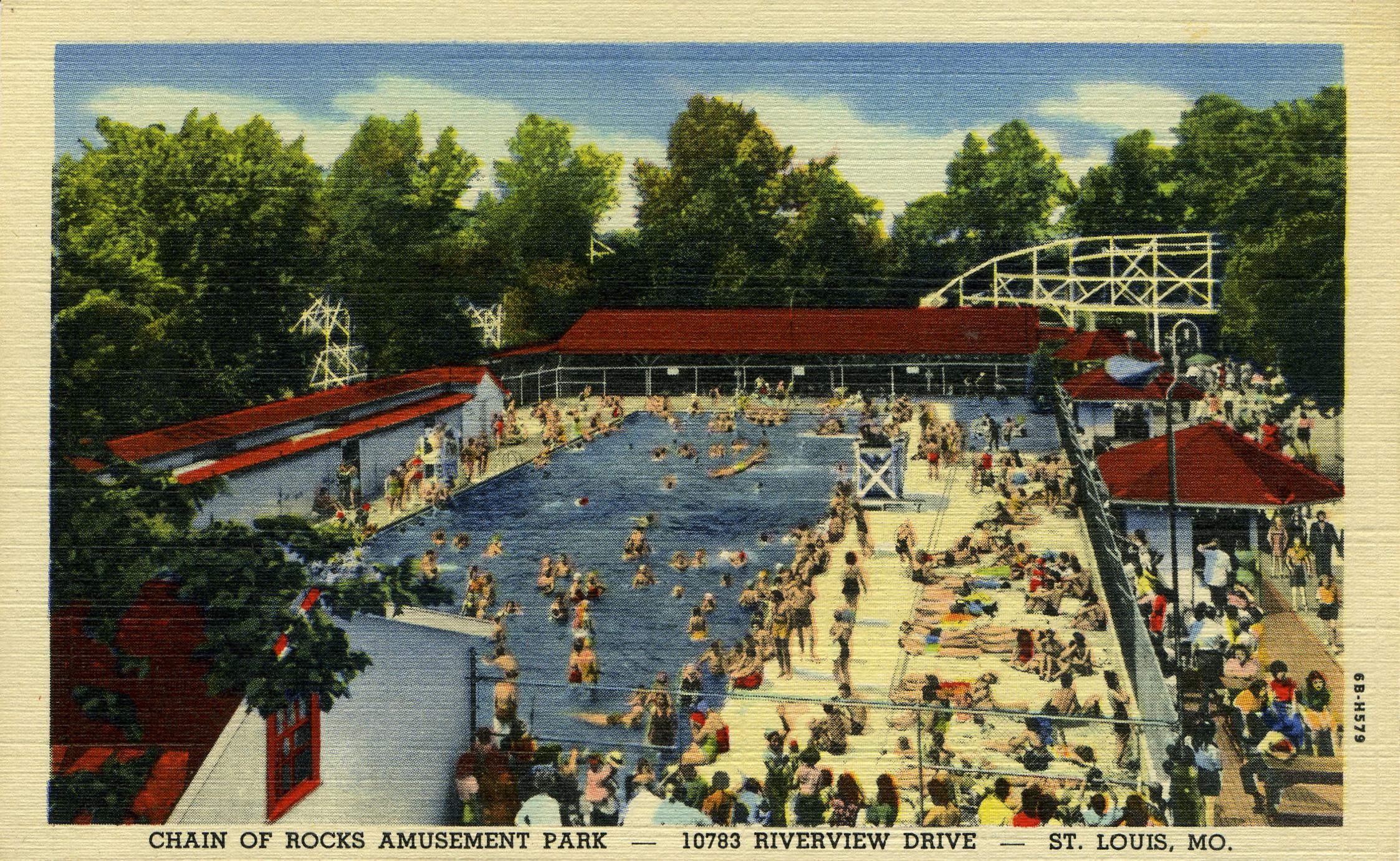
![Chain of Rocks Park swimming pool. [Courtesy of Joe Sonderman]](/sites/default/files/styles/article_header_image/public/2026-09/1.-sonderman-chain-of-rocks-swimming-pool.jpg?itok=nGONs7If "Chain of Rocks swimming pool. [Courtesy of Joe Sonderman]")
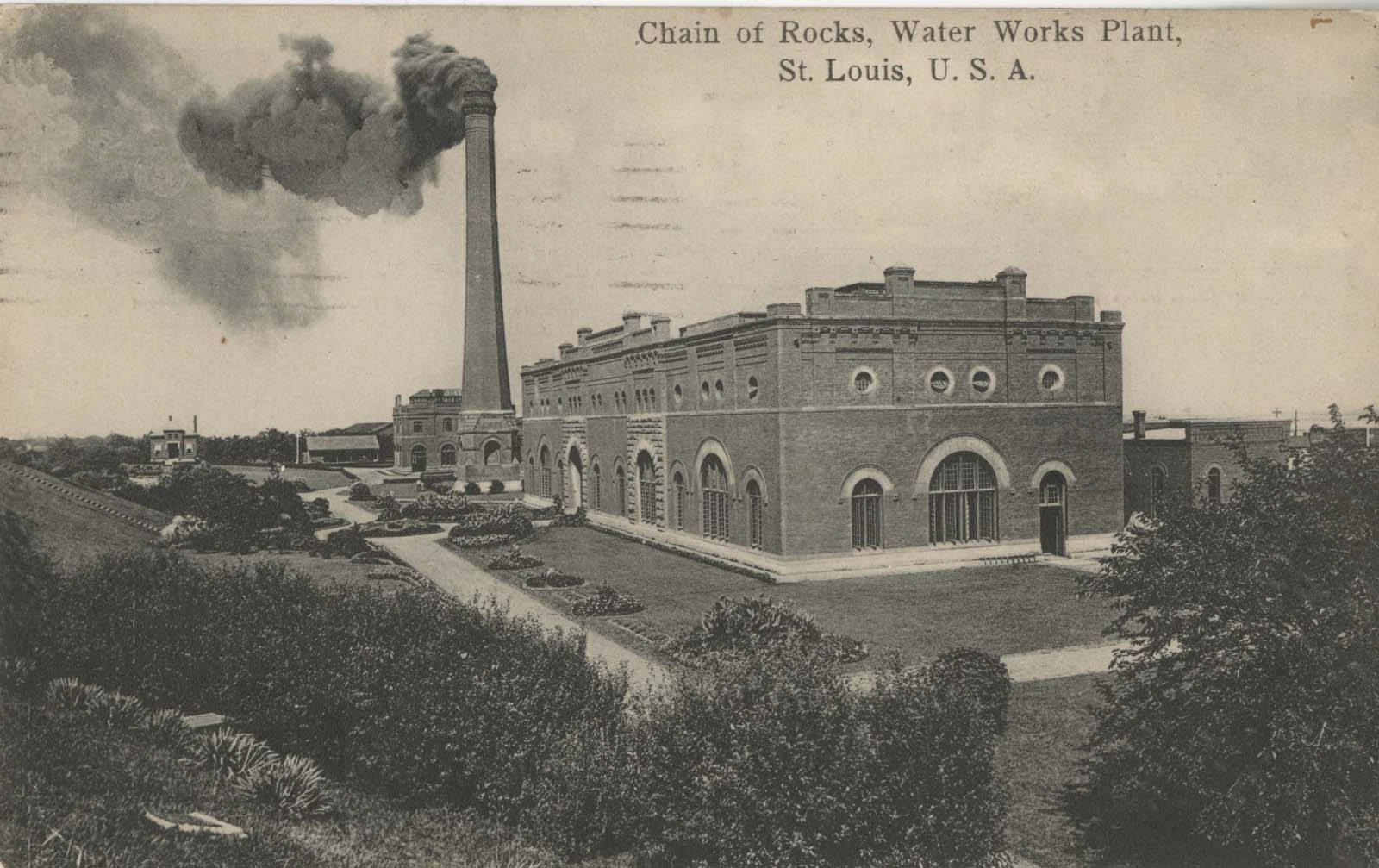
![The City of St. Louis’s Chain of Rocks Water Treatment Plant. [State Historical Society of Missouri, Missouri Postcard Collection (P0032)]](/sites/default/files/styles/article_header_image/public/2026-09/2.-missouri-postcard-collection-p0032-shsmo_0.jpg?itok=g-At0ru0 "The City of St. Louis’s Chain of Rocks Water Treatment Plant. [State Historical Society of Missouri, Missouri Postcard Collection (P0032)]")
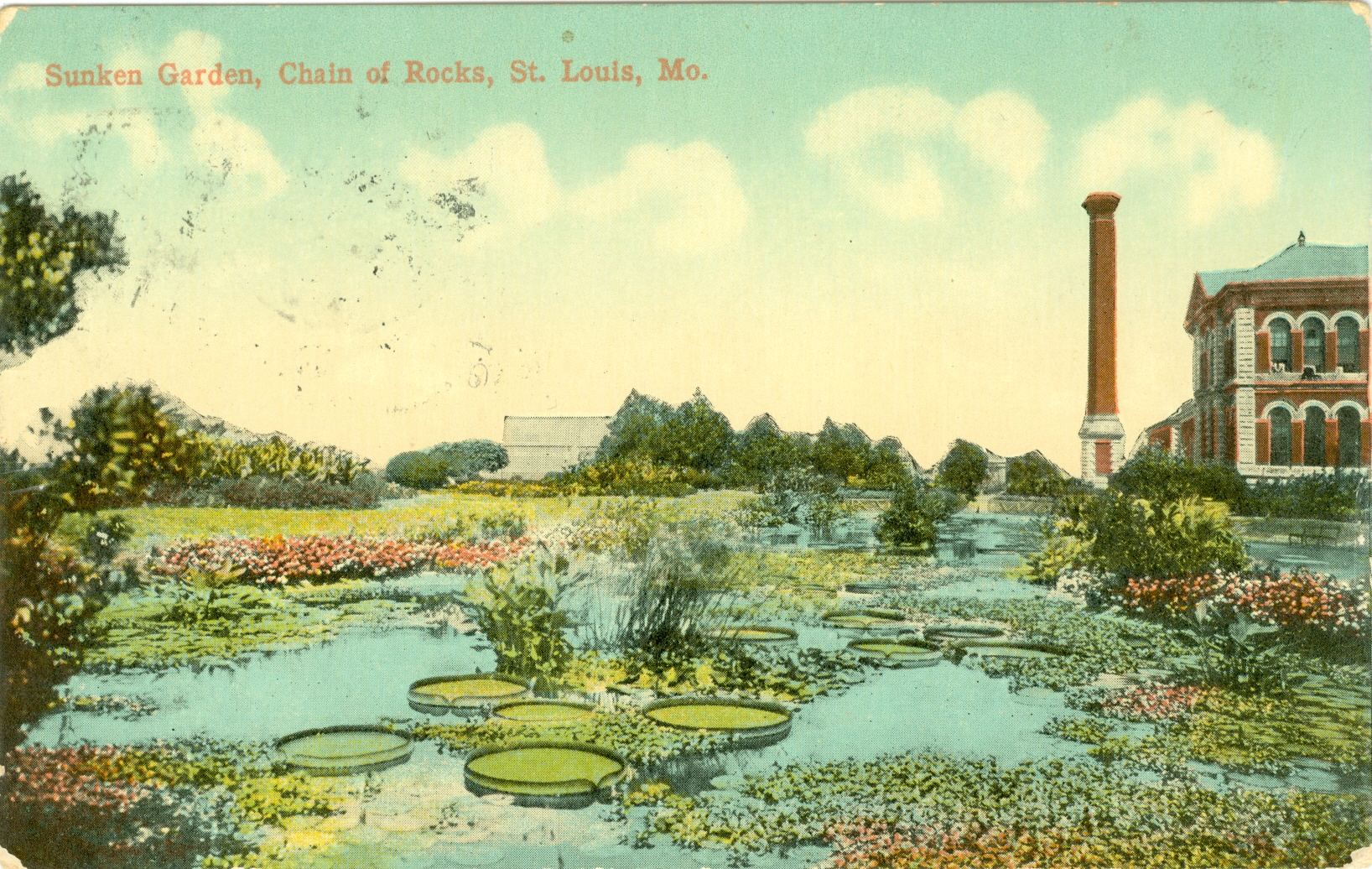
![The sunken garden at Waterworks Park [Courtesy of Joe Sonderman]](/sites/default/files/styles/article_header_image/public/2026-09/3.-sonderman-waterworks-garden_0.jpg?itok=XGWd0f0W "The sunken garden at Waterworks Park [Courtesy of Joe Sonderman]")
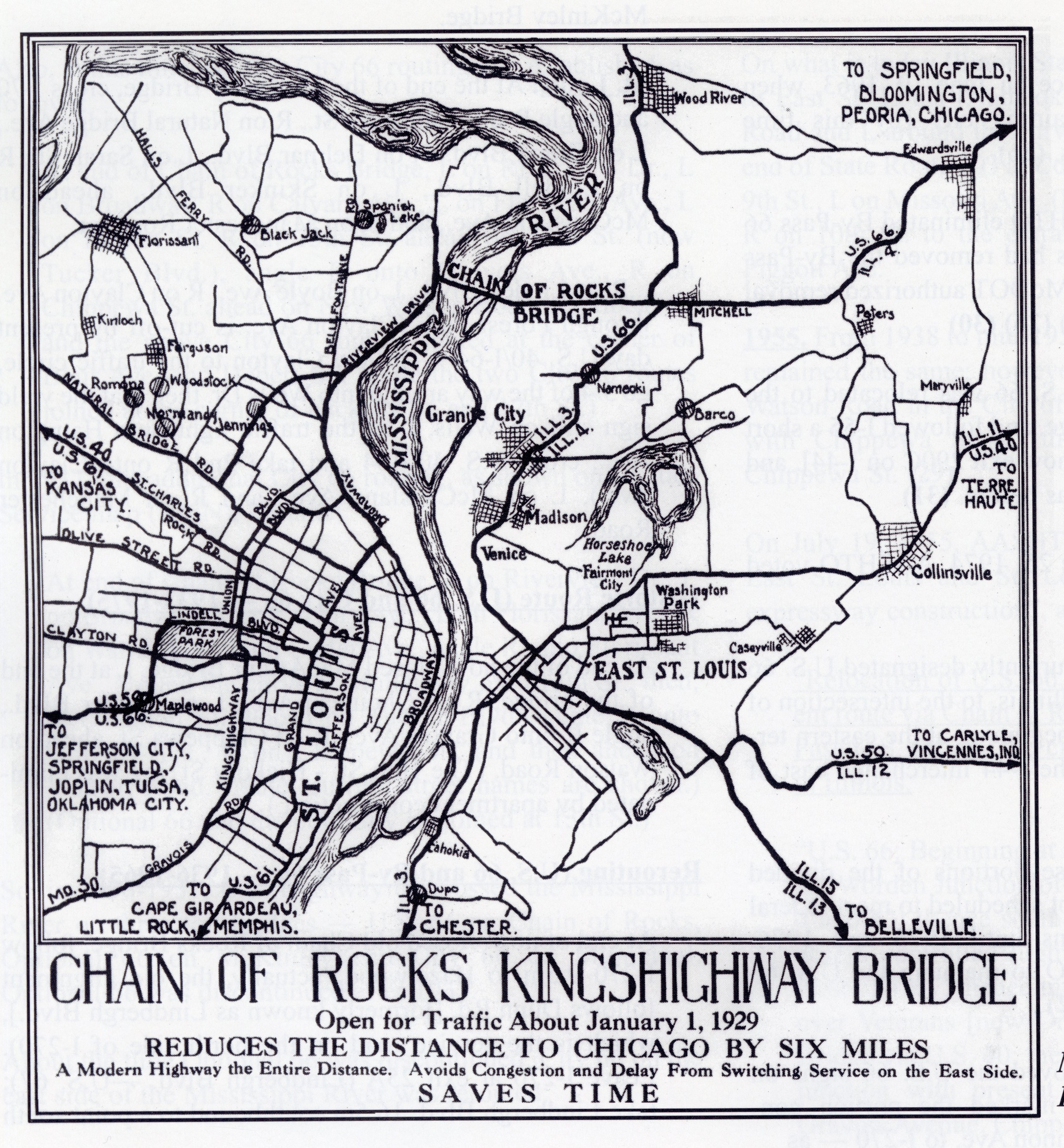
![A map showing Chain of Rocks’s proximity to the city of St. Louis. [St. Louis Post-Dispatch, December 9, 1928]](/sites/default/files/styles/article_header_image/public/2026-09/4.-i-st.-louis-post-dispatch-dec.-9-1928-map_0.jpg?itok=rsYy77Ie "A map showing Chain of Rocks’s proximity to the city of St. Louis. [St. Louis Post-Dispatch, December 9, 1928]")
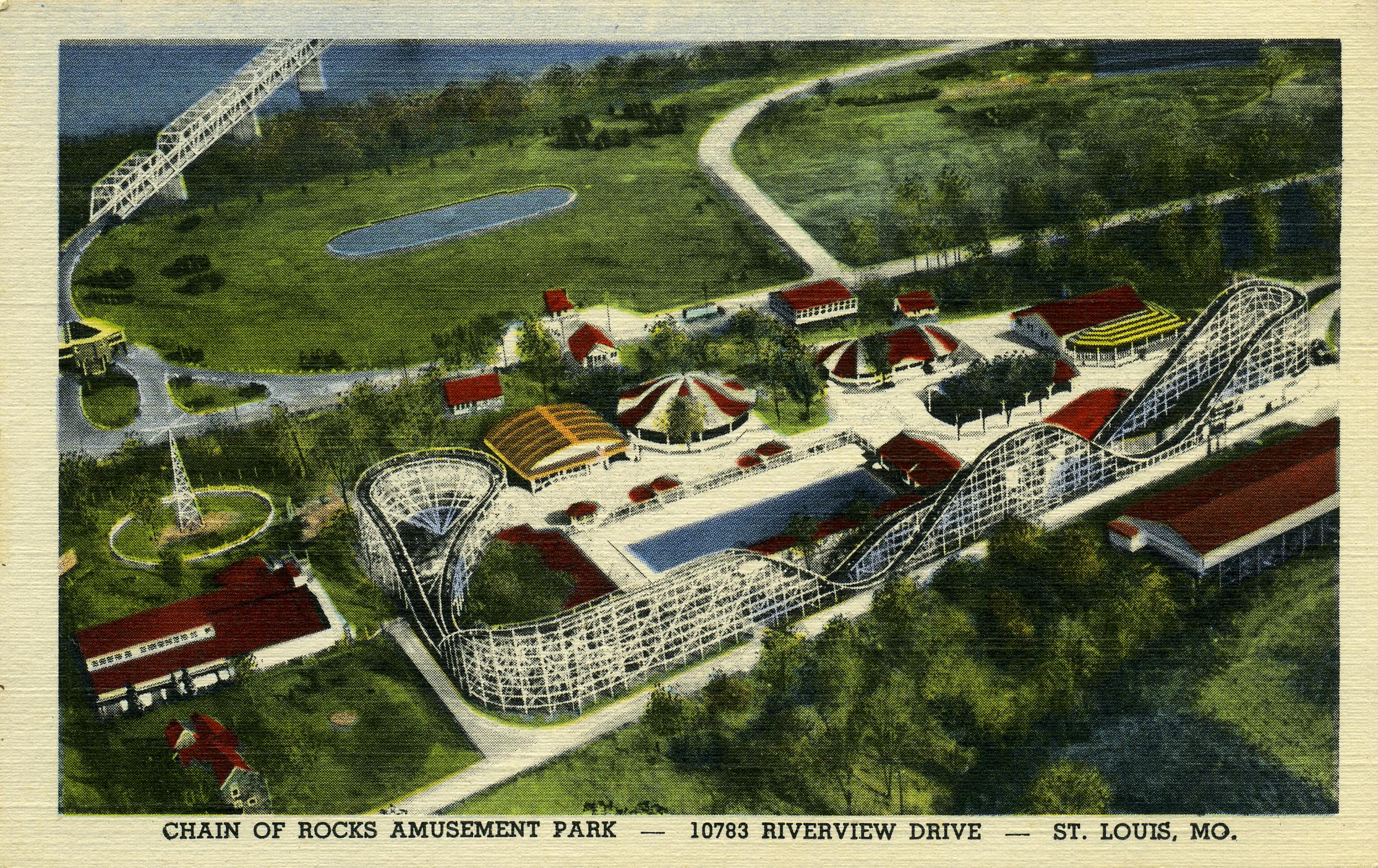
![Bird’s eye view of Chain of Rocks Amusement Park. [Courtesy of Joe Sonderman]](/sites/default/files/styles/article_header_image/public/2026-09/5.-sonderman-birds-eye-of-amusement-park_0.jpg?itok=VvbIQtwQ "Bird’s eye view of Chain of Rocks Amusement Park. [Courtesy of Joe Sonderman]")
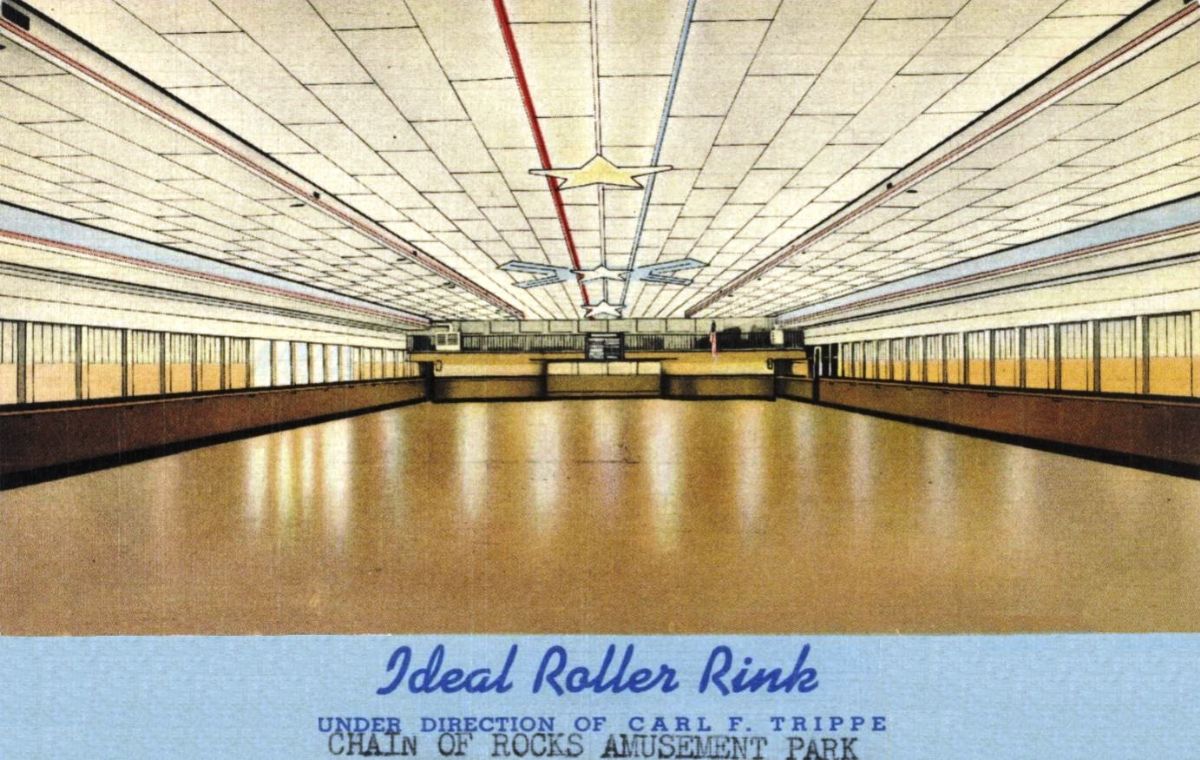
![Ideal Roller Rink at Fun Fair. It was one of three locations in St. Louis operated by park owner Carl Trippe. [Courtesy of Joe Sonderman]](/sites/default/files/styles/article_header_image/public/2026-09/7.-sonderman-ideal-roller-rink_0.jpg?itok=5vO92M0X)
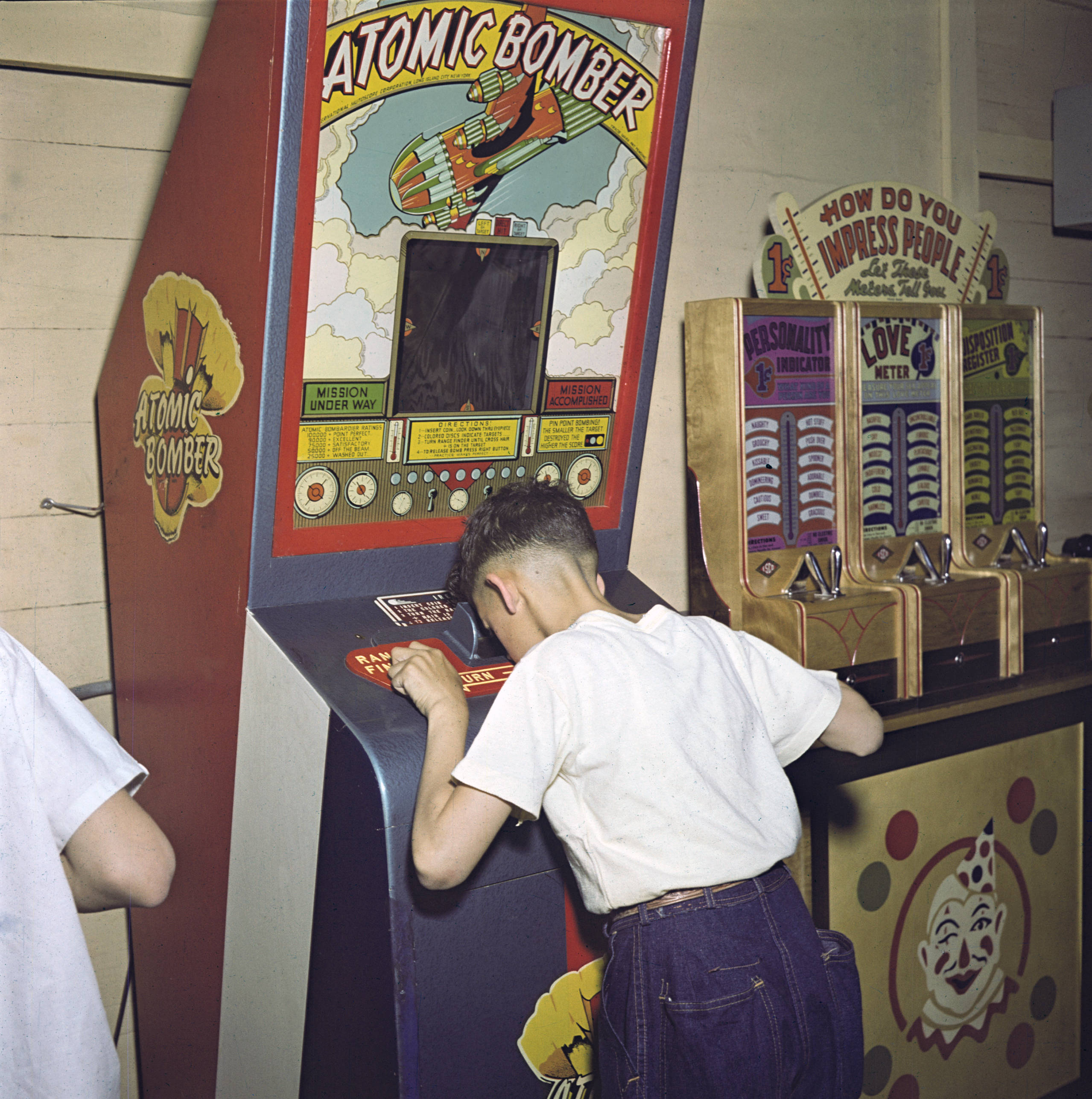
![This arcade game, located at Forest Park Highlands Amusement Park, is an example of the machines that proved popular with Fun Fair guests. [State Historical Society of Missouri, Arthur Witman Collection (S0732)]](/sites/default/files/styles/article_header_image/public/2026-09/arcade-game-at-forest-park-highlands-arthur-witman-s0732.jpg?itok=IzJw9mCq "This arcade game, located at Forest Park Highlands Amusement Park, is an example of the machines that proved popular with Fun Fair guests. [State Historical Society of Missouri, Arthur Witman Collection (S0732)]")
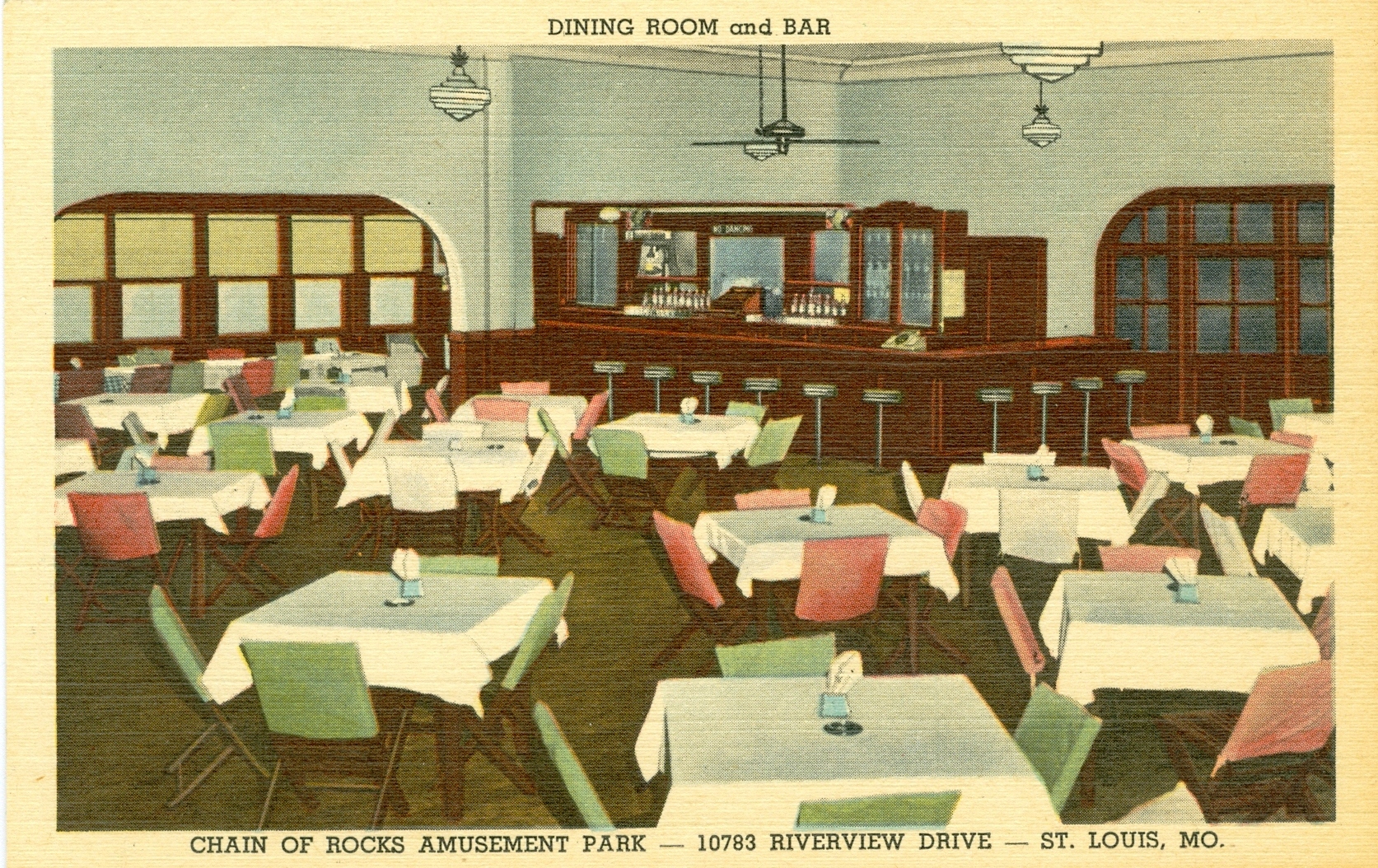
![Built in 1945 by Carl Trippe, the Sky Garden Bar and Restaurant overlooked the Mississippi River. [Courtesy of Joe Sonderman]](/sites/default/files/styles/article_header_image/public/2026-09/sonderman-sky-garden-bar-and-restaurant.jpg?itok=1X7OxHGw "Built in 1945 by Carl Trippe, the Sky Garden Bar and Restaurant overlooked the Mississippi River. [Courtesy of Joe Sonderman]")
During the prosperous 1920s, Parkview Amusement Park was constructed on the western bank of the Mississippi River north of St. Louis near the city’s Chain of Rocks water treatment plant. When Parkview opened in 1923, it was one of about fifteen hundred amusement parks that opened in the United States during the early 1900s. The popularity of amusement parks was driven by economic opportunity, technological advancement, middle-class prosperity, unionization, and the commercialization of entertainment. In operation from 1923 until 1977, Parkview—later renamed Fun Fair Amusement Park at Chain of Rocks—was one of the longest-running amusement parks in St. Louis County, Missouri.
Chain of Rocks Park was established by a series of land donations beginning in 1893 that both supported the city’s water treatment plant and provided a green space for city citizens to visit, with additions in 1918 and 1932. Early portions of the park, referred to as Waterworks Park at the turn of the century, were designed by Maximillian Kern, who also designed St. Louis’s Forest Park. Both locations were considered for the Louisiana Purchase Exposition of 1904, but Forest Park was ultimately chosen to host the monumental event.
In the early 1900s, the City of St. Louis’s Water Division operated a streetcar that ran from East Grand Boulevard to the Chain of Rocks pumping station; it carried an estimated ten thousand visitors a week to the park to picnic. Visitors could also take a steamboat from St. Louis and disembark at Chain of Rocks Harbor. Regardless of how they arrived, picnickers flocked to the park in the 1900s and 1910s as a welcome retreat into nature from the hot and busy city. During those years the park had brick barbecue pits with free firewood supplied by the city, benches, geometric gardens filled with exotic flowers, and a public restroom. Nearby at the top of the hill were two taverns: Hoffmans, a German-style beer garden, and Dillmann’s Grove; both establishments sold supplies to picnickers, though Dillmann’s was notorious for removing the firewood provided by the city and reselling it to visitors for fifty cents a bundle.
Seeking to capitalize on the park’s popularity, investors and promoters organized food vendors for a fledgling amusement park adjacent to Chain of Rocks Park in 1923. John A. Hoffman, Parkview Amusement Park’s first manager, placed an ad in the St. Louis Globe-Democrat in April 1923 requesting concessions for a “Chain of Rocks Park with boating rides, dancing, and splendid Sunday crowds.” This is the earliest known mention of a designated area near the park that had concentrated amusement activities. Chain of Rocks Park was already a popular destination, making it an ideal location for an amusement park to emerge.
The Parkview Amusement Park grew exponentially between 1923 and 1927. Early attractions included a picnic area, the whip (a ride similar to a tilt-a-whirl), a dodge ’em car pavilion (bumper cars), a forty-six-horse hand-carved carousel built by the Philadelphia Toboggan Company in 1922, an Olympic-sized swimming pool, a penny arcade, a dog-racing track, and an open-air ballroom that hosted live entertainment. Two of the largest attractions were the Comet, a large wooden roller coaster, and the Swooper, an oblong Ferris wheel. By 1927, the public had developed an even greater interest in the Chain of Rocks area, including in the new amusement park. In early March a St. Louis resident pleaded in the St. Louis Star and Times for United Railways to build a new track along Baden Avenue to improve access to Chain of Rocks Park for school groups. Work began on a new bridge near the waterworks at Chain of Rocks in October 1927 and was completed in January 1929.
The new bridge created greater access to Chain of Rocks Park, Parkview Amusement Park, and downtown St. Louis. Unfortunately, it did not generate as much traffic as the bridge’s promoters had hoped, and the company that operated it went bankrupt by 1932. In 1935, when Route 66 was rerouted across the Chain of Rocks bridge, the area experienced an uptick in economic growth during the Great Depression. The rerouting of Route 66 led to better roads and new businesses near the bridge, including a gas station. It also boosted business at the amusement park, which by this time was commonly referred to as Chain of Rocks Amusement Park, although its official name remained Parkview.
After John Hoffman departed Parkview Amusement Park in 1940 to work for Anheuser-Busch, his brother Christian took over the day-to-day operations in 1941. Not long after, the Hoffmans got into a dispute with the game supplier for their penny arcade, Carl F. Trippe. Trippe was the owner of the Ideal Novelty Company, a business he started in 1935 that supplied phonographs, jukeboxes, and vending machines (including gaming machines and pinball machines) to amusement vendors across the St. Louis area. In 1941, and again in 1943, Trippe was scrutinized by the St. Louis County Sheriff’s Department for installing illegal gambling machines in penny arcades in St. Louis County. The Hoffmans told Trippe to take his machines out of their amusement park, but Trippe was very well-connected in the St. Louis area and was able to purchase all the public shares of the Parkview Amusement Park that the Hoffman family did not directly own, essentially forcing them out of their own family business.
Carl Trippe took over the amusement park at Chain of Rocks sometime between 1942 and 1944 and started making improvements. The Sky Garden Bar and Restaurant, which overlooked the Mississippi River, was completed in 1945 and offered a fine dining experience in contrast to the fair-like concessions that had been offered there previously. Trippe also added a complete circuit of Kiddie Land rides offering scaled-down versions of larger rides to provide safe entertainment for young children. In 1950, Trippe brought one of his most popular ventures, the Ideal Roller Rink, to Chain of Rocks; it already had two other locations in St. Louis. The Parkview Amusement Park was well known during Trippe’s ownership for its community outreach. He often hosted large community events at the park, including a county fair and a horse show. In 1954 he hosted the park’s first Easter Egg hunt, which would become an annual tradition that continued after his sudden death from a heart attack in 1955.
In 1958, Carl’s wife, Margaret, sold Parkview Amusement Park to William Zimmerman and Ken Thone. The two men, brothers-in-law who already operated Holiday Hill Amusement Park on Natural Bridge Road in St. Louis, decided to go into business together again. Zimmerman purchased the park, and Thone became the manager. They decided to rename it the Fun Fair at Chain of Rocks. By 1958, even with Trippe’s improvements throughout the 1940s, the park needed extensive repairs. The new owners removed the Comet and the bandstand, which were in disrepair, and converted the roller rink into a miniature golf course. The Fun Fair at Chain of Rocks was making a fresh start with experienced amusement park operators at its helm. Zimmerman and Thone knew that the most reliable customers were school groups and catered heavily to them each spring; they even leased out space to a carnival operator that brought in additional kiddie rides during the school picnic season.
Throughout the 1960s, many school-age children visited the park and developed fond memories of the Fun Fair. Older generations enjoyed going there as well. Zimmerman and Thone contracted with a local radio station to hold splash parties at the pool with live music from performers such as Ike and Tina Turner, Bob Kuban, the Raiders, and the In Men, drawing regular crowds of up to three hundred people. After the Forest Park Highlands Amusement Park was severely damaged by fire on July 19, 1963, a Ferris wheel, Tilt-A-Whirl, and flying jets ride were transferred to Fun Fair.
In August of 1963, the Fun Fair at Chain of Rocks was officially integrated, though Thone insisted that the park had been open to Blacks as early as 1958. He may have been referring to a policy at Holiday Hill and the Fun Fair to allow Black schools to book the parks as event spaces for school picnics and use the rides, but neither park regularly allowed Blacks to enter as individuals. In fact, the parks had been courting Black customers through newspaper advertising since the early 1950s and then turning them away when they arrived at the parks without booking a church or school group. It happened so often that in the mid-1950s, several Black patrons sought to file suits against the business and filed complaints with the National Association for the Advancement of Colored People. The NAACP started picketing in front of the Fun Fair in the early summer of 1963. On August 1, Carl Henderson, a thirteen-year-old, became the first Black child to swim in the pool at Fun Fair. He was able to do so without incident, and the pool remained integrated for the rest of the park’s existence. Integration was good for business, and the 1960s were profitable years for the amusement park industry.
In 1971, Six Flags opened outside St. Louis. It was the beginning of the end for traditional amusement parks in St. Louis County. The attractions at Chain of Rocks experienced steady decline before a fire in 1973 destroyed the Sky Garden Bar and Restaurant and the offices that both Thone and Trippe had used to manage the amusement park. In 1975, Holiday Hill closed, and the remaining rides were added to the Fun Fair to bolster attendance, but it was too little too late. In June 1977, another fire ravaged the park and destroyed the beautiful hand-carved carousel and the dodge ’em car pavilion. After Labor Day the Fun Fair at Chain of Rocks Park closed for good. In 1978, what was left of the park was auctioned off to a lackluster crowd; the Swooper sold for a discouraging $1,500 and scavengers carried away what was left after the auction concluded. In 1980 the remaining property was sold off in pieces to developers.
Fun Fair Pool at Chain of Rocks, 1957-58
Repp, Thomas Arthur. Route 66: The Empires of Amusement. Lynnwood, WA: Mock Turtle Press, 1989.
Sonderman, Joe. “Chain of Rocks Bridge and Chain of Rocks Fun Fair Amusement Park.”
Show Me Route 66 17, no. 4 (April 2006): 17–23.
Published September 15, 2026
Creative Commons Attribution-NonCommerical-ShareAlike 4.0 International (CC BY-NC-SA 4.0)