 the State Historical Society of Missouri
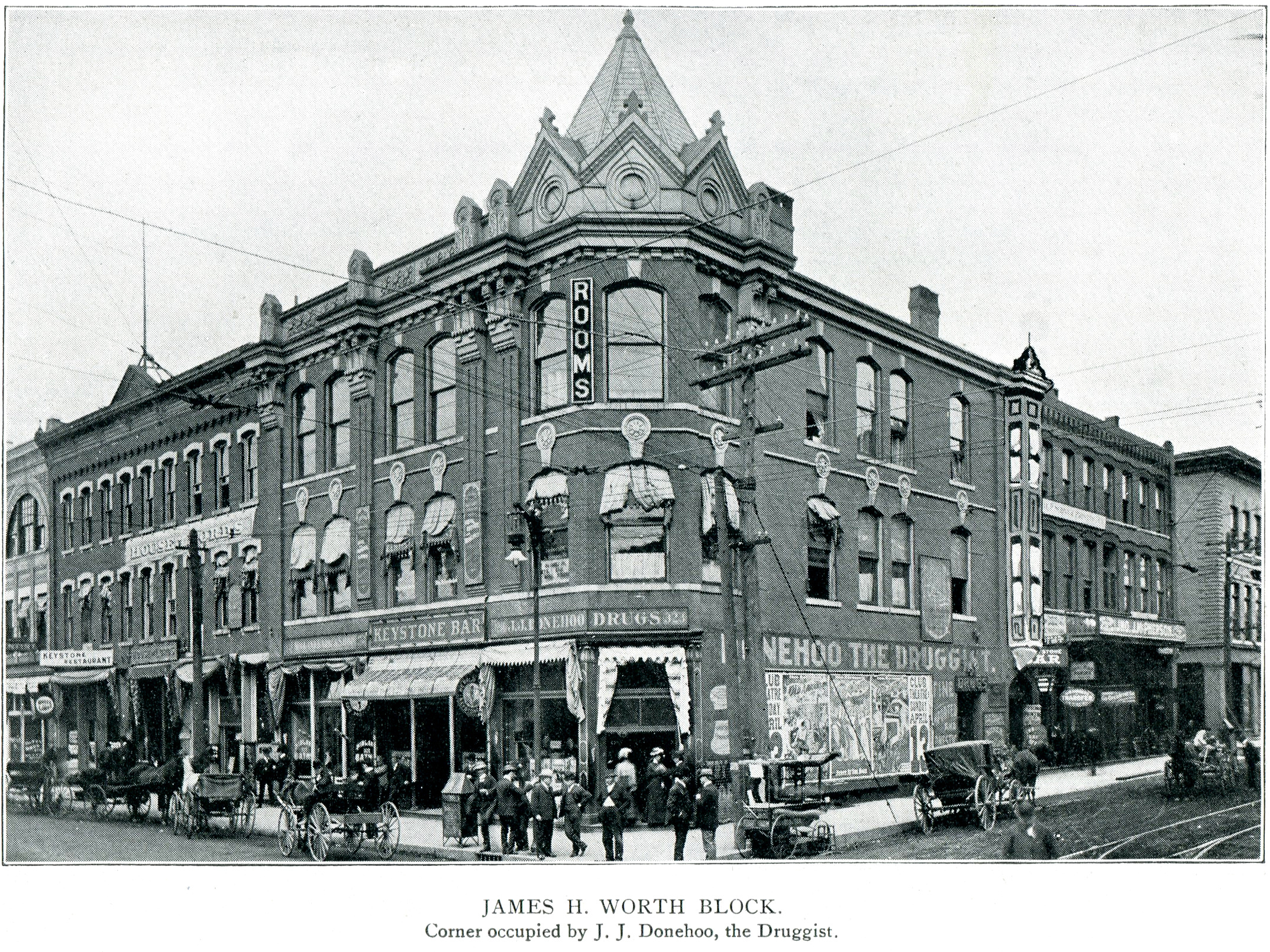
![The House of Lords, whose sign is visible on the left, was part of the James H. Worth block in downtown Joplin. [Courtesy of Kimberly Harper]](/sites/default/files/styles/article_header_image/public/2026-04/1.-house-of-lords.jpg?h=3850e8e5&itok=A3t96Nsp "The House of Lords, whose sign is visible on the left, was part of the James H. Worth block in downtown Joplin. [Courtesy of Kimberly Harper]")
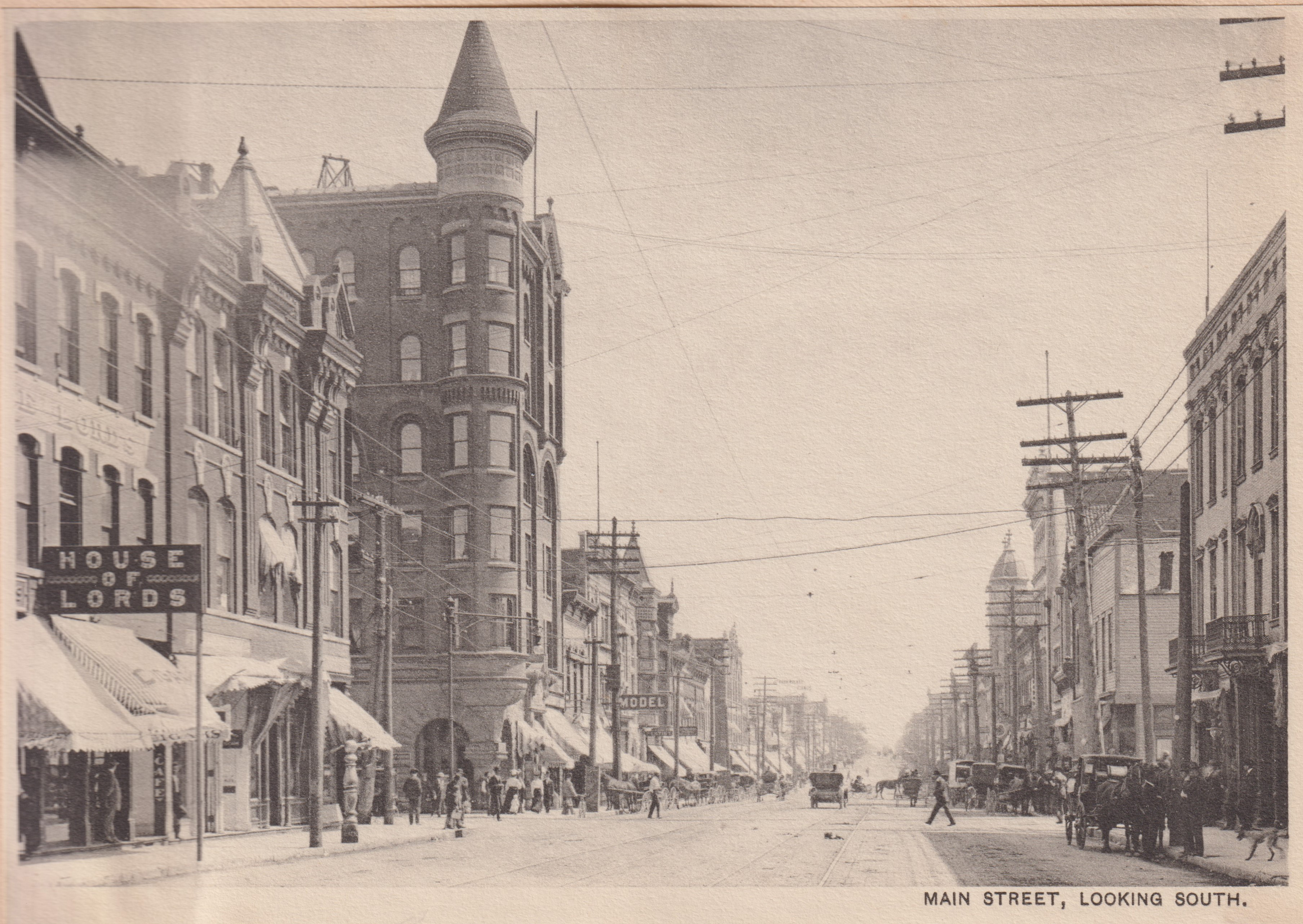
![Fourth and Main Streets in downtown Joplin; the House of Lords is at left. [Courtesy of Kimberly Harper]](/sites/default/files/styles/article_header_image/public/2026-04/2.-house-of-lords.jpg?itok=0iPFTvy8 "Fourth and Main Streets in downtown Joplin; the House of Lords is at left. [Courtesy of Kimberly Harper]")
The House of Lords was a three-story brick building in Joplin that housed a saloon and restaurant, gaming rooms, and brothel. Although Joplin’s reputation for wickedness has been exaggerated over the years, the stories surrounding the establishment at 319 Main Street have fueled decades’ worth of folklore that continue to keep it alive in memory. In the early years of a community, a saloon often fulfills multiple roles, with perhaps the most important being a forum where the town’s economic and social development is discussed and decided. The House of Lords was no exception.
Although sources disagree on the exact date it was founded, newspaper accounts indicate the House of Lords likely opened its doors in 1893. The first proprietor, William “Billy” Patton, reportedly could not settle on a name until a visiting Englishman suggested naming it after the upper house of Parliament. The House of Lords was not an uncommon name for a saloon during this period; historian Elliott West suggests that names like this projected “good-natured pomposity.” It likely reflected the atmosphere and clientele that Patton hoped to cultivate. Within a few years of opening the saloon, Patton opened a café and billiards parlor in the adjoining building. Over the years the House of Lords’s offerings evolved through changes in proprietors, but at the height of its glory, visitors to the ground floor could find a cigar stand, restaurant, and bar. Clientele included many of Joplin’s prominent citizens, who socialized with each other as well as eastern investors in town to check on their mining ventures in the Tri-State Lead and Zinc Mining District. Men conducted business over whiskey and cigars in secluded booths at the rear of the bar; society women and demimondaines dined at the restaurant but “remained well within their respective spheres.” Like similar establishments of its time, it was hailed as the Delmonico’s of the West for its extensive menu that brought to mind the famous New York City restaurant.
As was common for many saloons of this period, the House of Lords was lavishly decorated with mirrors, art, and sturdy furniture; a large painting of a nude woman was featured prominently behind the bar. Ragtime composer Percy Wenrich recounted hearing countless African American musicians grace the restaurant’s piano with their talent. Other first-floor entertainment options included pool and billiards. The activities that took place on the second and third floors, however, led to accusations of crime and lawlessness. The second floor housed gambling rooms, while the third floor was a notorious brothel. The first proprietor of the gambling den was Bill Hunter, who allegedly had several notches on his gun. Daniel E. Saighman, a “well-educated, polished man,” followed Hunter. After Saighman moved on, others assumed his role overseeing the card games and gaming tables.
One apocryphal story recounts that a miner, after losing a substantial amount of money, kicked a spittoon as he left. The spittoon, made of heavy brass, did not tip over. Enraged, the miner thundered, “Even the damn spittoons in this joint are crooked!” While Joplin was a rough mining town, the House of Lords was not a blood-bucket establishment; though fights took place, there were few fatalities over the years. One of these rare incidents happened in 1901 when Wilkins Taylor, son of Joplin businessman John H. Taylor, shot and fatally wounded Will Moore over an argument that began in the House of Lords. Another gambler was killed on the premises in an altercation later that same year. In another incident in 1922, a bartender shot and killed a Black porter.
Though the establishment changed proprietors several times over the years, the building itself remained under the ownership of local Democratic boss Gilbert Barbee. A wealthy businessman who made his fortune working his own Jasper County mining claim solo, Barbee owned considerable real estate holdings and mining operations in southwest Missouri. One of his shrewdest investments was a majority stake in the district’s leading newspaper, the Joplin Globe. Barbee used the Globe as a cudgel against his personal and political enemies. He also used it as a shield against his accusers. At his direction, the Globe asserted that neither he nor the restaurant and bar proprietors at the House of Lords had anything to do with the illicit businesses. But Barbee could not have been oblivious to the activities taking place in his building. A walkway built over an alley connected the House of Lords to the Joplin Globe building so that Barbee could go back and forth between his apartment at the Globe and the upper rooms “where the boys were.”
When Barbee was accused of providing political protection to confidence man Robert P. W. Boatright and his fellow swindlers known as the Buckfoot Gang, it provided his enemies a new avenue of attack. The allegations of corruption and Barbee’s bombastic, combative personality took a toll on his political influence. His grip was broken when he lost control of the Joplin Globe to rival businessman Alfred H. Rogers in 1911 and subsequently assumed a much less substantial role in local affairs.
The House of Lords boasted it never closed its doors, and its reputation was spread far and wide thanks to the cosmopolitan visitors attracted by the profitable Tri-State Lead and Zinc Mining District. Those who had traveled to Joplin would allegedly be asked, “‘And how is the House of Lords?’ If the person to whom the question was addressed happened to be a missionary, he would lift his eyes to the sky and reply: ‘Ah, my friend, Satan is in the ascendancy yet.’” In contrast, one sport’s response was, “Still there and going strong.”
The passage of time gradually transformed Joplin as well as the rest of country. In 1922, after moving from its original location to 407 Main under its final proprietors Peregoy and McCulloch, the House of Lords closed during the Prohibition era. The Globe lamented that in its last iteration, the establishment “bore only a faint resemblance to its antecedent . . . If the old House of Lords were personified, it probably would rise up and laugh with scorn and derision at the temerity of the final bearer of its title in holding forth under a name that is known perhaps in every corner of the globe.” The building was demolished in 1964. With its passing, one of the most colorful eras in Joplin’s history came to an end.
Harper, Kimberly. Men of No Reputation: Robert Boatright, the Buckfoot Gang, and the Fleecing of Middle America. Fayetteville: University of Arkansas Press, 2024.
Jones, Evelyn Milligan. Tales about Joplin . . . Short and Tall. Joplin, MO: Harragan House, 1962.
Published April 3, 2026
Creative Commons Attribution-NonCommerical-ShareAlike 4.0 International (CC BY-NC-SA 4.0)