 the State Historical Society of Missouri
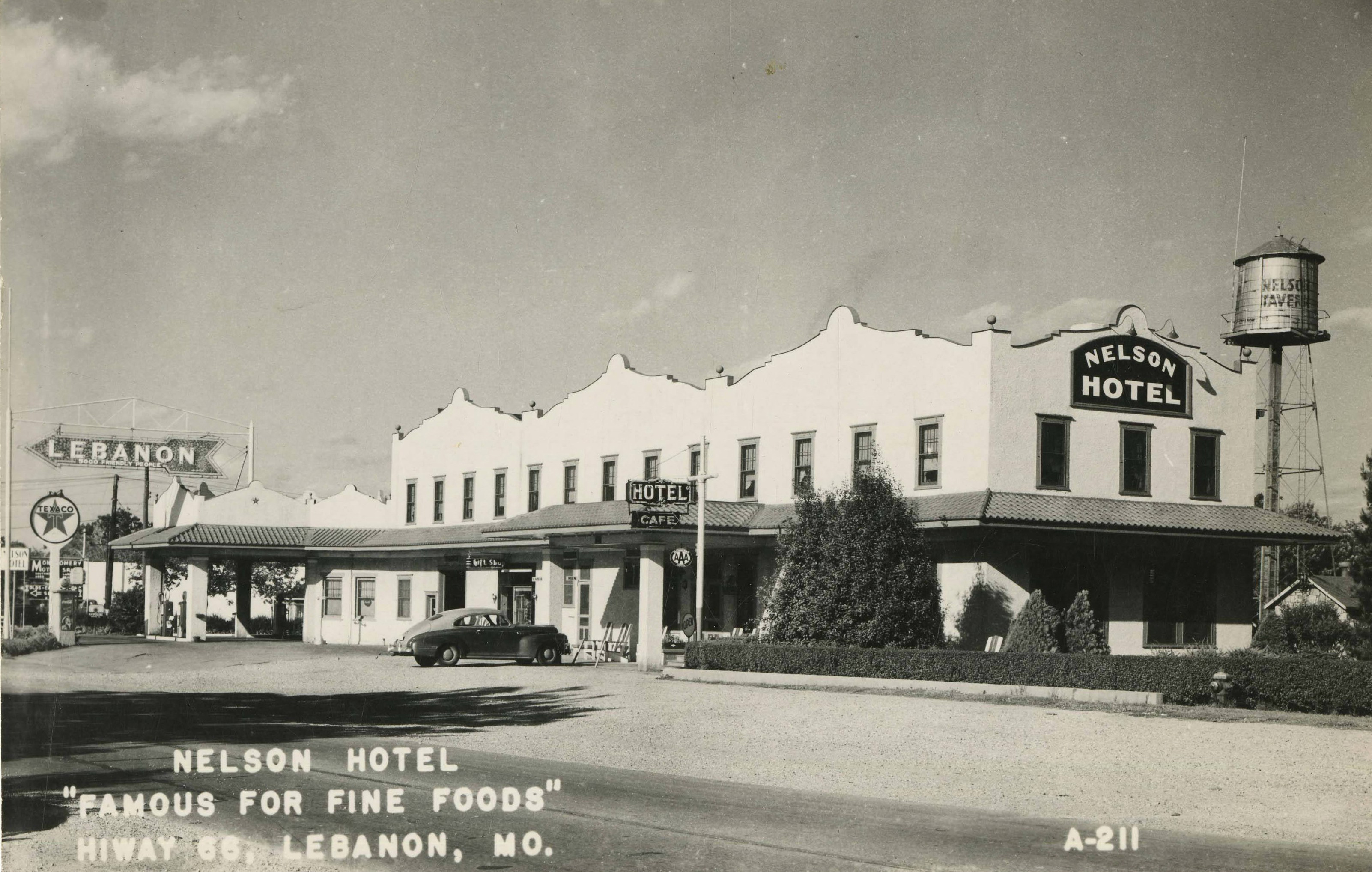
![The Nelson Hotel, formerly known as Nelson Tavern, in Lebanon, Missouri. [State Historical Society of Missouri, John F. Bradbury Jr. Postcard Collection, R1551]](/sites/default/files/styles/article_header_image/public/2026-02/1.-nelsons-dream-village.jpg?itok=bNCVuc4O "The Nelson Hotel, formerly known as Nelson Tavern, in Lebanon, Missouri. [State Historical Society of Missouri, John F. Bradbury Jr. Postcard Collection, R1551]")
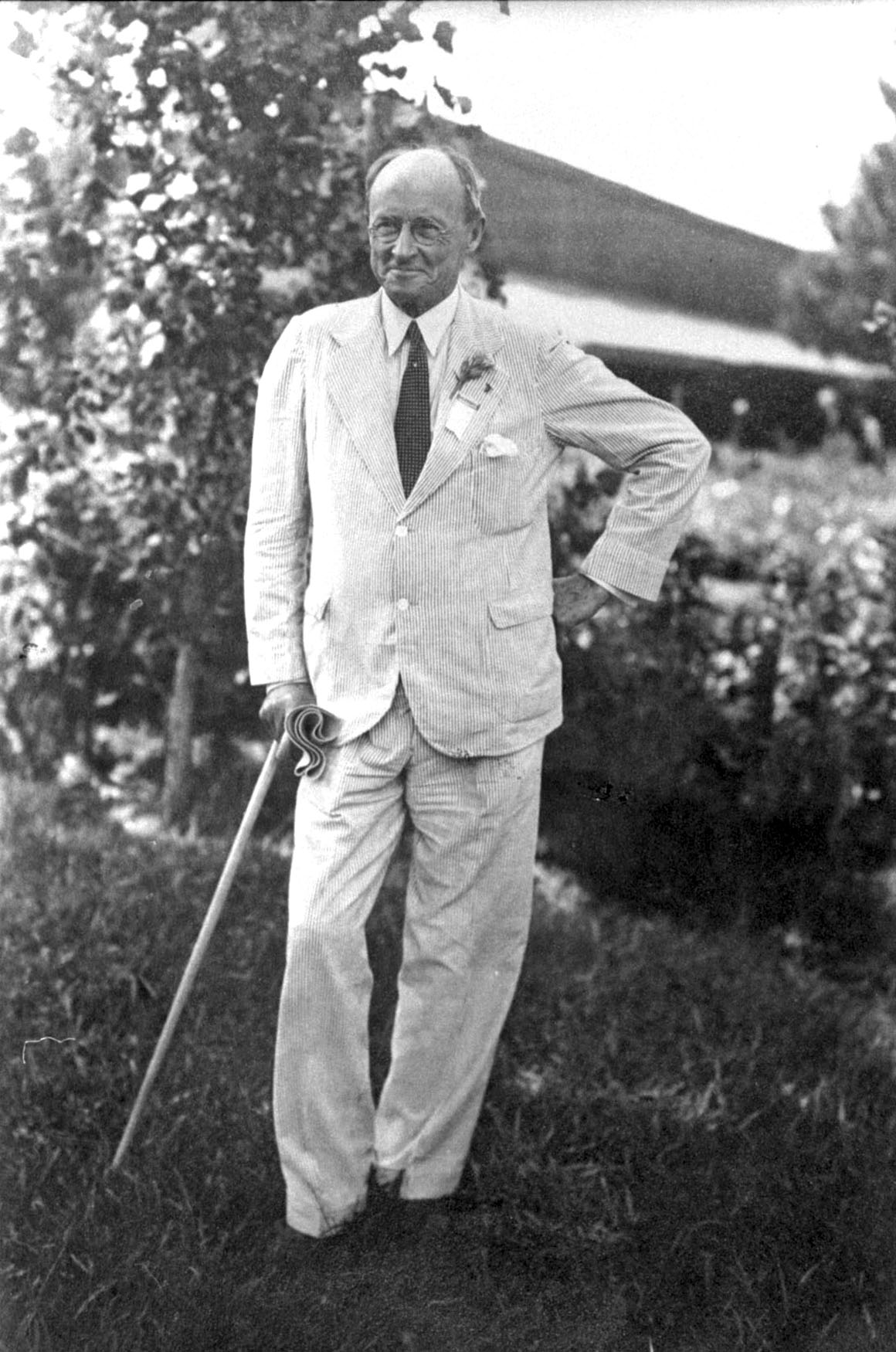
![Arthur Nelson. [State Historical Society of Missouri, Nelson Family Papers, R0252]](/sites/default/files/styles/article_header_image/public/2026-02/2.-nelsons-dream-village.jpg?itok=7RqMUo1g "Arthur Nelson. [State Historical Society of Missouri, Nelson Family Papers, R0252]")
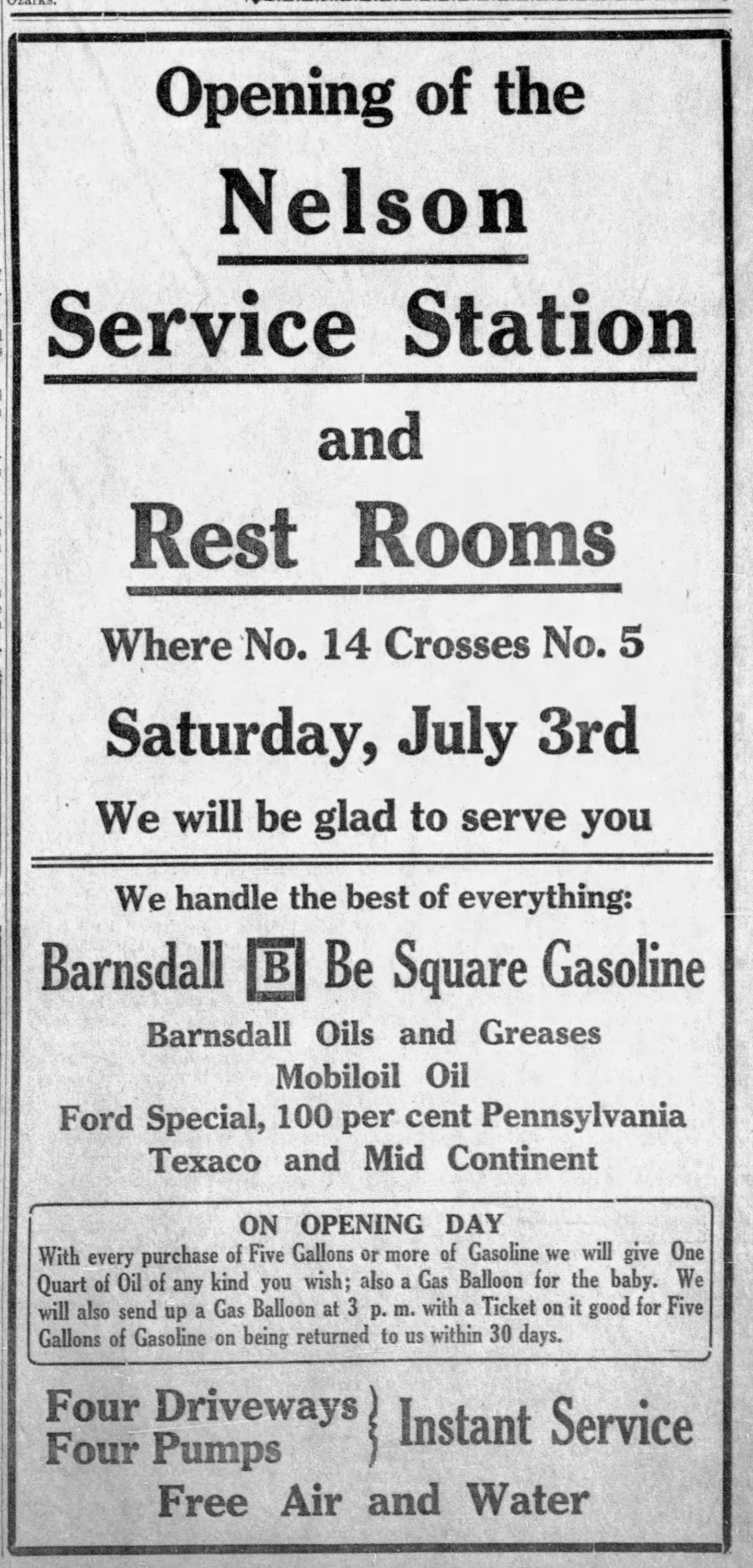
![An ad from the July 1, 1926, edition of the Lebanon Rustic-Republican announcing the opening of Nelson Service Station and Rest Rooms. [State Historical Society of Missouri, Newspaper Collection]](/sites/default/files/styles/article_header_image/public/2026-02/3.-nelsons-dream-village.jpg?itok=4ruEPURl "An ad from the July 1, 1926, edition of the Lebanon Rustic-Republican announcing the opening of Nelson Service Station and Rest Rooms. [State Historical Society of Missouri, Newspaper Collection]")
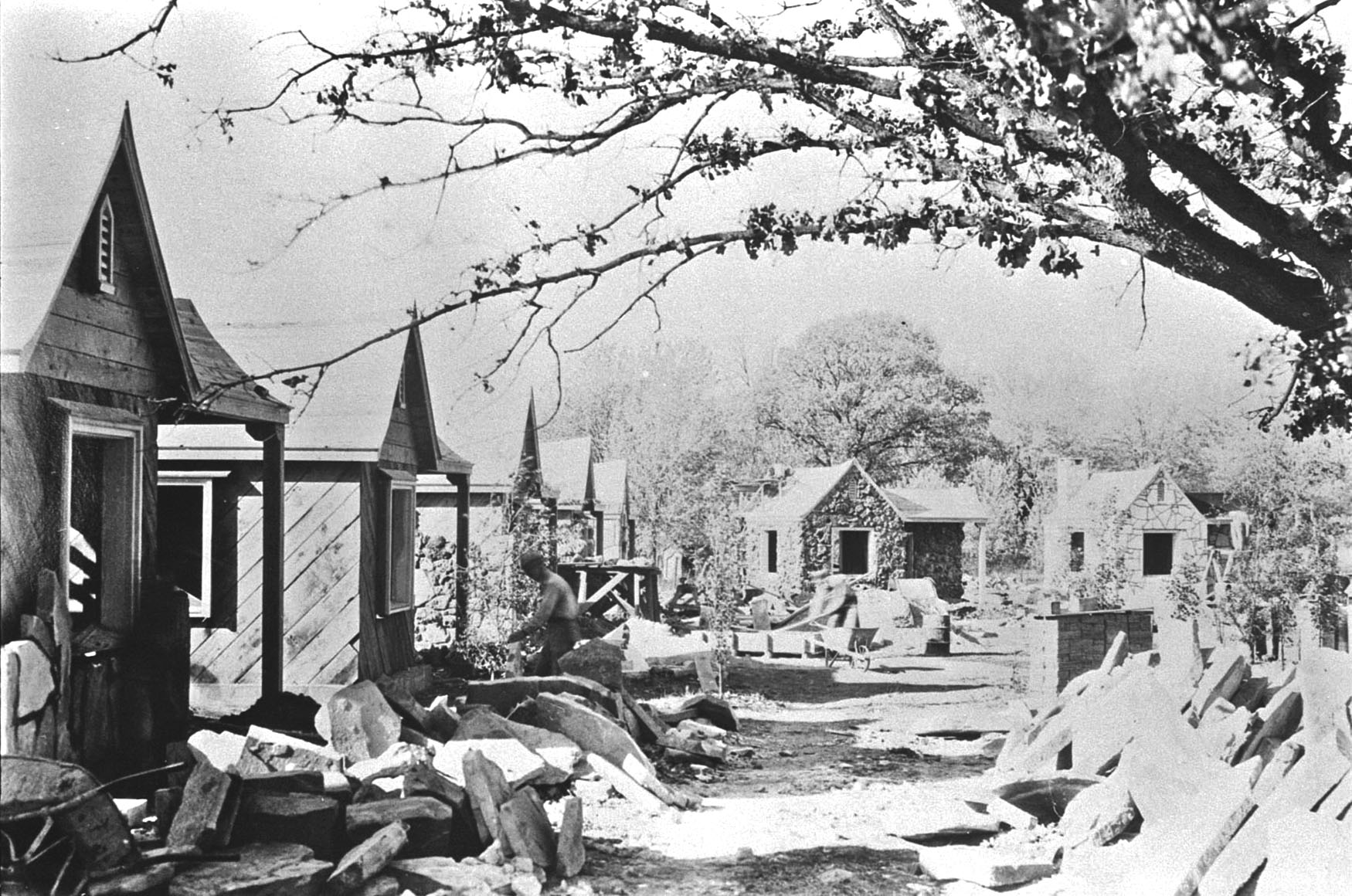
![Rock and stone cabins under construction on the grounds of Nelson’s grand enterprise in Lebanon. [State Historical Society of Missouri, Nelson Family Papers, R0252]](/sites/default/files/styles/article_header_image/public/2026-02/4.-nelsons-dream-village.jpg?itok=KtWMCawf "Rock and stone cabins under construction on the grounds of Nelson’s grand enterprise in Lebanon. [State Historical Society of Missouri, Nelson Family Papers, R0252]")
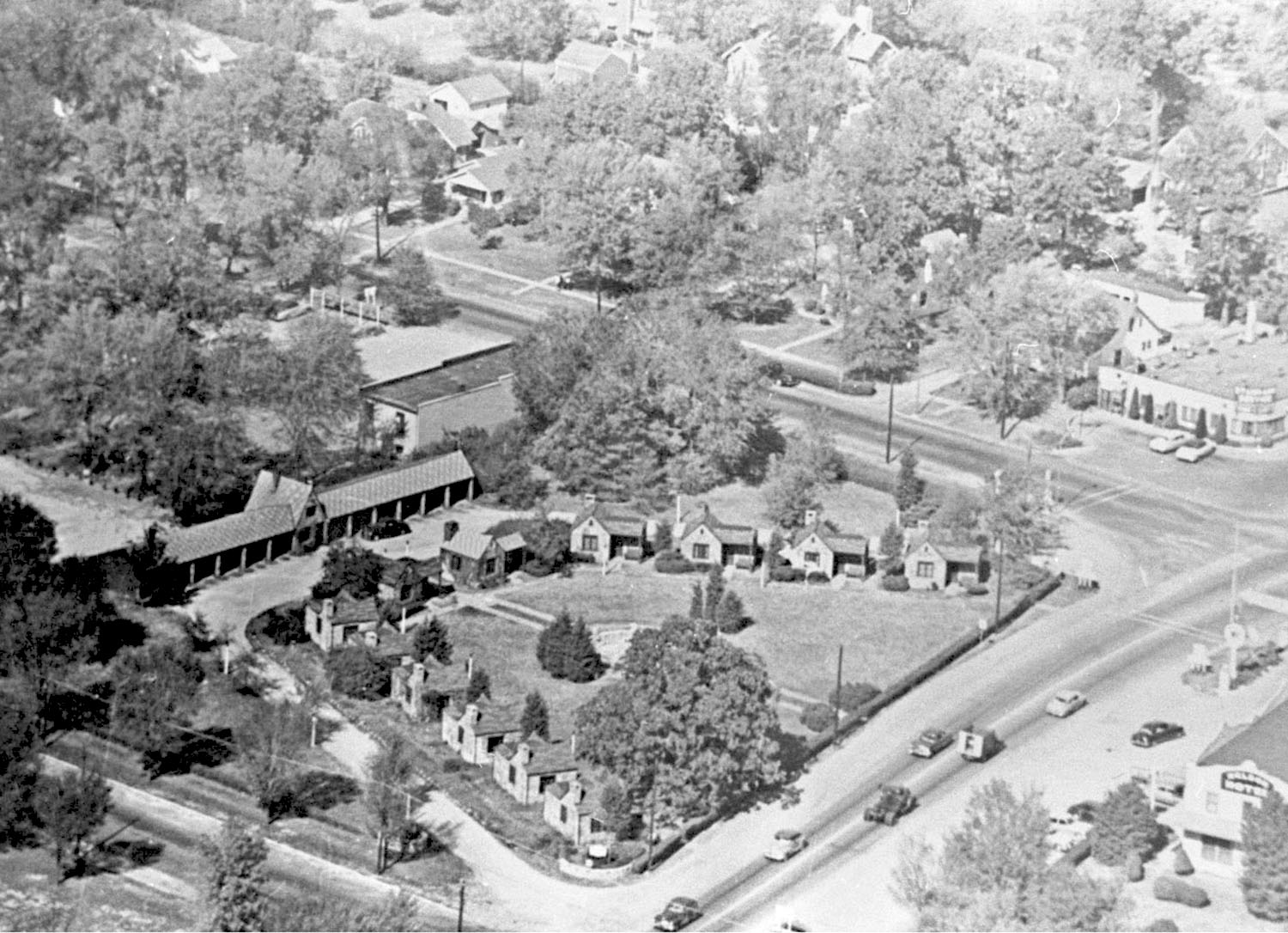
![Nelson’s Dream Village as seen from the air. [State Historical Society of Missouri, Nelson Family Papers, R0252]](/sites/default/files/styles/article_header_image/public/2026-02/5.-nelsons-dream-village.jpg?itok=GzNp5Tav "Nelson’s Dream Village as seen from the air. [State Historical Society of Missouri, Nelson Family Papers, R0252]")
At the intersection of Route 66 and Highway 5 in Lebanon, Nelson’s Dream Village was one of the finest examples of early twentieth-century roadside entrepreneurialism in Missouri. Its founder, Arthur T. Nelson, may not have been a native Ozarker, but during his lifetime the progressive businessman exerted substantial influence on Laclede County, the Ozarks, and Missouri through his family’s economic enterprises and his public service to the state.
In 1882 Nelson’s parents, Absalom and Nancy Jackson Nelson, moved from New York to Laclede County, where his father established an apple orchard that served as the foundation of the family’s wealth. To reach markets beyond Missouri, Absalom Nelson built a barrel manufacturing plant to ship his produce on the Frisco railroad. As Ozarks scholar Milton D. Rafferty observed, “Nelson’s efforts led to a region-wide expansion of the term, ‘Land of the Big Red Apple.’”
When Absalom Nelson died in 1901, Arthur assumed leadership of his family’s wide-ranging enterprises. He did not rest on his laurels. Passionate about agriculture and horticulture, Arthur Nelson stayed abreast of the latest developments and experimented with new varieties of apples. The Ozark Plateau Company, which Nelson also inherited, owned 160,000 acres of land in Camden, Dallas, Laclede, Pulaski, and Webster Counties. At his direction, it reportedly sold more than 75,000 acres by 1915. Nelson also wisely diversified his business interests. He owned a stake in the Laclede County Telephone Company, served as president of the Sleeper Canning Company, helped organize the Lebanon Creamery Association, and served on the board of directors for the Frisco Land and Emigration Company. In tandem with his own personal business interests, Nelson served on the boards of the State Horticultural Society, State Board of Agriculture, State Highway Commission, State Fair Board, and State Penal Board.
Like many progressives during the early twentieth century, Nelson recognized that modern roads were essential to economic growth and his own business’s continued success. In 1909 he purchased his first automobile and, together with his wife, Elizabeth, and son, Frank, embarked on the “first across-the-country car trip out of Lebanon” to Chautauqua, New York, in 1914. When they returned home after an arduous journey over rough, dusty roads that turned into muddy bogs after rainstorms, Nelson became an outspoken Good Roads advocate and traveled the state urging his fellow Missourians to support the creation of a modern road system. As Lebanon local historian Frances Ethel Gleason observed, “The number of cars in Lebanon increased rapidly each year and others were encouraged to take week-end trips and trans-continental tours, until by the 1920s the churches were well-nigh deserted during the summer months. By 1921 there were 873 cars in Lebanon, and a number throughout the county.” Nelson undoubtedly recognized the significance of the new automobile age just as the era of the Land of the Big Red Apple was ending. In the 1920s, locals began razing the old orchards that had once brought prosperity to Lebanon due to the encroachment of disease and high shipping costs.
Thus when highway engineers laid out State Highway 14, which preceded Route 66, across Nelson’s orchards south of Lebanon, he did not fight the road. Instead, he donated a portion of his property for the highway. Nelson’s only child, Frank, came up with the idea to open a service station along the new road. The family became pioneers on the new frontier of American roadside commercial culture when, on July 3, 1926, Nelson Service Station and Rest Rooms opened at the intersection of Route 66 and Highway 5. As the number of motorists on the highway increased, the Nelsons opened additional business ventures centered around the service station. They added a hamburger stand, tourist camp with tents and bathhouse, Top o’ the Ozarks Inn café, and eventually twelve cottages. The Nelsons soon demolished the inn and replaced it with a hotel and restaurant, Nelson Tavern, in 1931. The handsome Spanish Revival hotel was indicative of the architectural style’s resurgence in 1920s and 1930s America. The service station was remodeled to match the hotel’s design and to include a modern garage. It was connected to the hotel, where guests could dine, reserve a room, patronize the gift shop, and even visit Arthur Nelson in his private office. As one might expect of a horticultural devotee, the property featured lavish landscaping. During one season alone, fourteen thousand flower bulbs were planted. Gladiolas, peonies, irises, dahlias, and hollyhocks as well as native trees like dogwood and sassafras greeted visitors across the grounds. One Lebanon newspaper dubbed the venture “Nelsonville.”
By 1929 the Laclede County Republican insisted, “Of the thousands on thousands of travelers who have pursued the concrete thread between Chicago, Illinois, through Missouri, Oklahoma, Texas, New Mexico, Arizona, and California, to Los Angeles, probably more of them hold in memory ‘Nelsonville,’ Col. Arthur T. Nelson’s cottages, artistic filling station, the Top o’ the Ozarks Inn, the flowers and trees and beautiful surrounds than remember any other place on the great highway.” Such was Nelsonville’s allure that “Tourists, on return trips, have been known to extend their day’s journey 100 miles in order to make the Nelson camp ground for the night.”
Just as Arthur Nelson experimented with landscape design, he constantly added to and expanded upon the accommodations and services his business offered. In 1934 he sketched a village he envisioned during a dream and immediately sought to make it a reality. “Nelson’s Dream Village,” as it became known, was built across the highway from Nelson Tavern. Twelve one-bedroom cabins, made from carefully selected local rock and stone, were constructed around a landscaped courtyard. At its center was a pool twenty-six feet in diameter with a fountain in the center lit with multicolored lights. For an hour each evening the fountain’s ten individual streams of water would dance to semiclassical and waltz music amidst the twinkling lights. Each cabin was thirteen by thirteen feet with a rock fireplace and chimney as well as a radio. Behind the cabins was a line of twelve individual garages. The business demonstrated Nelson’s willingness to take risks during the depths of the Great Depression.
Arthur Nelson’s advocacy for Good Roads rewarded him handsomely in ways he likely never imagined. As Gleason noted, Route 66 “gave Lebanon direct overland connection with the Atlantic and Pacific Oceans,” while “a series of lesser highways” allowed “Lebanonites to reach any part of the country on one of the numerous buses that pass through the town, morning, noon, and night.” After Arthur Nelson died from a suspected heart attack on October 5, 1936, Frank Nelson and his wife, Dorothy, operated the Nelson Hotel and Nelson’s Dream Village until November 1944. At that time, they leased it to C. Lynn West, who, together with his wife, operated the business for a decade.
Despite the demands of World War II on American society, Nelson’s businesses remained busy due in part to the opening of Fort Leonard Wood in nearby Pulaski County. Upon the Wests’ retirement, the Nelsons briefly resumed management of the businesses before permanently closing them. In July 1958 the property was sold and the hotel and service station were demolished to make way for a Consumers grocery store. The passage of the Federal Aid Highway Act of 1956 and the Highway Revenue Act of 1956 led to the creation of Interstate 44; the new road quickly displaced Route 66 as the main highway for motorists traveling across Missouri from St. Louis to the Missouri/Oklahoma line. Nelson’s Dream Village survived until 1977 when it, too, was razed. Nothing remains of Arthur Nelson’s roadside entrepreneurial visions, but they hold an indisputable place in the history of the storied Mother Road.
Chubb, Elliott. “Nelson’s Dreams: A History of the Nelson Enterprises on Route 66.” Show Me Route 66 Magazine 5, no. 1 (June 1993).
Jakle, John, Keith Sculle, and Jefferson Rogers. The Motel in America. Baltimore: Johns Hopkins University Press, 1996.
Nelson Family Papers, 1879-1973. R0252. State Historical Society of Missouri, Rolla Research Center.
Rossiter, Phyllis. “A Dream Village on the Main Street of America: Part Two of Nelson Family in Lebanon.” Briarwood (March 1989).
Published February 3, 2026; Last updated September 18, 2026
Creative Commons Attribution-NonCommerical-ShareAlike 4.0 International (CC BY-NC-SA 4.0)