 the State Historical Society of Missouri
![Oasis Night Club. [State Historical Society of Missouri, Newspaper Collection, Joplin News Herald, November 29, 1937]](/sites/default/files/styles/article_header_image/public/2026-06/1.-oasis_joplin_news_herald_1937_11_29_11.jpg?itok=hQ5jL3oG "Oasis Night Club. [State Historical Society of Missouri, Newspaper Collection, Joplin News Herald, November 29, 1937]")
![The Jasper County, Missouri/Cherokee County, Kansas state line sign. [Courtesy of the Galena Mining and Historical Museum, Galena, Kansas]](/sites/default/files/styles/article_header_image/public/2026-06/3.-state-line-image-from-galena-ks-museum-waiting-for-permission.jpg?itok=AgCgj0Rf "The Jasper County, Missouri/Cherokee County, Kansas state line sign. [Courtesy of the Galena Mining and Historical Museum, Galena, Kansas]")
![1937 Oasis Night Club ad. [State Historical Society of Missouri, Newspaper Collection, Joplin News Herald, December 1, 1937]](/sites/default/files/styles/article_header_image/public/2026-06/4.-joplin_news_herald_1937_12_01_9.jpg?itok=Dv3rKZQ1 "1937 Oasis Night Club ad. [State Historical Society of Missouri, Newspaper Collection, Joplin News Herald, December 1, 1937]")
![Oasis Roller Dome grand opening ad from 1938. [State Historical Society of Missouri, Newspaper Collection, Joplin Globe, November 6, 1938]](/sites/default/files/styles/article_header_image/public/2026-06/5.-joplin_globe_1938_11_06_21.jpg?itok=QTW22Y3r "Oasis Roller Dome grand opening ad from 1938. [State Historical Society of Missouri, Newspaper Collection, Joplin Globe, November 6, 1938]")
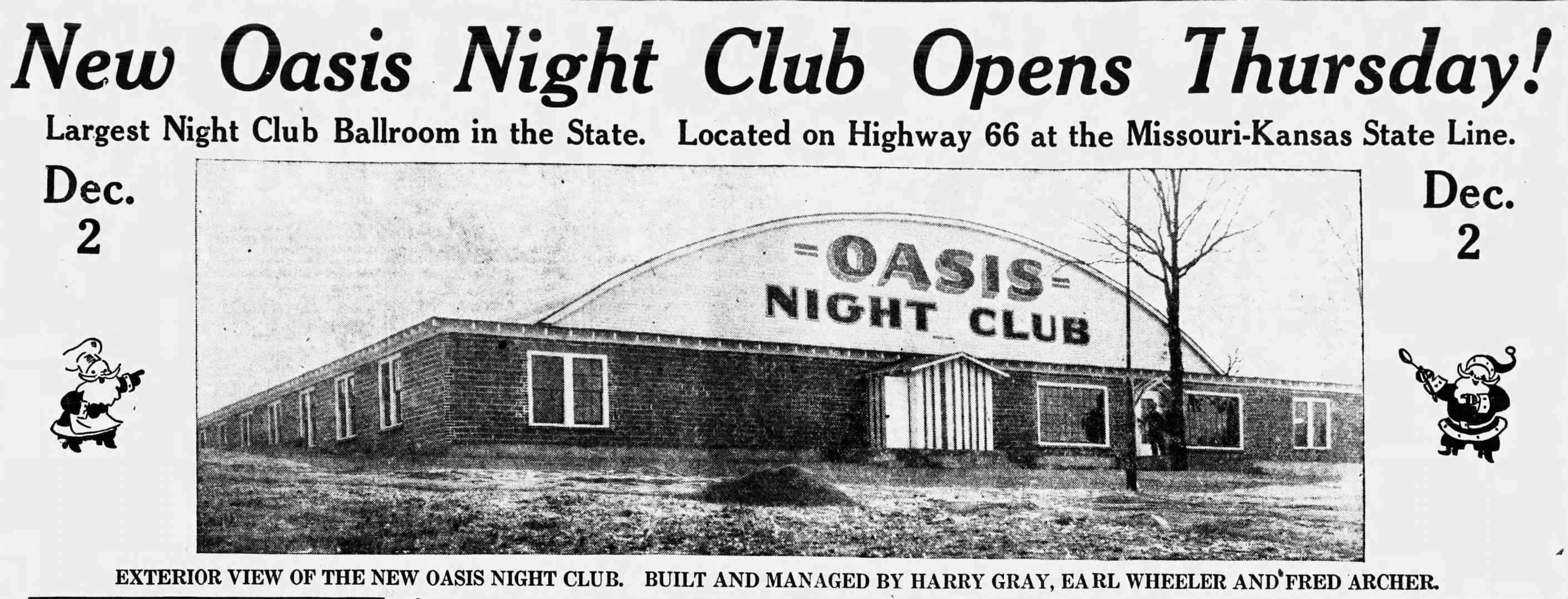
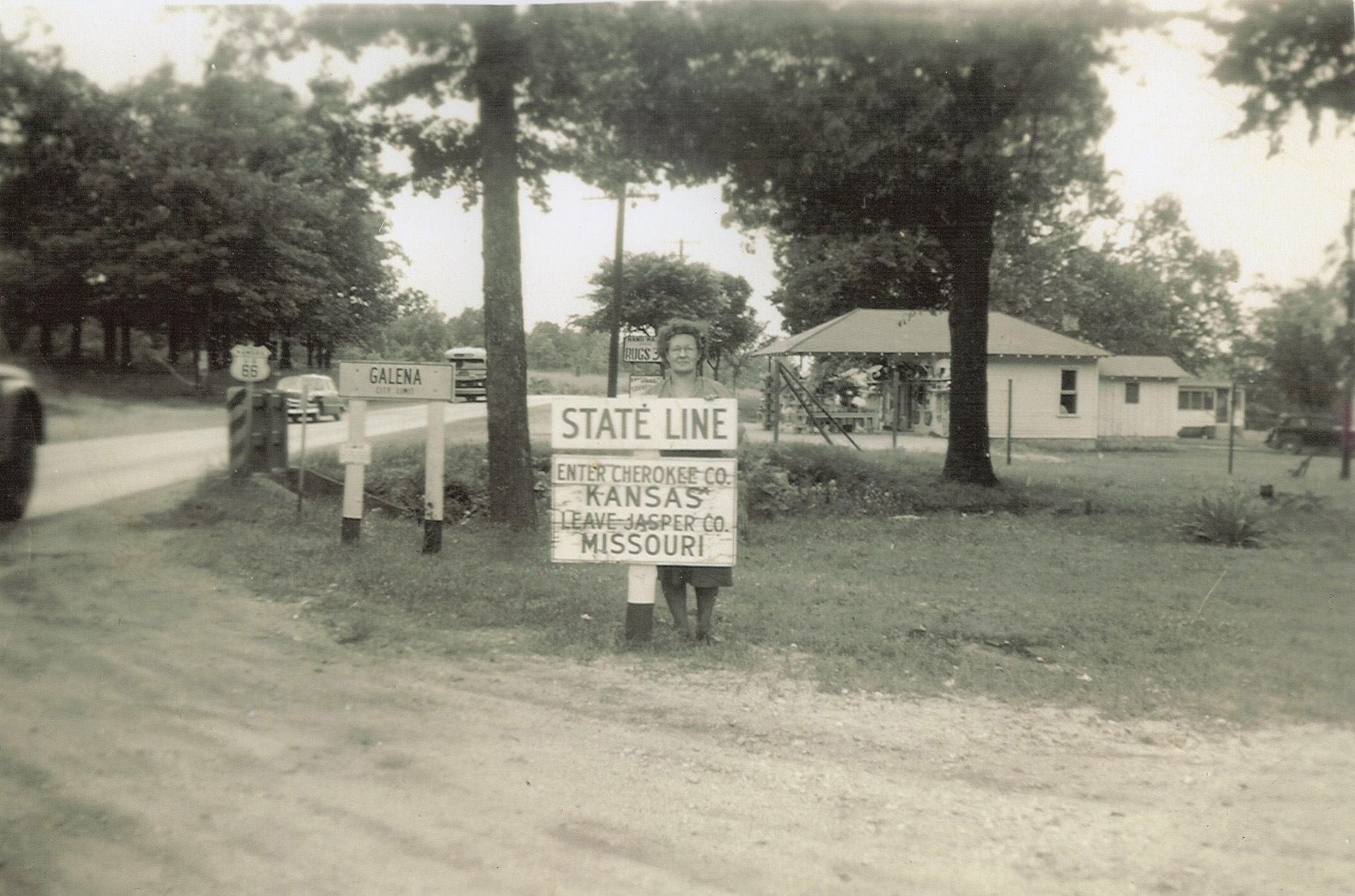
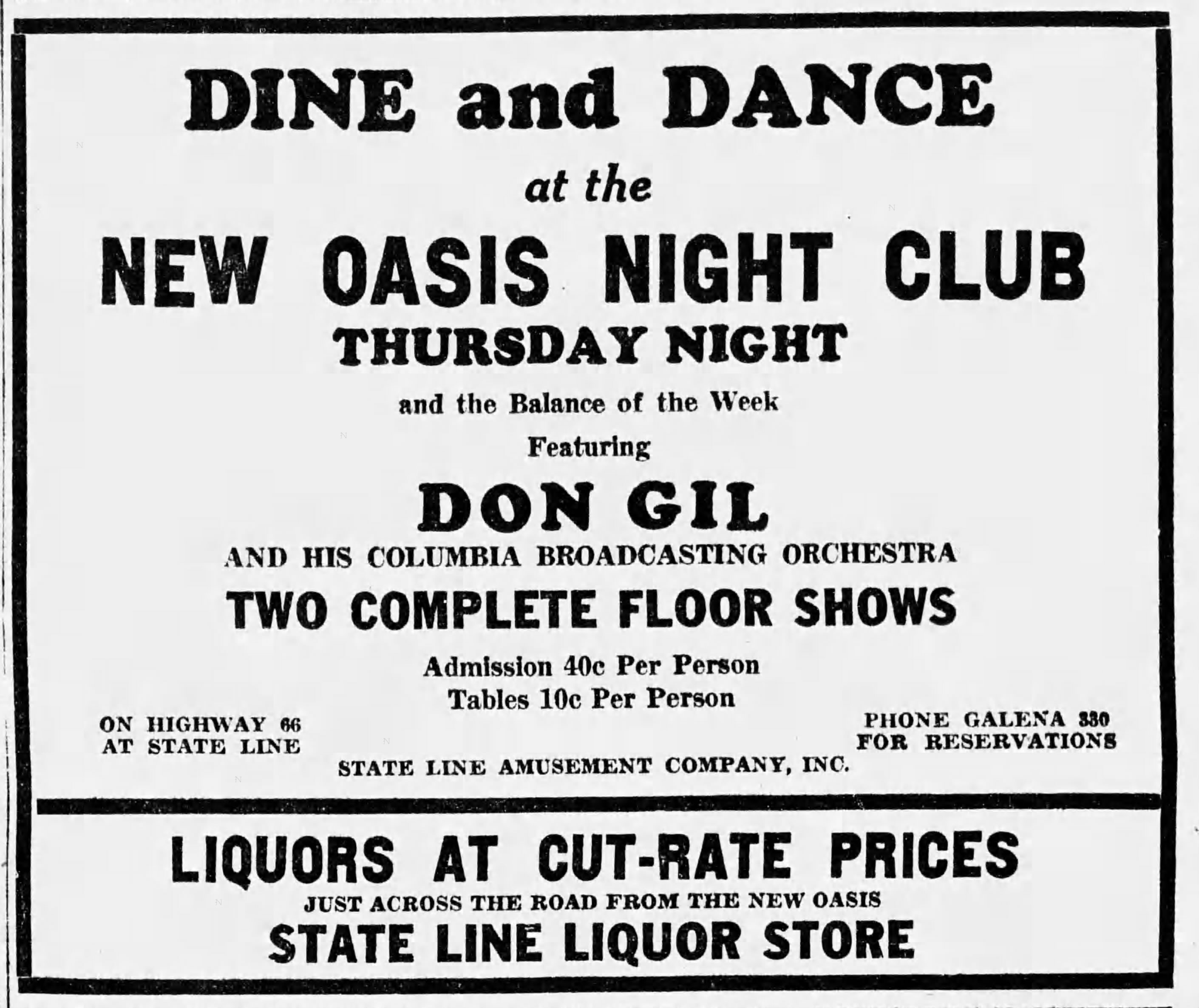
The Oasis Night Club in Central City, Missouri, was one of the last businesses westbound travelers on Route 66 could patronize before leaving the state and crossing into Kansas. It was one of the more unique homegrown businesses that sprang up along Route 66 in Missouri. Touted as the “Largest Night Club Ballroom in the State,” it opened on December 2, 1938, amid the giant chat piles of Jasper County and the Tri-State Mining District. Like the other handful of businesses perched along the state line, the Oasis catered to travelers and locals, especially Kansans, as Kansas prohibited the sale of alcohol until 1949.
Built at a reported cost of $30,000 and managed by Fred Archer, Harry Gray, and Earl Wheeler under the name State Line Amusement Company, the Oasis boasted that its dance floor could accommodate a thousand couples. Contemporary news accounts indicate it was 100 by 120 feet in size. When not dancing, customers could dine and indulge in alcoholic beverages. The opening acts on its first night in business were Don Cil and his fourteen-piece Columbia Broadcasting Orchestra and the entertainer Madelon. Over time the Oasis booked acts like Bob Wills and His Texas Playboys as well as Wills’s brother, Johnnie Lee and the Rhythmaires. The Oasis also hosted African American performers such as Don Clifton’s Collegians, a Mississippi swing band, and the dance act Riff and Raff.
Harry Gray, a Jasper County native, owned area liquor stores and operated taverns. He and Fred Archer ran two liquor stores and a filling station on the Missouri-Kansas line. The Oasis might have been their most ambitious endeavor, but it fit in with Central City’s reputation as a “lively, colorful community.” According to one long-time resident, “there was a honkeytonk [sic] every half mile between [Central City] and Joplin, frequented by locals, travelers, and miners from across the state line.” Central City could be rough; in 1933 a local athletic coach was murdered in the parking lot of a business there.
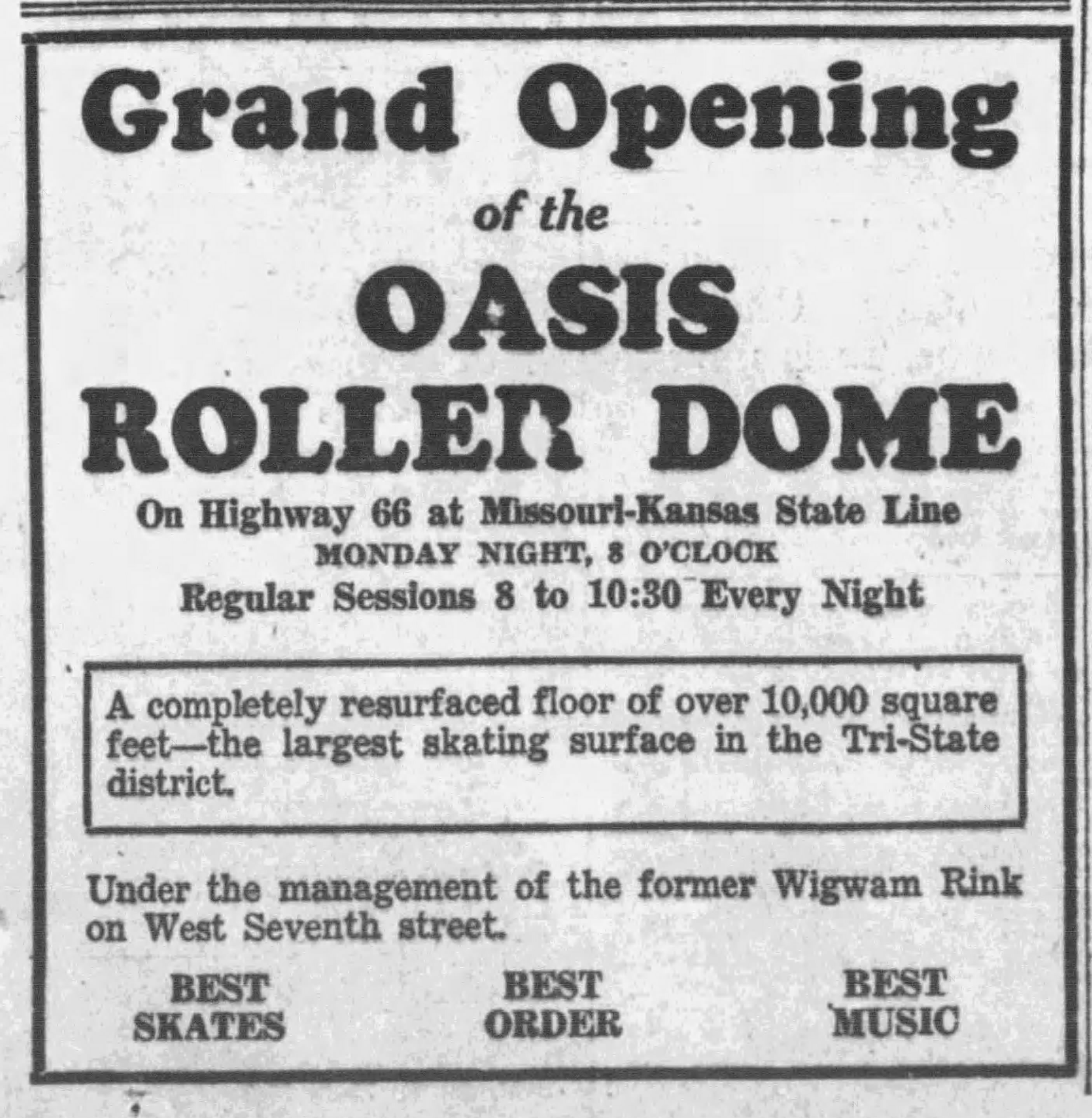
Liquor, dancing, and dining were not enough to make the nightclub successful, however. It closed less than a year after it first opened but soon reopened as the Oasis Roller Dome. The ten-thousand-square-foot skating facility featured what was arguably the largest skating rink in the Tri-State region. Roller hockey teams from Carthage and Joplin battled it out in matches held at the rink. It, too, must have been unsuccessful, as the Oasis once again became a night club in early 1939. By 1941 the business was marketed as the Oasis Ballroom. Shortly thereafter the club’s owners seized upon another opportunity for the building.
In 1942 the Oasis building was leased to the Old Rock Distilling Company, later reorganized as the Ozark Mountain Distilling Company, for use as a bottling plant and warehouse. Three years later the building was destroyed by fire, ending the former dance hall’s brief existence. Central City, too, eventually lost its spark. As noted in a 1993 historic survey, when Route 66 was bypassed in the late 1960s, most of Central City’s businesses closed. Although it did not survive for more than a decade, the Oasis Night Club is illustrative of the wide-ranging ambitions of small-town entrepreneurs who sought to fill unexpected niches along Route 66.
Baker, T. Lindsay. Eating Up Route 66: Foodways on America’s Mother Road. Norman: University of Oklahoma Press, 2022.
Joplin Globe.
Joplin News-Herald.
Published June 25, 2026
Creative Commons Attribution-NonCommerical-ShareAlike 4.0 International (CC BY-NC-SA 4.0)