 the State Historical Society of Missouri
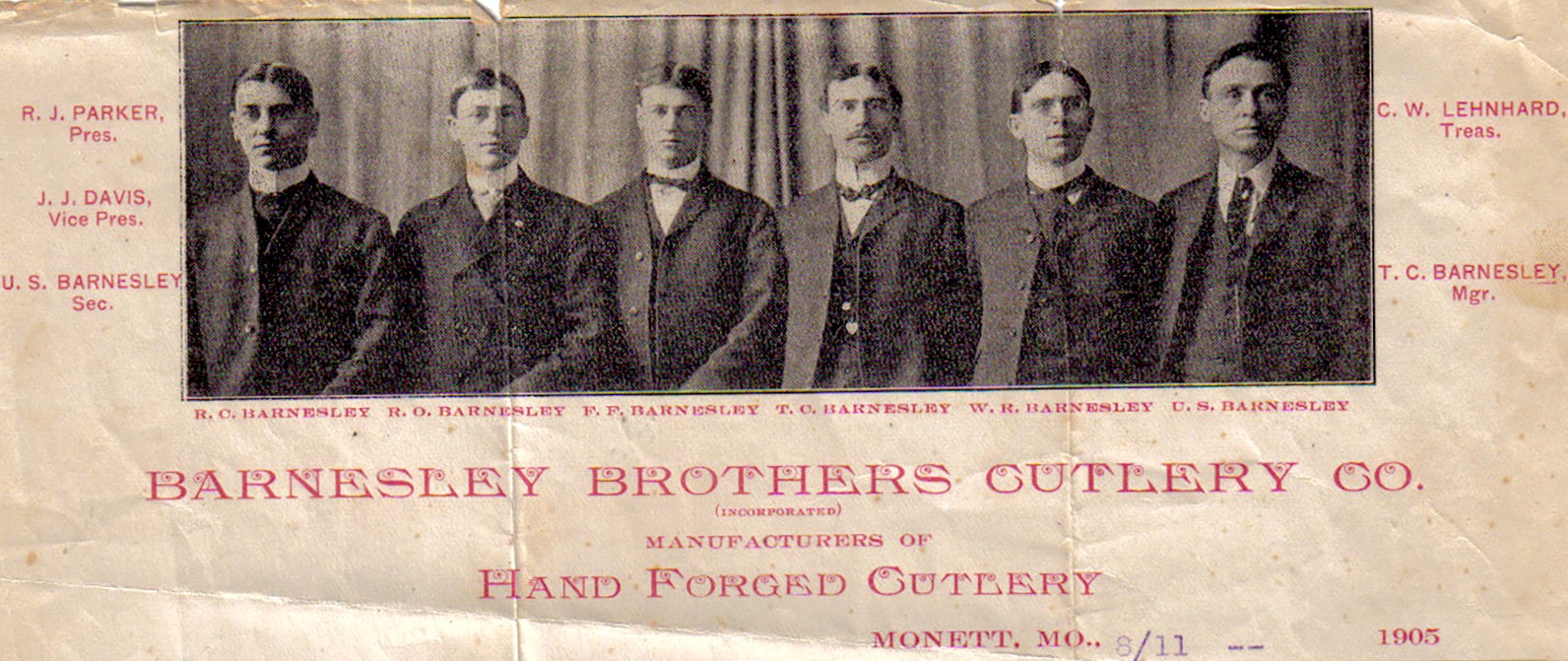
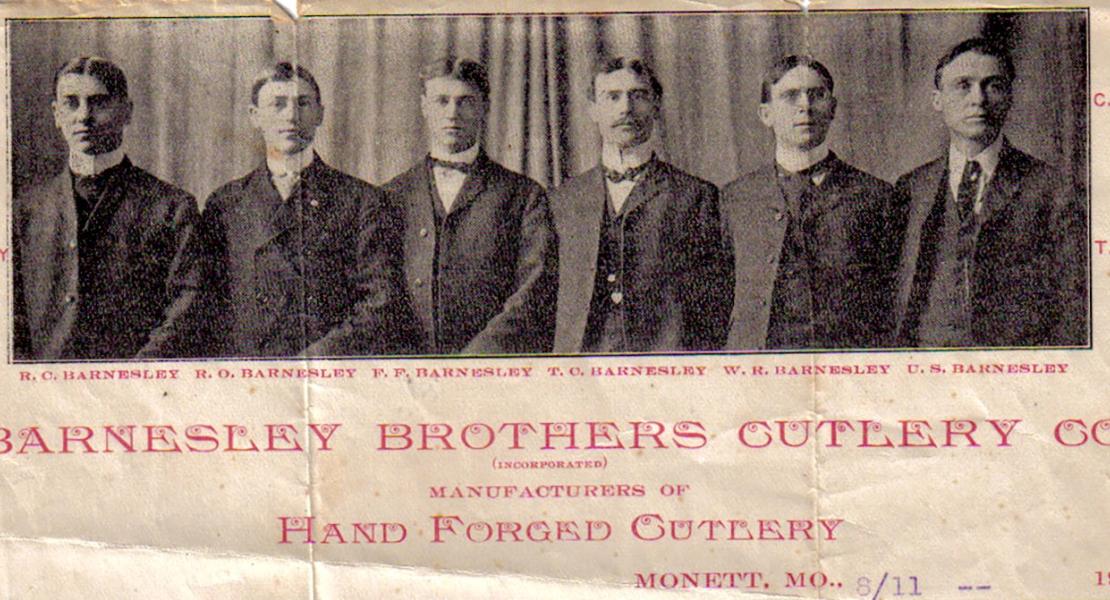
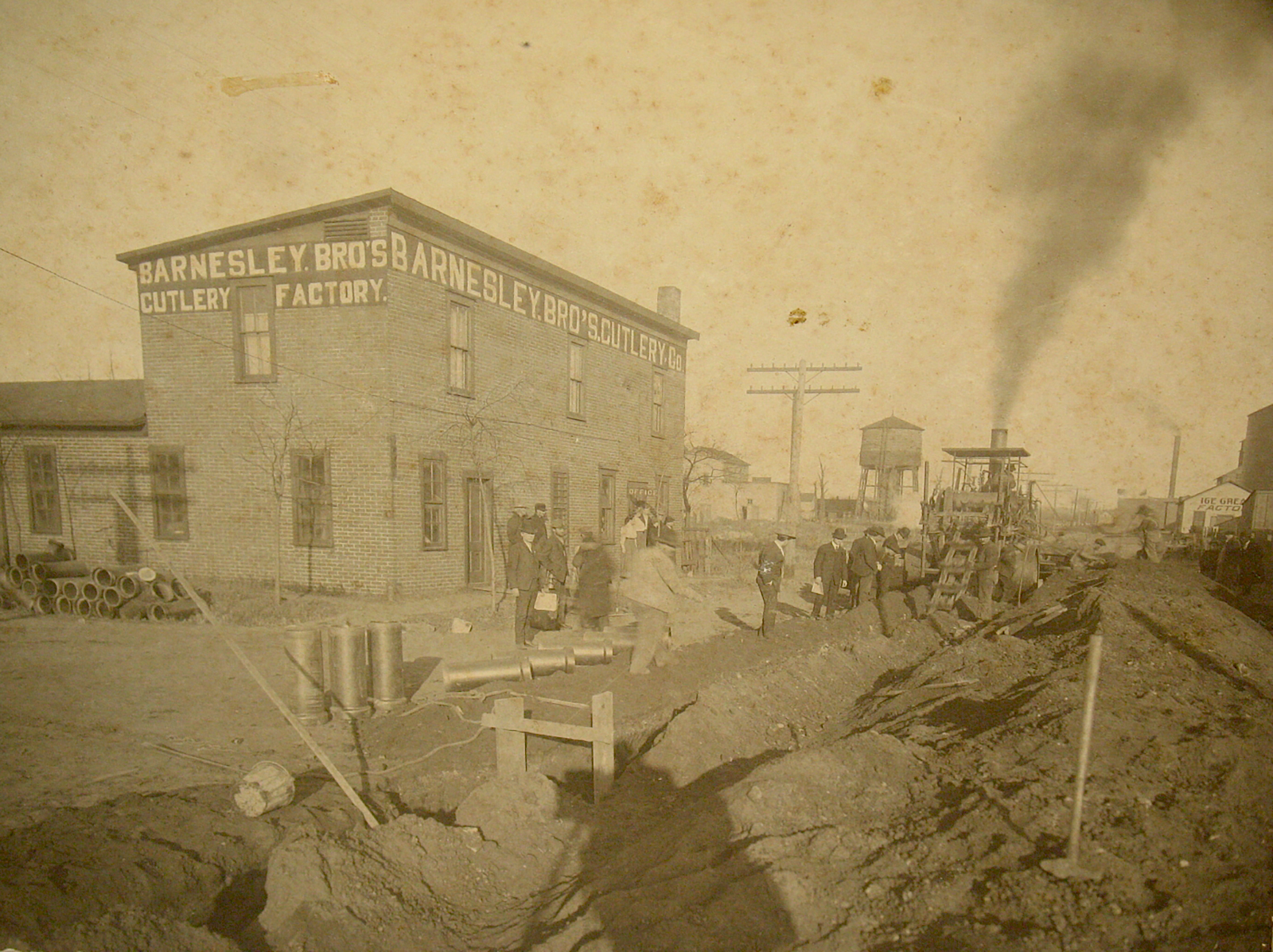
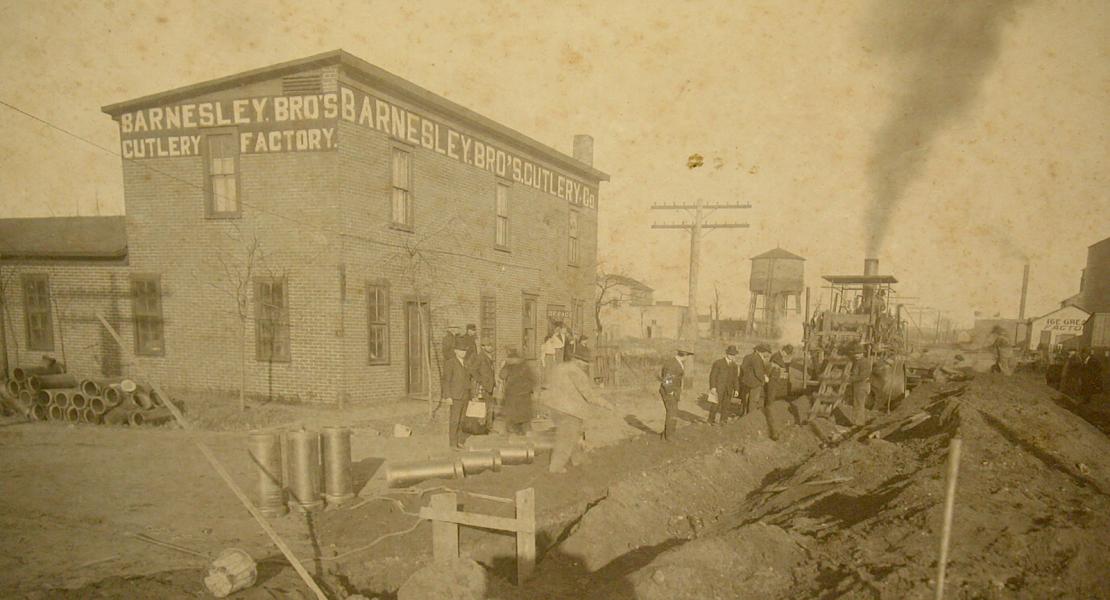
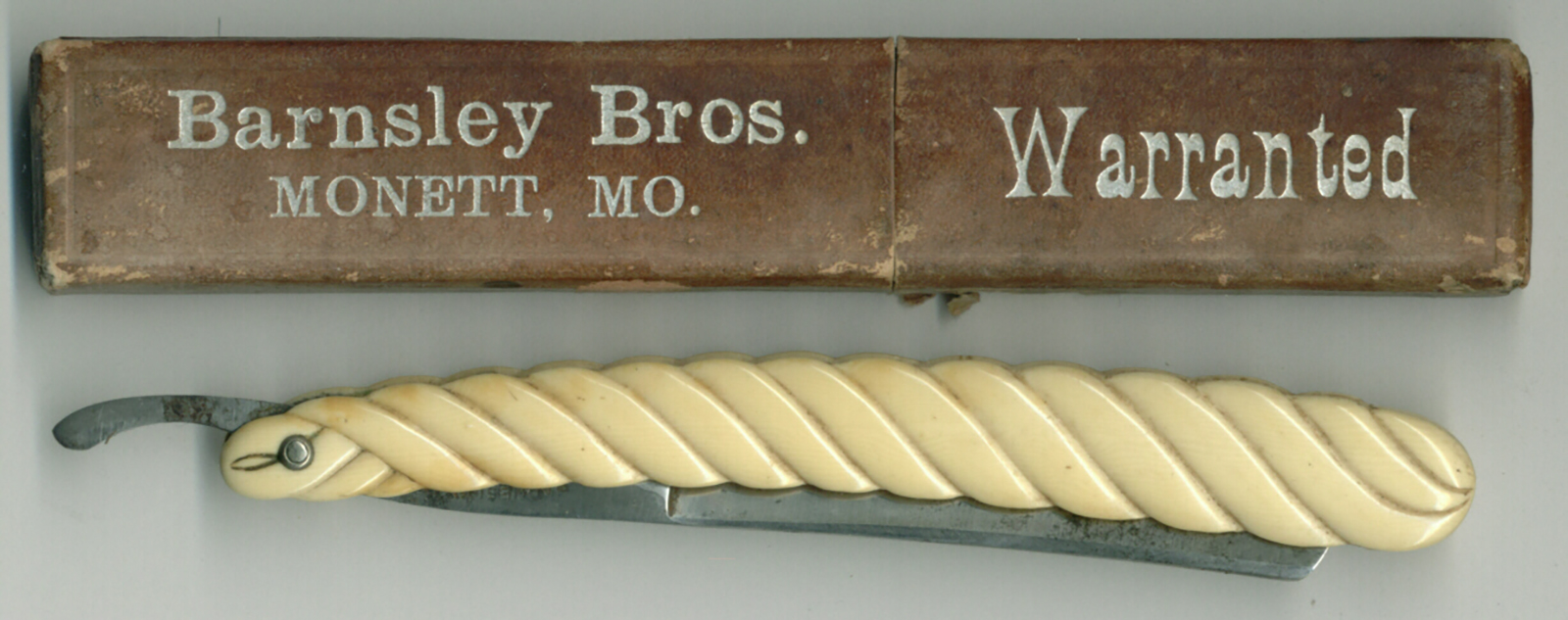
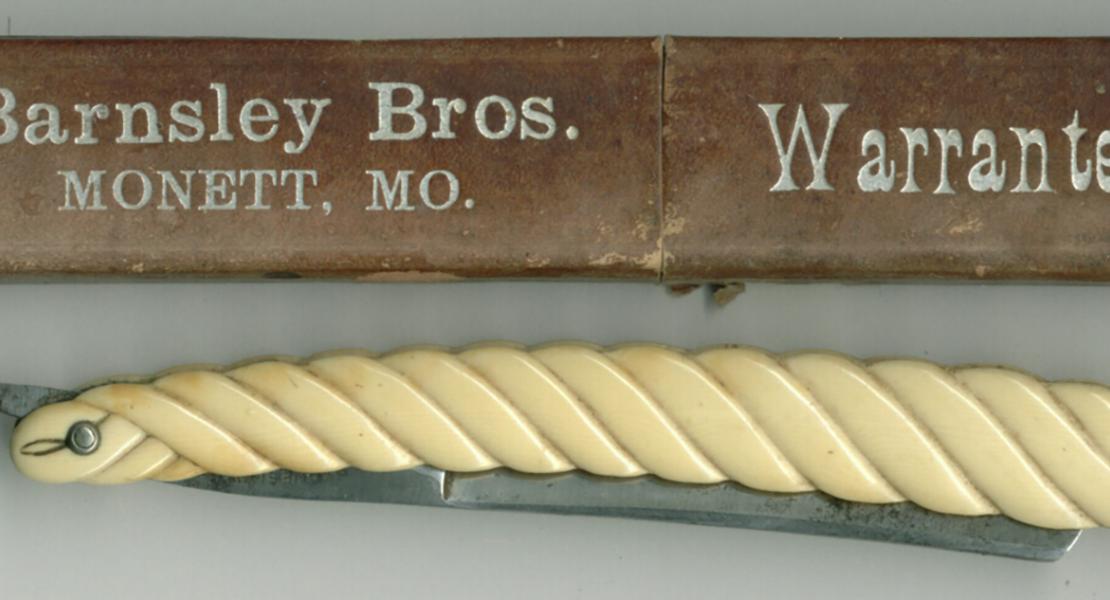
The Barnsley Brothers Cutlery Company was a manufacturer and wholesaler of knives, straight razors, scissors, and other cutting tools. Founded in Monett, Missouri, in late 1903, the company promoted itself as the handiwork of six brothers and the first full-line manufacturer of cutlery west of the Mississippi. While the oldest brother, Ulysses, ran the factory and corporate offices in Monett, his five younger brothers fanned out across the American West selling the company’s products. Financially, the company prospered, but it ultimately succumbed to the restlessness and entrepreneurial drive of the brothers, who used their profits to fashion alternative careers in ranching, land, timber, and oil. The company left Monett in January 1915, and after an abortive attempt to reestablish itself in Montana, ultimately dissolved. Today the Barnsley name survives only in the memory of knife and razor collectors.
Ulysses Sheridan Barnsley, the oldest of the six Barnsley brothers, was born in Randolph County, Indiana, on February 20, 1868, to Union veteran Nelson Barnsley and his wife, Elizabeth (Addington) Barnsley. The family had moved to the Esrom community in Barton County, Missouri, by 1873 and eventually included six sons and several daughters. Ulysses’ five younger brothers—Walter, Thomas, Foster, Richard, and Roscoe—were all born in Missouri. The family changed the spelling of its last name from Barnesley to Barnsley sometime around 1905 or 1906.
In 1900, Ulysses owned a store in Esrom and served as postmaster. He had also launched his career as an entrepreneur and business promoter by building a telephone company that stretched from Lamar and Carthage, Missouri, and to Pittsburg, Kansas. In May 1900 his store at Esrom burned, taking with it the main office of his telephone company. Realizing that the era of small, independent telephone companies was coming to an end and faced with the necessity and difficulty of forming a larger network, he sold out.
By November 1900 he was a traveling salesman for an unnamed cutlery company. Later, in August 1901, he was a salesman for Case Brothers of Little Valley, New York. Within the next year or two, all of his brothers joined him. The Cases had sold handcrafted knives from the back of a wagon for years and built their first factory in 1900. In time, Case became a preeminent American pocketknife manufacturer. By June 1903, the Barnsley brothers were important enough in the organization that J. I. Case paid a personal visit to southwest Missouri.
While the Barnsley brothers were learning the cutlery business from the Case brothers, the Monett Cutlery Company opened a factory sometime around August 1902 to manufacture butcher knives and razors. Very little is known of its operations, but on December 28, 1903, Thomas, Richard and Foster Barnsley of Lamar bought the factory for $4,000, then acted immediately to expand its line. In January 1904 two of the brothers went east to buy materials and machinery. While there, they visited Fremont, Ohio, sometimes called the cutlery capital of America, and hired mechanics experienced in cutlery production. By mid-year, the Barnsley line included razors, pocketknives, and butcher knives, and the brothers had ambitions to expand into scissors and other hardware items. Already faced with a $1,000 per month backlog of unfilled orders, they began discussing the need to expand their facilities. Ulysses Barnsley later said that the company had sales of $27,000 in its first year.
The company had barely established itself in Monett, however, when it threatened to move. During his business career, Ulysses Barnsley was a relentless promoter of new businesses, always trying to raise capital for some new enterprise, beginning with the telephone company and including coal exploration, cutlery, early airplanes, shipping containers, farm machinery, and mailing machines. One lesson he learned early was that smaller towns had a hunger for manufacturing jobs and could be played off against each other. His constant refrain was, “If your town doesn’t want and support it, some other town will.” This was true of Monett and the cutlery factory.
In August 1904 newspapers in nearby Joplin announced that Barnsley Brothers were negotiating with the Joplin Club for financial concessions. The club’s committee on manufactures visited the Barnsley factory in Monett and announced that they were extremely pleased with what they saw. The club apparently offered the Barnsleys significant financial guarantees to move to Joplin, but by the end of September, the deal had fallen apart.
In negotiating a possible move to Joplin, the Barnsleys may have been too greedy or too obvious that they were playing one town against another, as possible moves to Springfield, Aurora, and Lamar were mentioned in the newspapers at the time. On the other hand, they may never have seriously intended to move and may simply have been trying to pressure Monett. In any event, in October 1904, Ulysses Barnsley announced that the company had enlarged its facilities in Monett. On December 5, 1904, the Barnsley Brothers Cutlery Company was formally incorporated with the Barnsley brothers owning 450 shares and Monett investors 50 shares. What the local investors paid for their interest in the company is unknown, but it was enough to silence further talk of moving.
Somewhere along the way, the company solved its capacity problem by simply ceasing to be a manufacturer and becoming a jobber. That is, it closed its factory and sold under the Barnsley name only products manufactured by others. When the change occurred is uncertain, but it may have been sometime in 1907 or 1908. As essentially a marketing company, it employed some fifteen traveling salesmen and did well. In July 1909, Ulysses Barnsley reported that the company had more than doubled its sales from 1904, doing “nearly $57,000 worth of business during the panic year of 1908 on a capital of $14,700.” At the time, a local post office had to generate at least $10,000 in revenue in order for the town to qualify for free home delivery of mail. In 1911, the Monett Times credited the shipping of Barnsley products with putting Monett over the top. The company claimed to be the town’s largest shipper both by parcel post and by railway express.
One notable aspect of the cutlery company’s history was that Ulysses Barnsley was a tireless entrepreneur and business promoter, but also a committed Socialist. Over a period of years, he was several times a candidate for state or local office on the Socialist ticket. When national Socialist leader Eugene Debs visited Monett in 1906, Barnsley introduced him to the audience. When he first tried to build an early airplane, the inventor was Henry Laurens Call, a noted Socialist author and lecturer from Girard, Kansas. Finally, in 1920, Barnsley was arrested for sedition in Arkansas for criticizing the imprisonment of Debs during World War I.
In one respect, Ulysses Barnsley’s political beliefs affected the cutlery company, inspiring its only known foray into direct marketing. The Appeal to Reason, published in Girard, Kansas, was America’s largest Socialist newspaper. On several occasions from late 1904 through 1907, it carried ads urging its readers to buy cutlery made by Socialists directly from the factory, cutting out the middleman’s profits. The return address was the “Co-operative Cutlery Company” of Monett, almost certainly a Barnsley creation.
From the beginning, Barnsley Brothers marketed itself as “the pioneer cutlery factory of the west,” and it frequently pointed out its advantage on freight rates compared to eastern manufacturers. As early as August 1904, Tom Barnsley remarked that the company had filled large orders in California and Oregon, and in the following years, newspapers frequently commented on the comings and goings of the younger brothers, including business trips to the Pacific Coast, Mexico, and Panama.
In the short run, this western strategy seems to have been a great success, but in time it may have led to the company’s undoing. As the Monett Star said in 1907, “Extensive traveling gave them [the Barnsley brothers] the opportunity of viewing all of the country open to the young man of push and energy.” They were not shy in taking advantage of what they saw. Newspaper accounts reported their speculation in Texas land and Idaho timber as well as their Texas cattle ranches and their successes in the oil industry. In 1907, Raleigh, Tom, Richard and Roscoe bought 20,000 acres of land in Webb County, Texas near Laredo, which they apparently saw as suitable for truck farming and fruit growing. Later oil and gas were discovered on the property. By 1928, a San Antonio newspaper called Richard Barnsley an “oil magnate,” and he publicly joked that he was now leasing for $1,000 an acre land that he had once tried unsuccessfully to sell for $10 an acre.
Despite their many business ventures, the younger brothers continued selling cutlery for the company until about 1910 or 1911, after which all except Foster faded out of the company picture. Ulysses Barnsley had become obsessed with early aviation. From 1908 to 1911, he was involved with three different efforts to build an airplane. One of these, the Holbrook-Dechenne, eventually flew and was entered in a few exhibitions at county fairs, but it was financially unsuccessful. In October 1913, Ulysses advertised his Monett home for sale and began a rapid series of family moves that ultimately ended with his divorced wife and family living in Colorado while he settled in Ozone, Arkansas, where he became a longtime real estate and timber broker.
Sometime in 1913, Foster Barnsley took over management of the company in Monett. He had by that time put down roots in the Pacific Northwest, and in January 1915 he announced that Barnsley Brothers would leave Monett for North Yakima, Washington. The company attempted to reestablish a manufacturing facility in Billings, Montana, but it was unsuccessful, and the company dissolved. The Barnsley Brothers name faded from local memory, but its knives remain popular among collectors.
Published June 24, 2026
Creative Commons Attribution-NonCommerical-ShareAlike 4.0 International (CC BY-NC-SA 4.0)