 the State Historical Society of Missouri
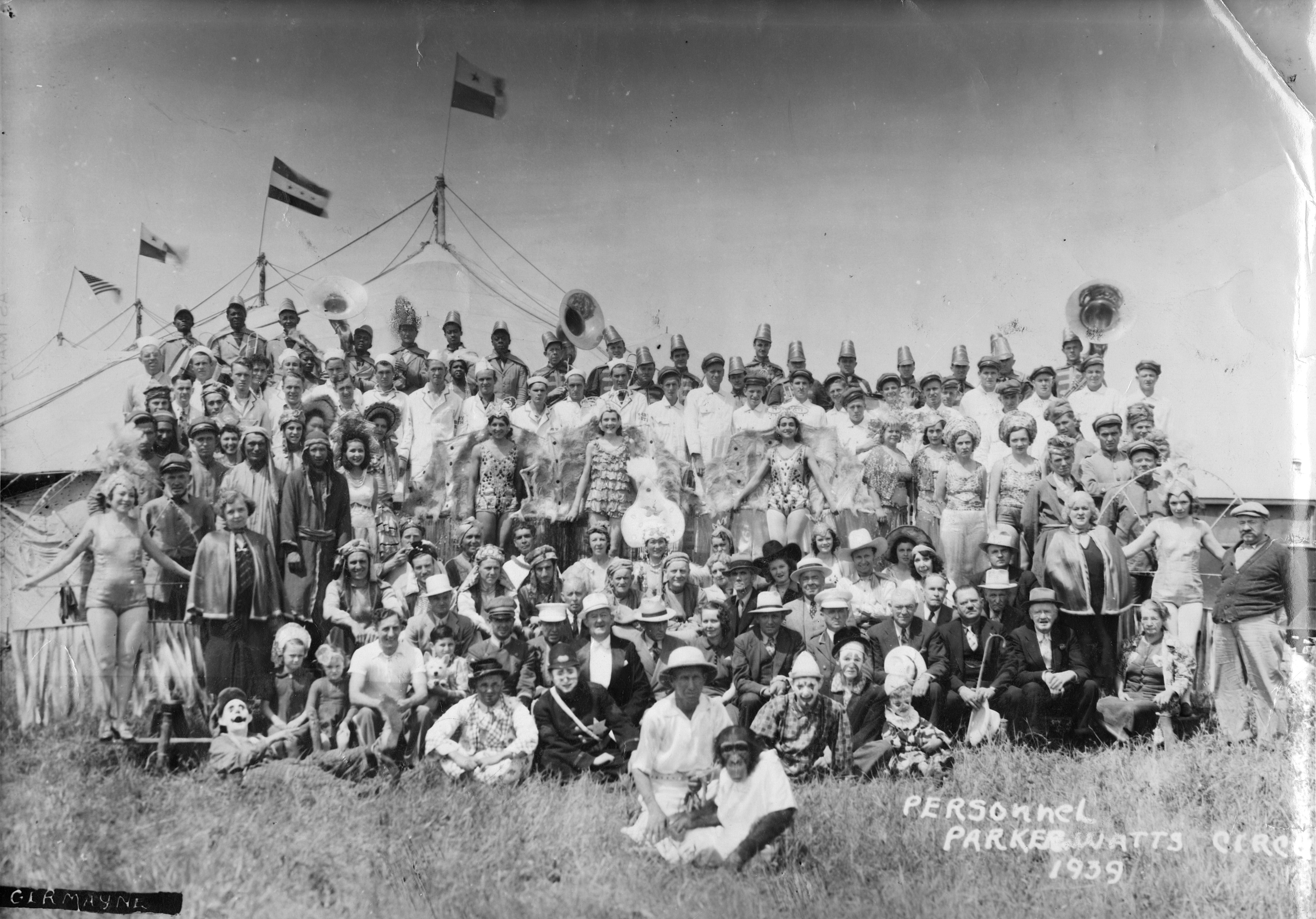
![Performers and personnel of the Parker and Watts Circus in 1939. [State Historical Society of Missouri, Parker and Watts Circus Records (C2307)]](/sites/default/files/styles/article_header_image/public/2026-09/1.-2307-f1917-no47-group-photo-jpeg_0.jpg?itok=W2Er-H5L "Performers and personnel of the Parker and Watts Circus in 1939. [State Historical Society of Missouri, Parker and Watts Circus Records (C2307)]")
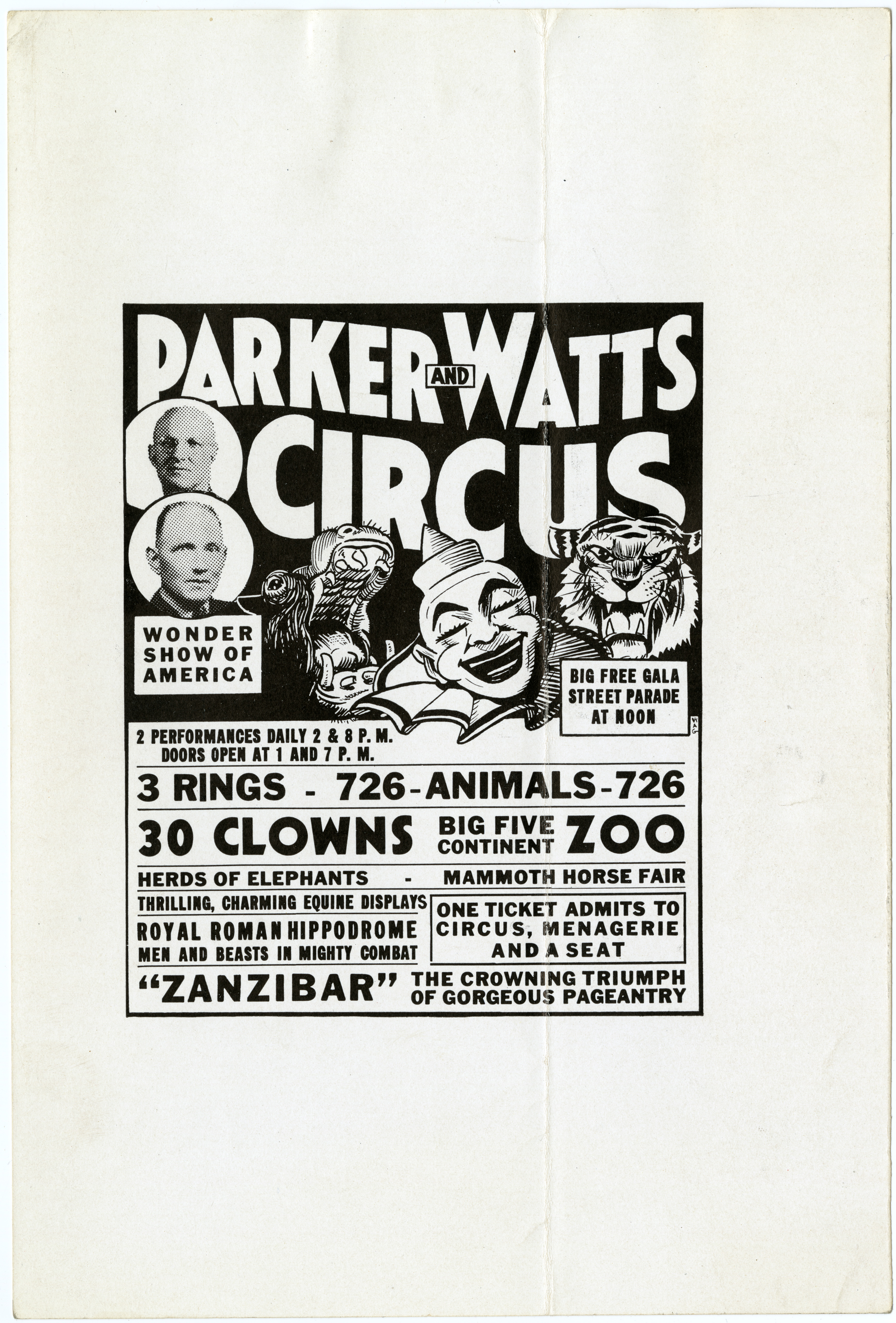
![Parker and Watts Circus poster, undated. [State Historical Society of Missouri, Parker and Watts Circus Records (C2307)]](/sites/default/files/styles/article_header_image/public/2026-09/2.-c2307-f1909-01_0.jpg?itok=8HE1a5em "Parker and Watts Circus poster, undated. [State Historical Society of Missouri, Parker and Watts Circus Records (C2307)]")
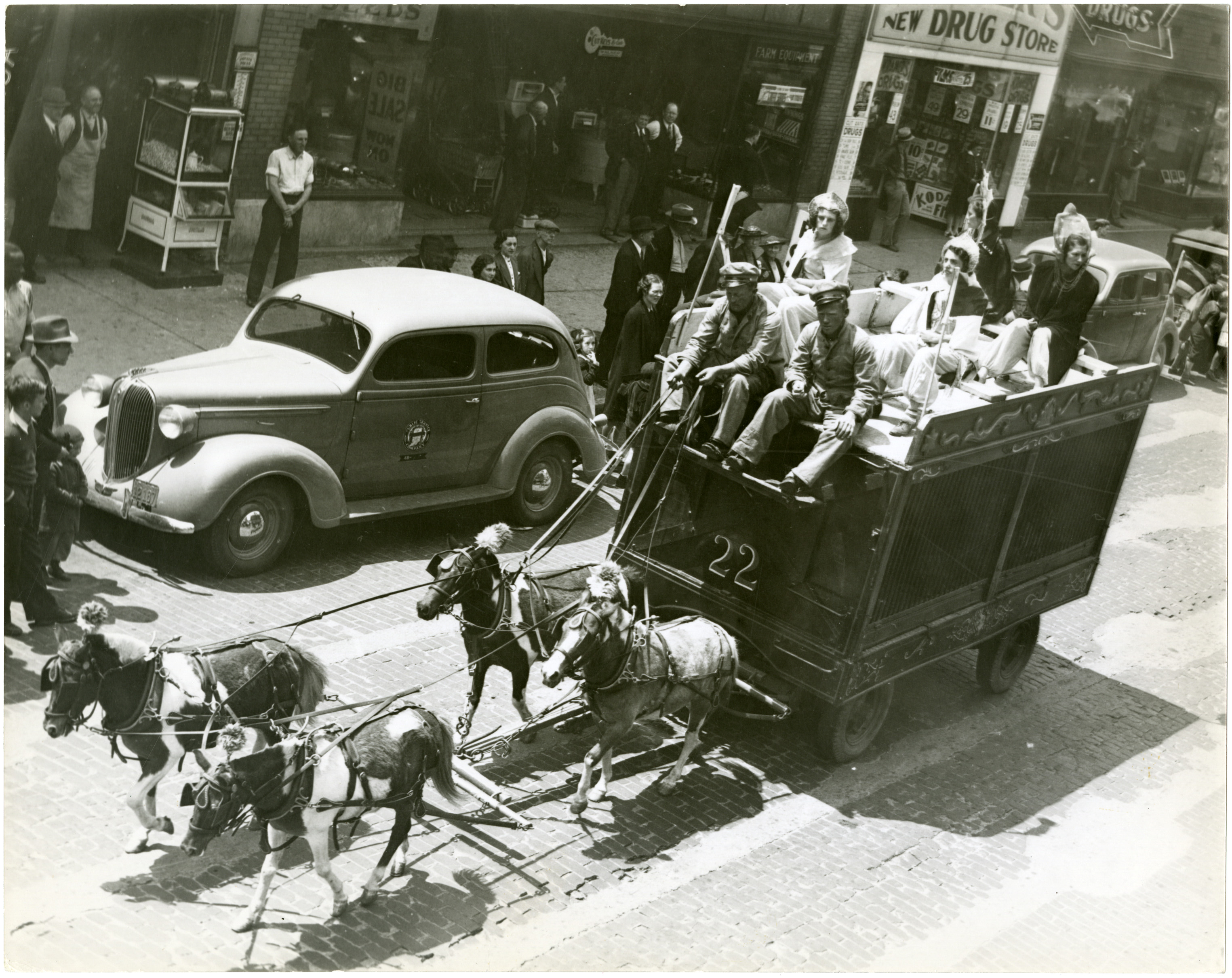
![A Parker and Watts Circus parade, date and location unknown. [State Historical Society of Missouri, Parker and Watts Circus Records (C2307)]](/sites/default/files/styles/article_header_image/public/2026-09/4.-c2307-f1920-86_0.jpg?itok=GqyTPQmu "A Parker and Watts Circus parade, date and location unknown. [State Historical Society of Missouri, Parker and Watts Circus Records (C2307)]")
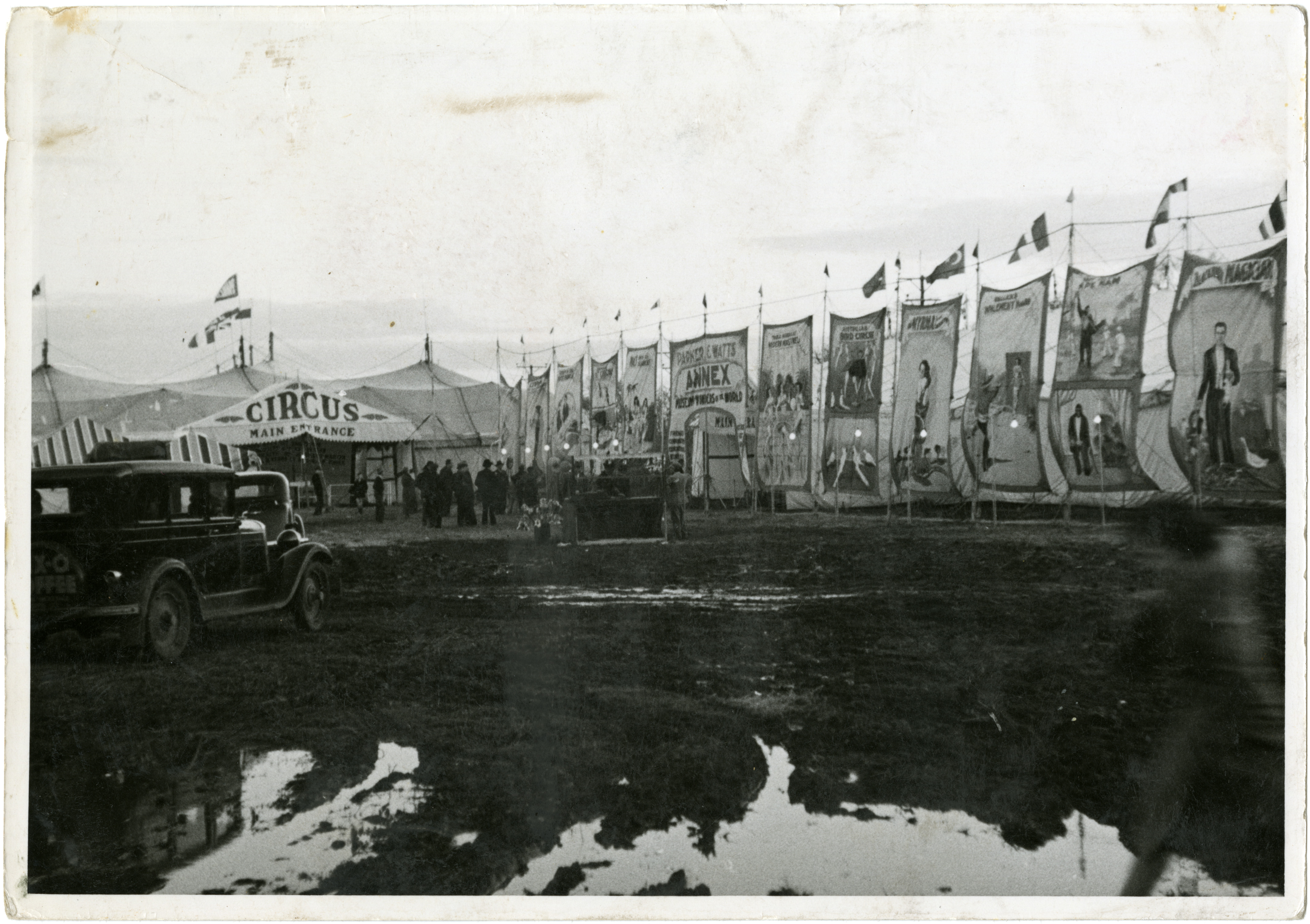
![Parker and Watts Circus sideshow banners, date and location unknown. [State Historical Society of Missouri, Parker and Watts Circus Records (C2307)]](/sites/default/files/styles/article_header_image/public/2026-09/5.-c2307-f1916-21.jpg?itok=zGUPV0dy "Parker and Watts Circus sideshow banners, date and location unknown. [State Historical Society of Missouri, Parker and Watts Circus Records (C2307)]")
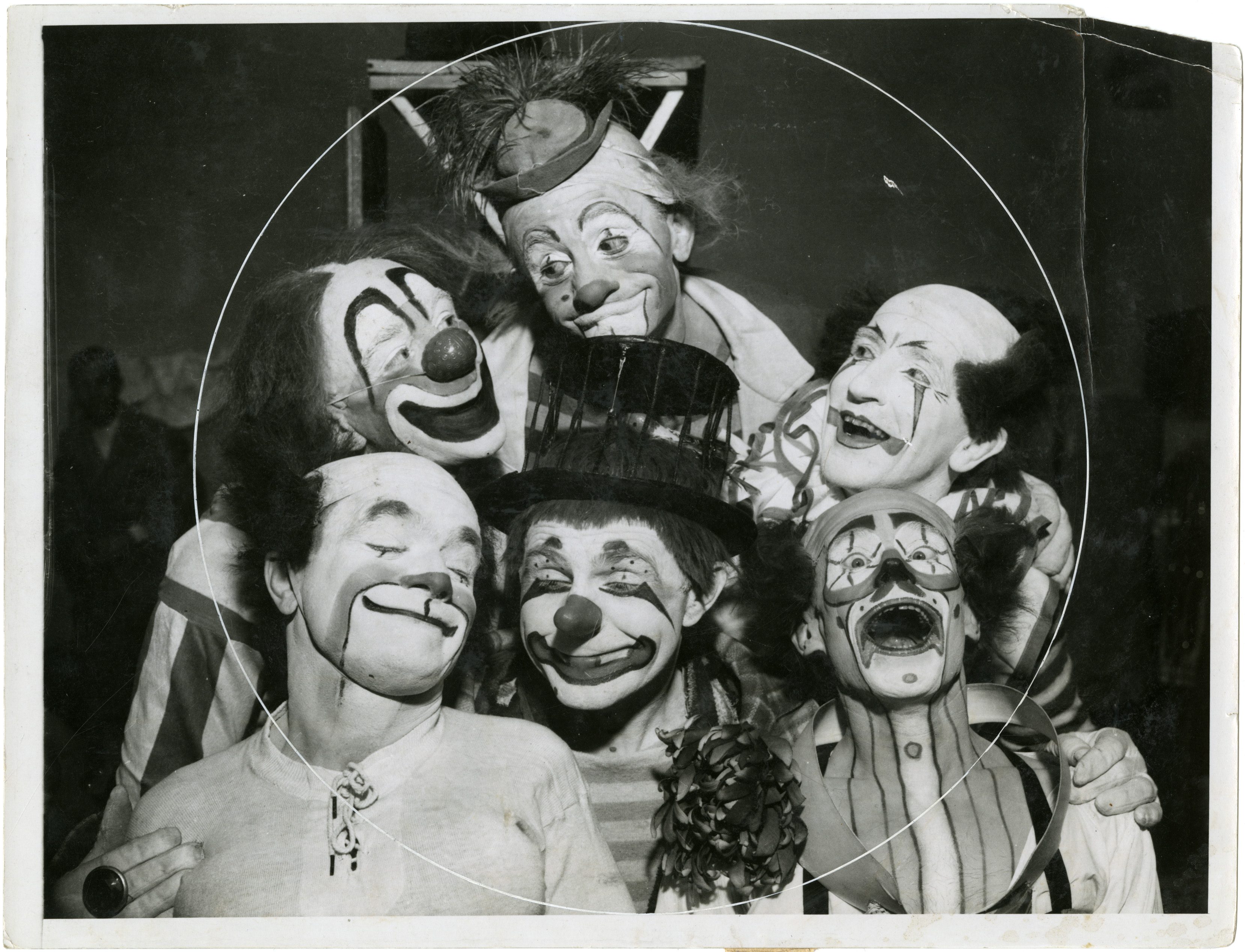
![Parker and Watts Circus clowns, date and location unknown. [State Historical Society of Missouri, Parker and Watts Circus Records (C2307)]](/sites/default/files/styles/article_header_image/public/2026-09/6.-c2307-f1920-89_0.jpg?itok=aiVF9WvW "Parker and Watts Circus clowns, date and location unknown. [State Historical Society of Missouri, Parker and Watts Circus Records (C2307)]")
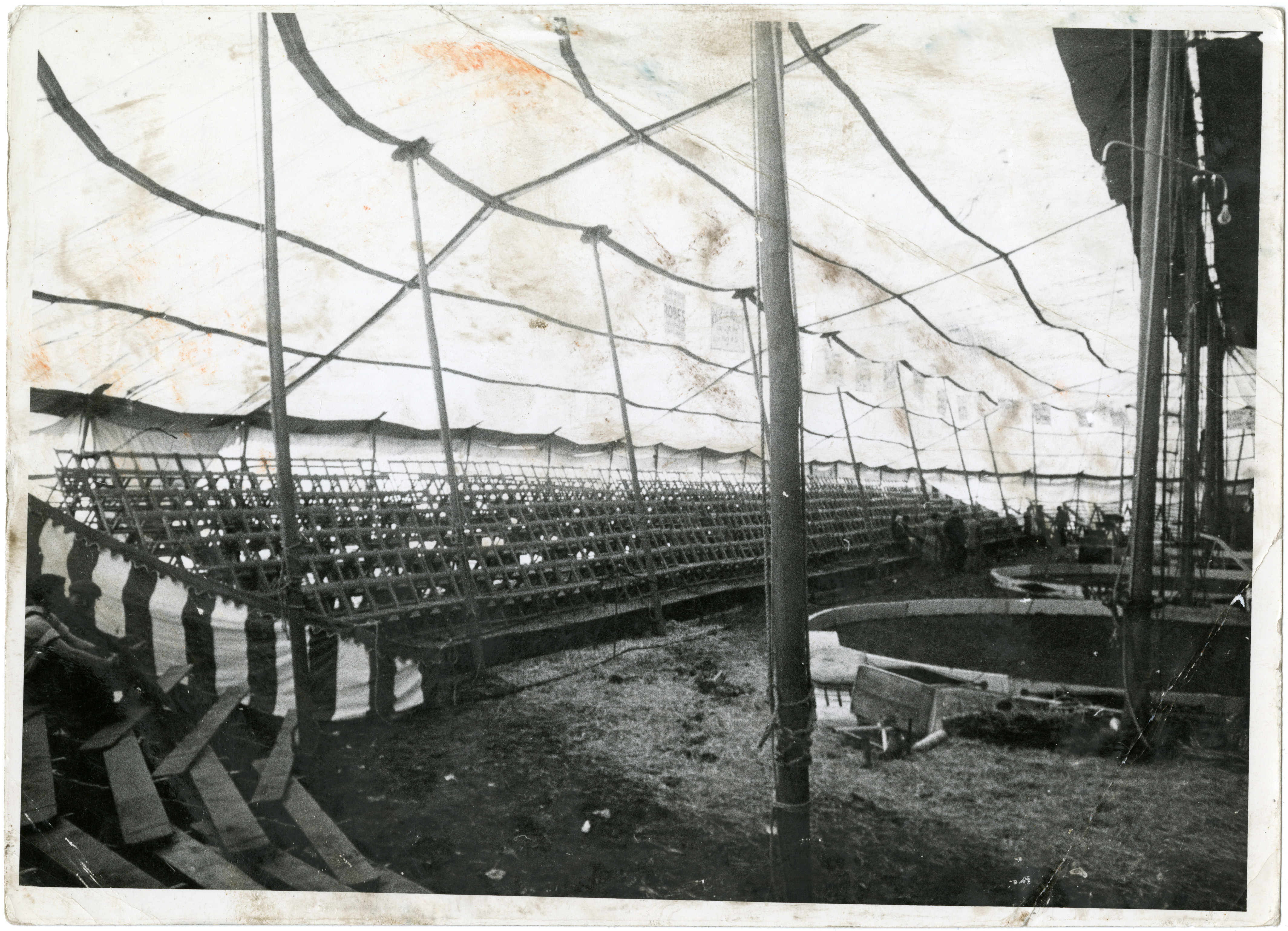
![View of the inside of a Parker and Watts Circus tent, date and location unknown. [State Historical Society of Missouri, Parker and Watts Circus Records (C2307)]](/sites/default/files/styles/article_header_image/public/2026-09/7.-c2307-f1918-55.jpg?itok=80V9WFES "View of the inside of a Parker and Watts Circus tent, date and location unknown. [State Historical Society of Missouri, Parker and Watts Circus Records (C2307)]")
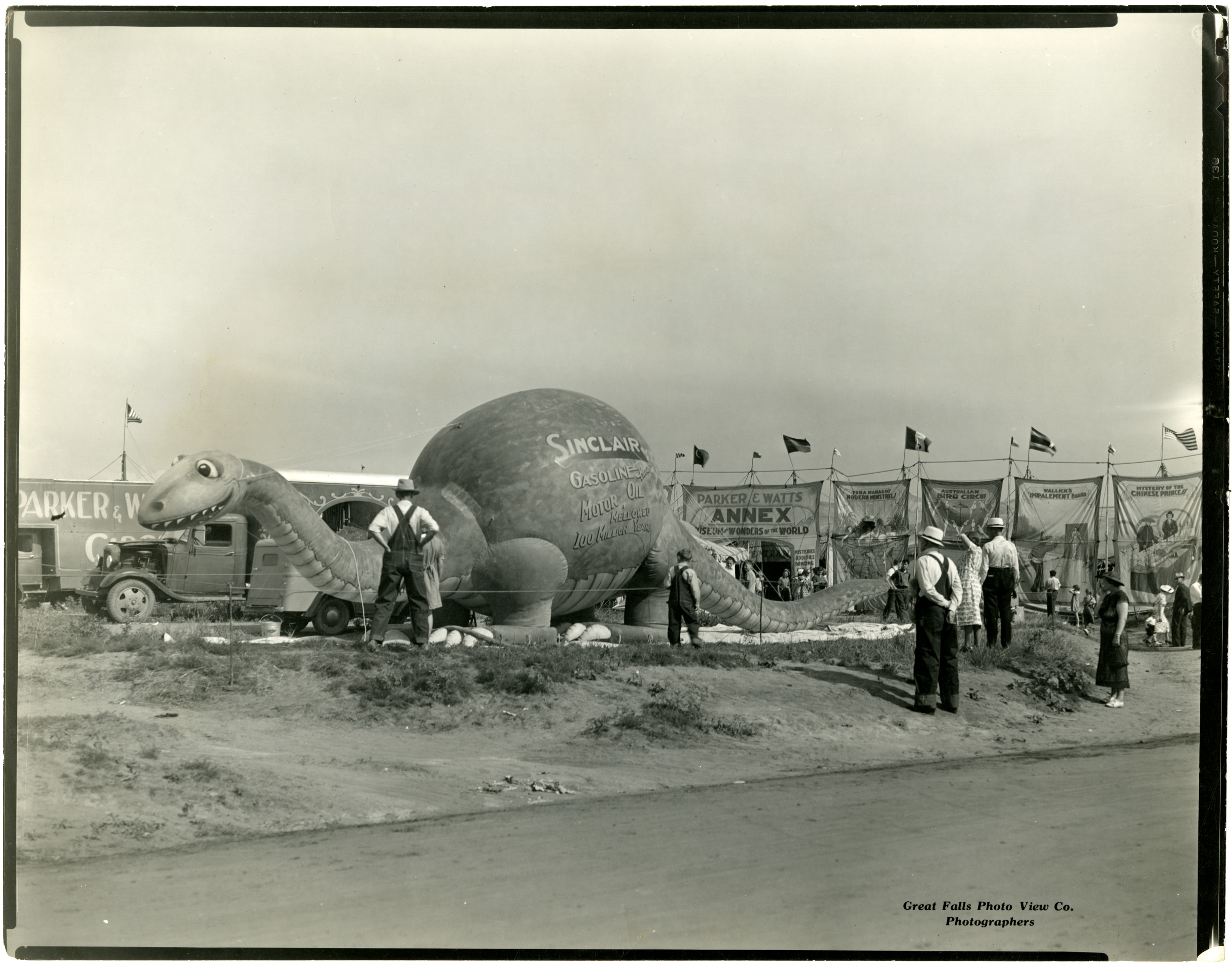
![Sinclair dinosaur promotion at Parker and Watts Circus, date and location unknown. [State Historical Society of Missouri, Parker and Watts Circus Records (C2307)]](/sites/default/files/styles/article_header_image/public/2026-09/8.-c2307-f1919-71_0.jpg?itok=nZmxtX9q "Sinclair dinosaur promotion at Parker and Watts Circus, date and location unknown. [State Historical Society of Missouri, Parker and Watts Circus Records (C2307)]")
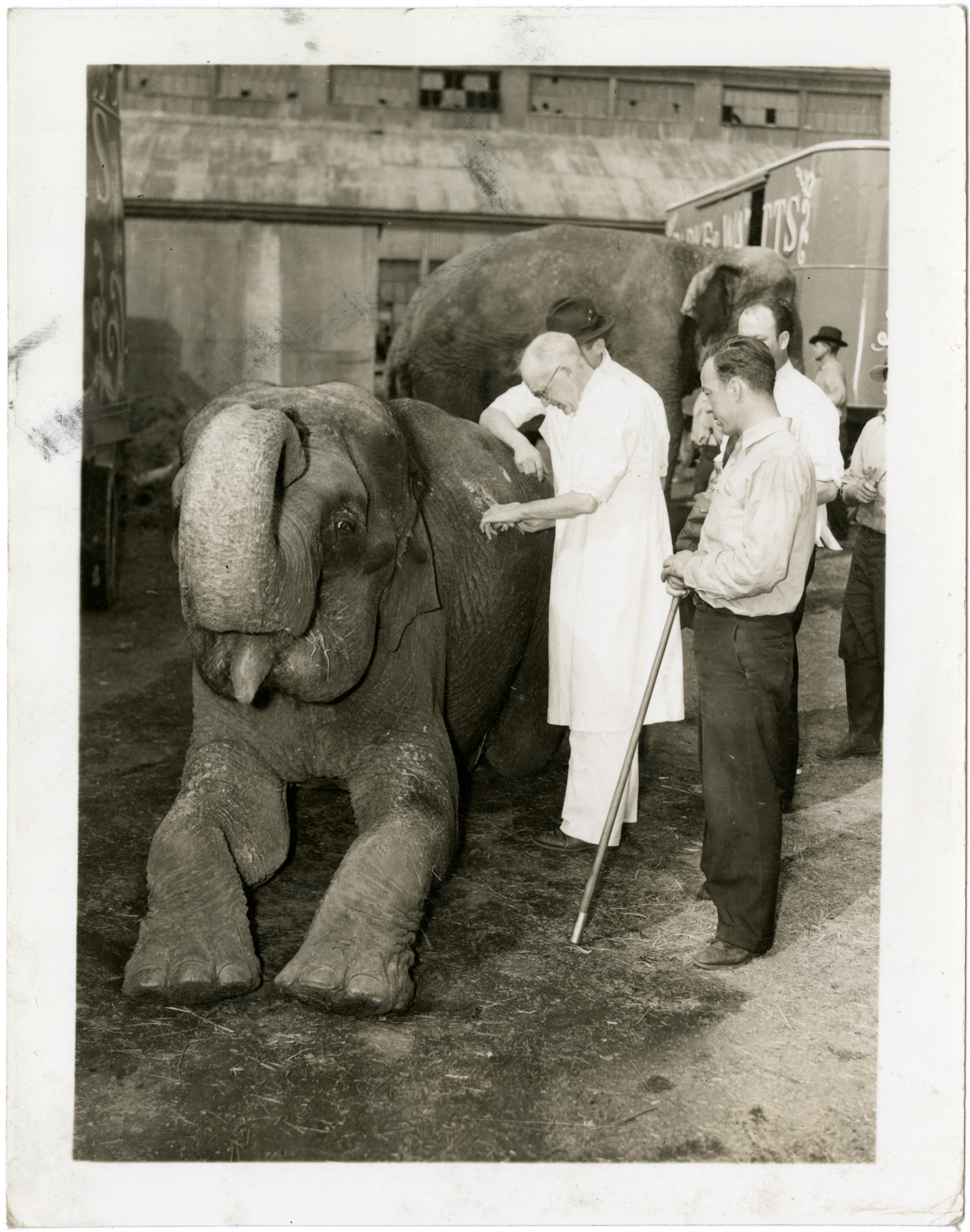
![An elephant receiving medical care at the Parker and Watts Circus, date and location unknown. [State Historical Society of Missouri, Parker and Watts Circus Records (C2307)]](/sites/default/files/styles/article_header_image/public/2026-09/9.-c2307-f1916-06_0.jpg?itok=wIlve7g4 "An elephant receiving medical care at the Parker and Watts Circus, date and location unknown. [State Historical Society of Missouri, Parker and Watts Circus Records (C2307)]")
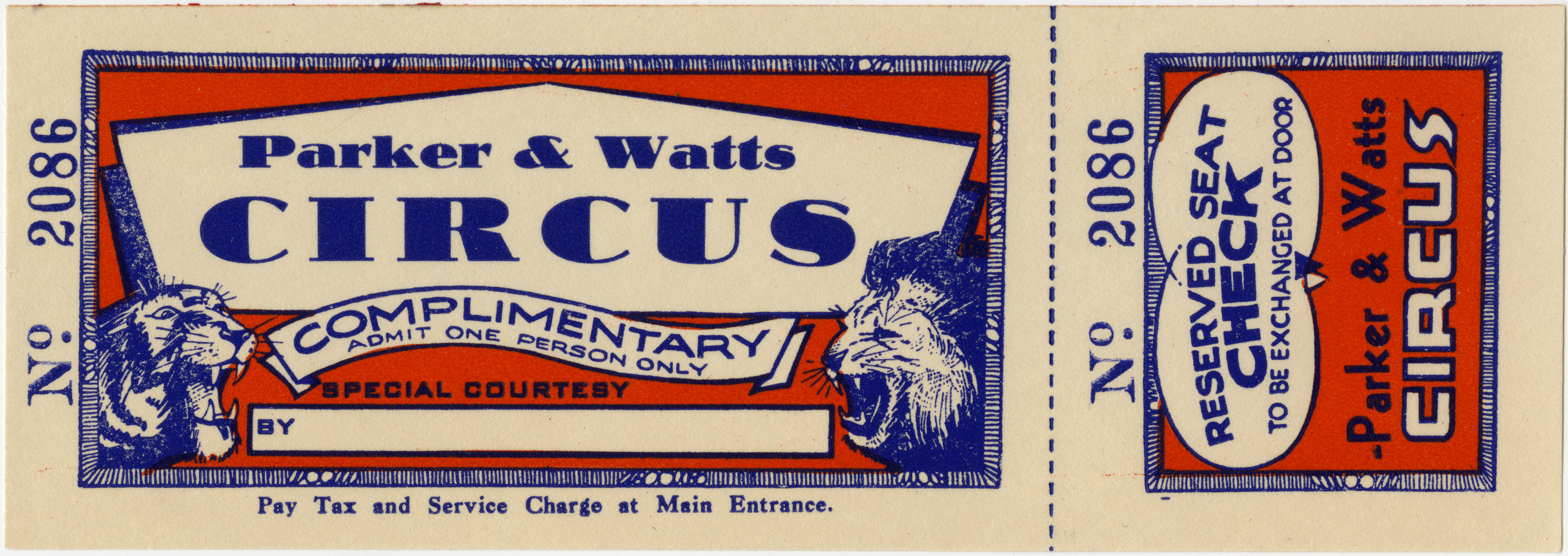
![Parker and Watts Circus ticket. [State Historical Society of Missouri, Parker and Watts Circus Records (C2307)]](/sites/default/files/styles/article_header_image/public/2026-09/12.-c2307-f1910-2_0.jpg?itok=LiOA8fPT "Parker and Watts Circus ticket. [State Historical Society of Missouri, Parker and Watts Circus Records (C2307)]")
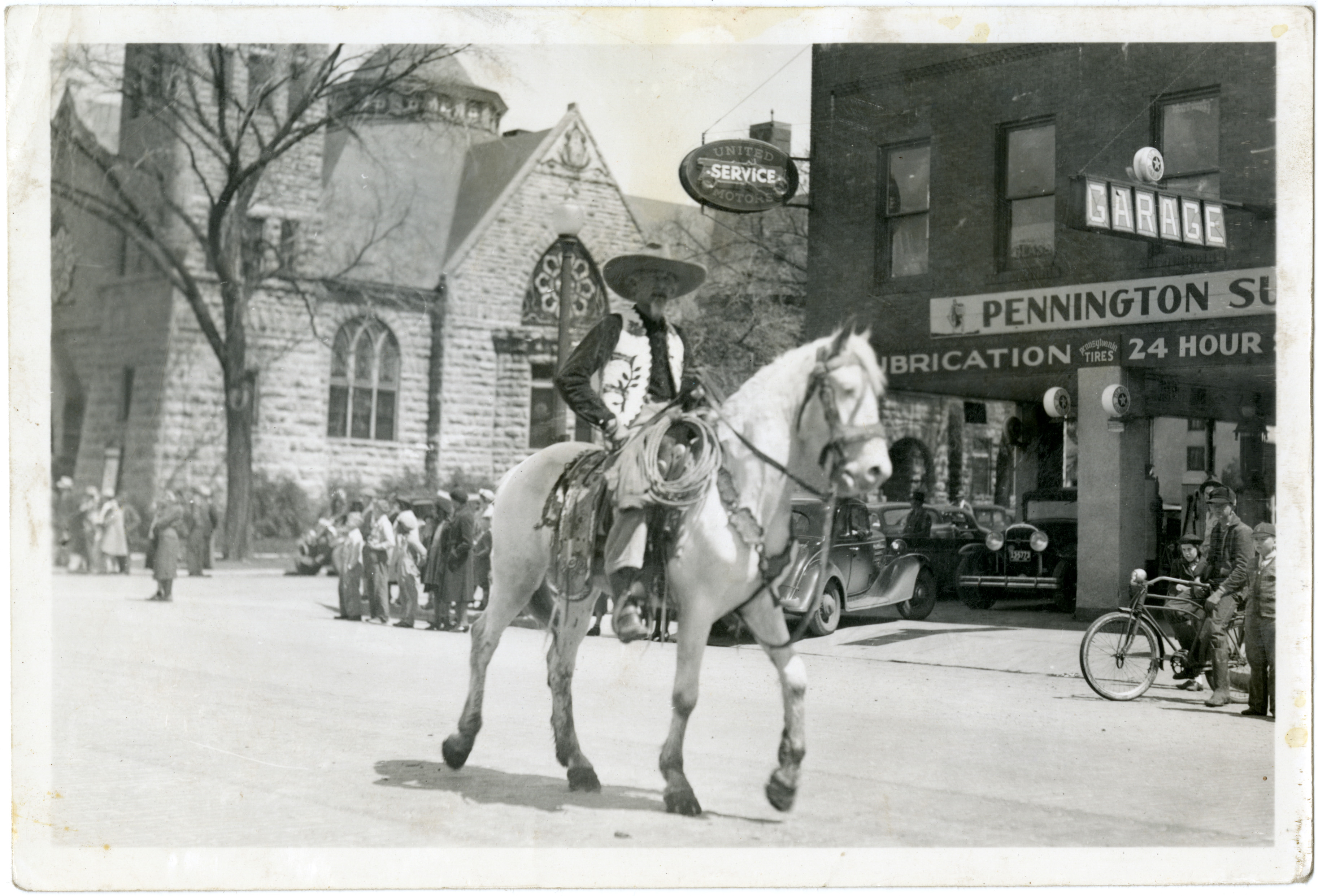
![Performer on parade, date and location unknown. [State Historical Society of Missouri, Parker and Watts Circus Records (C2307)]](/sites/default/files/styles/article_header_image/public/2026-09/13.-c2307-f1916-08_0.jpg?itok=KUN3l6ZK "Performer on parade, date and location unknown. [State Historical Society of Missouri, Parker and Watts Circus Records (C2307)]")
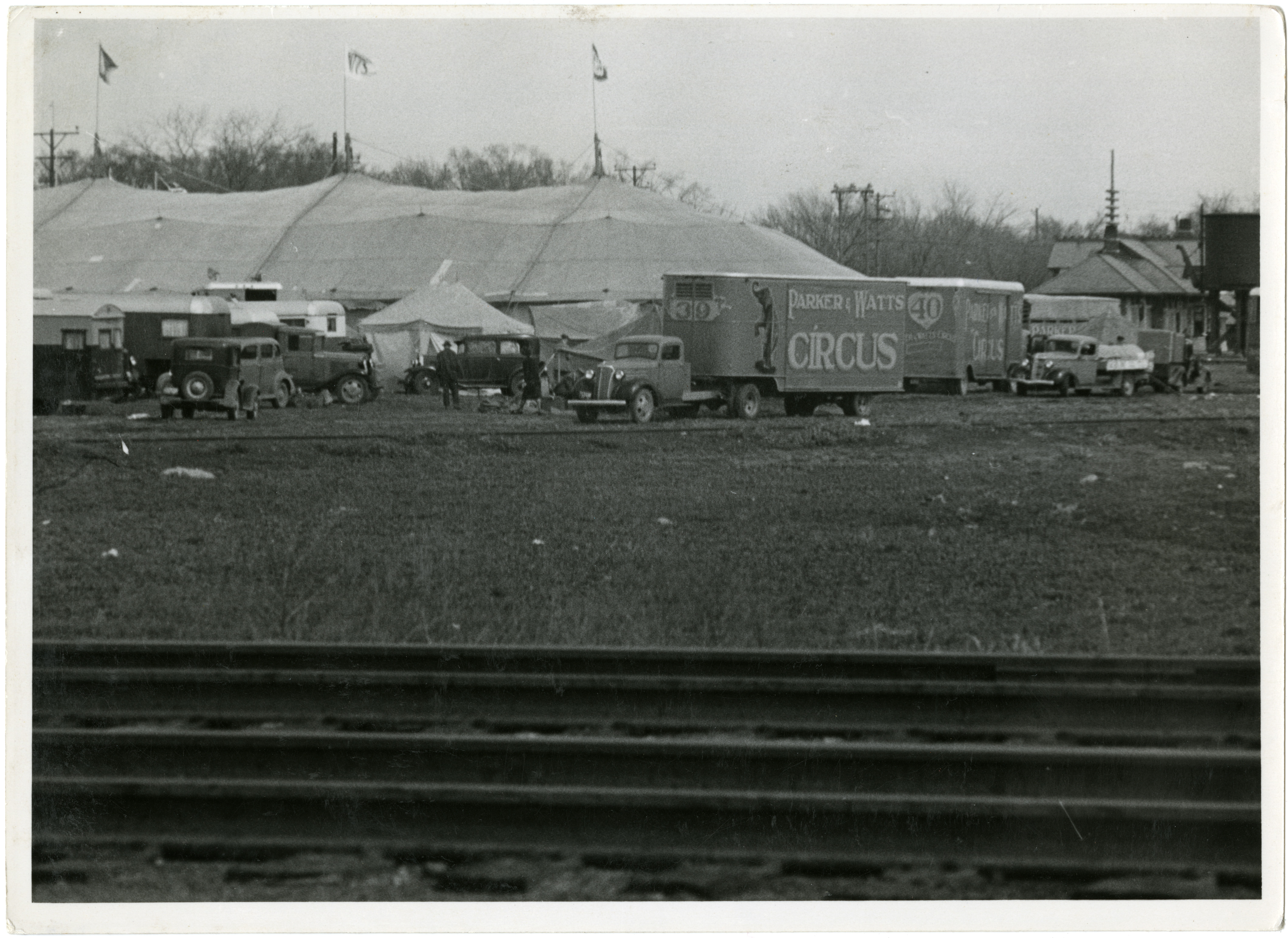
![Parker and Watts trucks, date and location unknown. [State Historical Society of Missouri, Parker and Watts Circus Records (C2307)]](/sites/default/files/styles/article_header_image/public/2026-09/14.-c2307-f1916-02_0.jpg?itok=AbMO3aMl "Parker and Watts trucks, date and location unknown. [State Historical Society of Missouri, Parker and Watts Circus Records (C2307)]")
The brief existence of the Parker and Watts Circus illustrates the trials and tribulations that circuses faced in the 1930s as the rise of the radio and film industries threatened traditional forms of entertainment. Widespread ownership of automobiles also created competition for the public’s time and attention. In the fall of 1937, Missouri natives Ira M. Watts and Charles H. Parker purchased Seal Brothers Circus and renamed it after themselves. Both men had previous experience in the circus world. Watts had been with the James Patterson-Gollmar Brothers Circus since joining it in 1917. Parker had left the big top to become the assistant general superintendent of Eagle-Picher Mining and Smelting Company facility in nearby Picher, Oklahoma, but the allure of the circus was too much for him to resist. He and Watts, with the financial backing of their mutual friend George W. Potter, an Eagle-Picher executive, purchased Seal Brothers Circus for $40,000. The partners announced their intent to bring “a medium sized circus with a Big Horse Drawn Street Parade, a good high class performance and an absence of objection gambling and catch penny devices” to the public.
After wintering in Emporia, Kansas, the Parker and Watts Circus embarked on its inaugural season in 1938, a grueling 10,002-mile journey across ten states. A “motorized” circus, Parker and Watts traveled by highway caravan rather than by rail like larger shows. Reportedly one of the last circuses to feature a horse-drawn parade, Parker and Watts’s lively street procession concluded with loud blasts from the show’s calliope. Talented performers such as Andy Calino the Educated Chimp, ménage rider Hazel King, the Aerial Zerrados, and the Hodgini Riding Troupe worked and performed for Parker and Watts. Despite these established acts, the circus struggled to turn a profit. Just a few weeks into the tour, Parker wrote to George W. Potter, “There is no indication of an end for this recession. This means that we will have to cut the show down to the bone.”
Tragically, Parker died June 8, 1938, while on tour with the circus in Mobridge, South Dakota. Ira Watts and the rest of the troupe stayed on schedule. Daily life and accommodations with the circus were challenging. Menus show that performers and crew ate basic fare such as onions, potatoes, macaroni and cheese, tomatoes, and raisins for lunch and dinner. Knowing which towns were lucrative and which were not was crucial for getting by. Lynchburg, Virginia, was “excellent,” Albemarle, North Carolina, was “good at tobacco time only,” and Atlanta, Georgia, was “only good for Ringling show.” The unsavory reputations of some other circuses prompted Parker and Watts to distribute flyers advertising their free street parade with the admonishment, “Do not be deceived by small bankrupt circus[es], with big tents with nothing in them, carrying crooked gambling and questionable devices to rob and fleece the public.”
The show hit the road again in 1939, but a series of mishaps crippled the circus. A rival circus infringed on Watts’s business route. In October 1939, Watts wrote to his aunt, “Since leaving Virginia things have gone from bad to worse, and when the war was declared [in Europe] the bottom dropped out of show business.” The show’s general agent, L. B. Greenhaw, allegedly ran up expenses before he was fired. Creditors began demanding payment. Disagreements with performers led to lawsuits over back pay that sapped the already strained finances of the Parker and Watts Circus. This forced the show to disband for the rest of the season and move into winter quarters at Fort Smith, Arkansas. Watts announced his intent to take “a little back roads show to the hills of Arkansas, where I hope they haven’t even heard of the war.” Calling the new show the “Adams-Floto Trained Animal Show,” Watts hoped for a fresh start. On December 15, 1941, however, Watts wired financial backer George W. Potter, “War declared. Business coastal towns went to nothing. I have made my last show.” The Parker and Watts Circus was subsequently liquidated.
Parker and Watts Circus Records, 1934-1939. C2307. State Historical Society of Missouri, Columbia Research Center.
Published September 17, 2026
Creative Commons Attribution-NonCommerical-ShareAlike 4.0 International (CC BY-NC-SA 4.0)