 the State Historical Society of Missouri

![Naomi Brooks. [Hayti (Missouri) Central High School Yearbook, 1958, via Ancestry.com]](/sites/default/files/styles/article_header_image/public/2025-12/1.-brooks-v.-moberly.jpg?h=9e3b45e4&itok=924ADt7m "Naomi Brooks. [Hayti (Missouri) Central High School Yearbook, 1958, via Ancestry.com]")
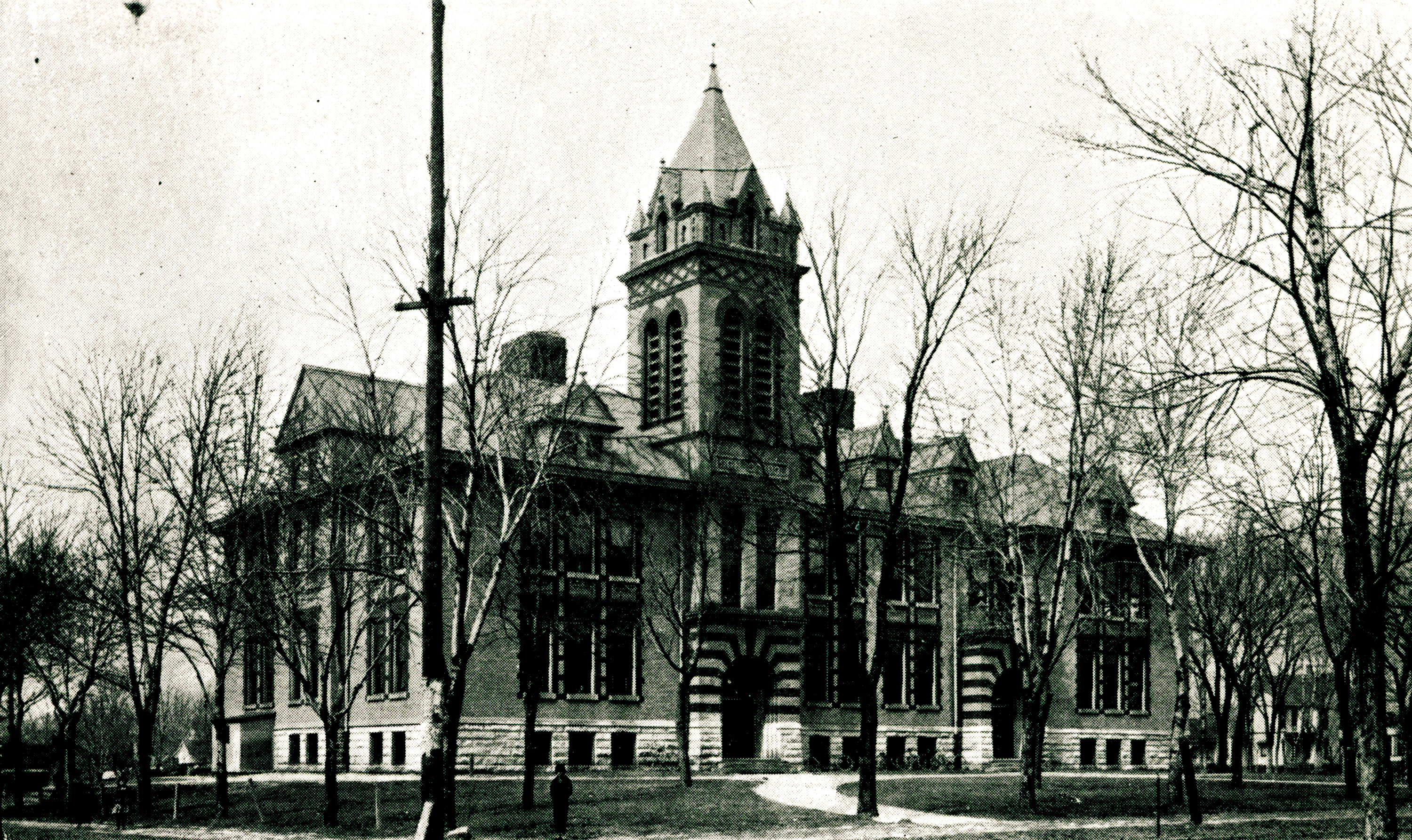
![Central High School in Moberly. The Moberly school district was segregated until after the Brown v. Board of Education decision in 1954. [State Historical Society of Missouri, Missouri Postcard Collection, P0032-027600]](/sites/default/files/styles/article_header_image/public/2025-12/2.-brooks-v.-moberly_0.jpg?itok=nfF5CMyE "Central High School in Moberly. The Moberly school district was segregated until after the Brown v. Board of Education decision in 1954. [State Historical Society of Missouri, Missouri Postcard Collection, P0032-027600]")
Brooks v. Moberly was a federal court case in Missouri that tested how American schools would navigate teacher integration and Black teacher employment in the wake of the US Supreme Court’s landmark Brown v. Board of Education decision in 1954. Filed in 1955 by nine Black teachers who were terminated when the Moberly School District integrated its schools, Brooks v. Moberly was the first federal case to directly challenge the post-Brown displacement of Black school personnel, confronting whether such firings, widespread in the wake of Brown, violated the Equal Protection Clause of the Fourteenth Amendment of the US Constitution. Though Black teachers were the only teachers laid off with Moberly’s integration, the US District Court for the Eastern District of Missouri in St. Louis ruled against the teachers who had filed the lawsuit. Affirmed by the Eighth Circuit US Court of Appeals and declined to be heard by the US Supreme Court, the district court’s decision stood, forcing Moberly’s Black teachers to pay a price for student integration. Brooks v. Moberly was a pivotal case at the intersection of school desegregation and the employment rights of Black teachers as states grappled with compliance with Brown.
Historical Background
The Brooks v. Moberly case unfolded against rapid, voluntary school desegregation in Missouri following the Brown decision. Despite a relatively small Black population in the 1950s, Missouri, like other border states from the Civil War era, mandated segregated schooling in its state constitution. Many school districts—especially in rural parts of the state—had few Black students, and tended to segregate them into a single Black school or bus them to a neighboring district for schooling there.
In the early 1950s, the Moberly School District operated a dual school system under Jim Crow segregation. All the district’s Black students attended the Lincoln School, a combined elementary through high school, and all its Black employees worked there. The district’s white students attended six elementary schools, one junior high school, and one combined high school and junior college.
Shortly after the Brown decision, Missouri’s attorney general, John M. Dalton, pointed out that the state’s constitutional requirement for segregated schools was “superseded by the [Court’s] decision . . . and was, therefore, unenforceable.” Many Missouri school districts immediately and voluntarily began desegregating their schools. On June 9, 1954, the Moberly Board of Education appointed a committee to plan for integration.
The committee initially proposed keeping the Lincoln School open but restructuring it as an integrated elementary school. In response to resistance from both the Black and white communities, the school board scrapped the committee’s plan and instead recommended closing Lincoln entirely. This new plan called for redistributing all the district’s Black students into the eight traditionally white schools. The board voted to approve the plan on March 2, 1955, with full student integration to begin in the 1955–1956 school year.
During the 1954–1955 school year, the Moberly School District employed 109 teachers: 98 white teachers across the eight white schools and 11 Black teachers at Lincoln. With Lincoln closed, the school board projected that fewer teachers would be needed. On April 13, 1955, the board convened a meeting with school superintendent Carl Henderson and instructed him to recommend which teachers to retain or dismiss according to the district’s established employment policy that hiring decisions should be based on “merit, determined by . . . qualifications, training, experience, personality, and ability.”
During the meeting, Henderson presented a comparative evaluation of every teacher in the district, pairing each Black teacher from Lincoln with a white teacher performing a similar role elsewhere in the system. Henderson concluded that all eleven Black teachers were less qualified than their white counterparts. He reported to the board that he “could see no justification” for displacing any white teacher to retain a single Black teacher from Lincoln. The board accepted his recommendation and voted to terminate the contracts of all eleven Black teachers at the end of the 1954–1955 school year.
On April 15 the school board sent official termination notices to the entire Black workforce at Lincoln, informing them the district would not be renewing their contracts. Three white teachers at other schools were also nonrenewed due to overall staffing decisions. These positions, however, were treated as vacancies, and the board filled all three positions with new white hires.
The reaction from Moberly’s Black community was swift. The fired Black teachers and many Black residents immediately protested the dismissals as discriminatory. The town’s Black citizens pointed out that aside from one elderly teacher who had agreed to retire, every single one of the district’s Black employees had been let go, indicating that race, not merit, was the real reason for the board’s decision. They also noted that several Black teachers were equally or even more qualified than some of the white teachers who had kept their jobs. These Black teachers had college credit hours, teaching experience, and years of service to the district on par with or exceeding their white colleagues.
With the backing of the newly established local branch of the National Association for the Advancement of Colored People (founded in Moberly in April 1955 to facilitate a response to this crisis) and national support from the NAACP’s Legal Defense and Educational Fund, several of the dismissed Black teachers prepared to take legal action against the Moberly Board of Education. In the fall of 1955, Naomi Brooks and seven of her colleagues from the Lincoln School filed a lawsuit in the US District Court in St. Louis against the Moberly School District and Superintendent Henderson. The case, which became known as Brooks v. Moberly, alleged that the school board had a de facto policy of hiring only white teachers in integrated schools, and that the Black teachers had been dismissed and subsequently not rehired solely because of their race.
NAACP attorney Robert L. Carter and a team of attorneys from Kansas City and St. Louis argued that the Moberly school board had violated the Equal Protection Clause of the Fourteenth Amendment. They sought a declaratory judgment that the board’s actions were unconstitutional, an injunction requiring the district to stop barring Black teachers from employment, and remuneration for their lost jobs. The suit asked the federal court to recognize that what had happened in Moberly was not a race-neutral staff reduction, but a purposeful exclusion of qualified Black teachers from the district’s newly integrated schools.
Legal Questions and Issues
Brooks v. Moberly raised fundamental legal questions about equal protection and discrimination in public school employment. The main concern was whether a school board could, in the course of integrating its schools, terminate or refuse to hire teachers based on race without violating the US Constitution. The suit alleged that the Moberly school board had in practice established a policy of excluding Black teachers from its integrated schools. Even if the board had no written rule barring Black teacher employment under integration, the pattern of dismissals and refusal to rehire Black applicants to fill vacancies suggested racial discrimination.
In its defense, the Moberly Board of Education claimed that terminating all the Lincoln School’s Black teachers could be upheld as a race-neutral decision grounded in employee qualifications and the overall educational needs of the district. The board argued that as long as all factors necessary to staff a school were considered and teachers were not intentionally singled out for dismissal based on race, then no constitutional violation existed. It also noted that school boards had wide latitude to make hiring and firing decisions, and argued that the courts should not second-guess their decisions.
Brooks v. Moberly tested how far the federal courts would go to scrutinize local boards of education as they moved toward compliance with Brown. With federal employment protections such as Title VII of the Civil Rights Act of 1964 not yet in place, the dismissed Black teachers’ only legal defense against employment discrimination was the US Constitution, meaning they had to prove that their termination was the result of state action. Ultimately, the case focused on the following question: was the Moberly Board of Education’s action unlawful, or was it permissible under the board’s discretion to manage employment?
The case was heard by the US District Court for the Eastern District of Missouri in a bench trial (no jury). On June 27, 1958, Judge Roy W. Harper, who had overseen the case, ruled against Brooks and her colleagues. Finding on behalf of the Moberly Board of Education, Harper agreed that “intangible factors, such as personality, character, disposition, industry, adaptability, vitally affect the work of any teacher.” He noted that the court could not “substitute its judgement for that of the School Board or the Superintendent on the wisdom or expediency of a determination” about which teachers were best suited to staff the newly integrated school system.
On June 17, 1959, the Eighth Circuit US Court of Appeals in St. Louis upheld the district court’s ruling. Though the appeals court found “no positive evidence that the Board was influenced by racial considerations,” Judge Martin D. Van Oosterhout acknowledged that “one would suppose that a fair application of standards would result in the reemployment of some of the [Black] teachers” from the Lincoln School.
In September 1959, NAACP attorney Robert L. Carter prepared an appeal to the US Supreme Court. The court, however, declined to hear the case, leaving the Moberly school board’s victory in place. The case closed with no further legal recourse.
Historical Significance
The broader legal implications of the case were felt for years. Brooks v. Moberly established a precedent that a school board could, with impunity, fire or refuse to hire Black teachers during desegregation so long as it presented an ostensibly nondiscriminatory reason and the court uncovered no explicit evidence to the contrary. As local boards of education worked toward compliance with Brown, federal courts throughout the late 1950s and early 1960s often continued to defer to school authorities in matters of teacher employment, making it difficult for Black teachers to win wrongful termination lawsuits.
By 1973, the NAACP, in partnership with the National Educational Association and other education interest groups, reported that approximately 31,500 Black teachers had been terminated as a result of school integration in the southern and border states. In Missouri, many Black teachers were displaced as communities desegregated their schools. The Hannibal Board of Education terminated all its Black teachers at the end of the 1954–1955 school year; the school district serving Bonne Terre retained only one Black teacher, who was reassigned to a nonteaching position; Cape Girardeau’s school district also fired all but one Black teacher (who was moved out of teaching) in the process of integrating its students. According to the Southern Educational Reporting Service, Black teachers declined from 10 percent of Missouri’s teacher workforce in 1957–1958 to 7.9 percent in 1965–1966.
Student integration did not always translate to teacher integration. Brooks v. Moberly demonstrates the limitations of federal court action during the civil rights era. The case highlights the inability of the judiciary to deliver full equality during the early years of school integration after Brown. Its historical significance lies in how it clearly illustrates the gap between federal civil rights law and implementation realities on the ground.
Etheridge, Samuel B. “Impact of the 1954 Brown vs. Topeka Board of Education Decision on Black Educators.” Negro Educational Review 30, no. 4 (1979): 217–32.
Fairclough, Adam. “The Costs of Brown: Black Teachers and School Integration.” Journal of American History 91, no. 1 (2004): 43–55.
Fultz, Michael. “The Displacement of Black Educators Post-Brown: An Overview and Analysis.” History of Education Quarterly 44, no. 1 (2004): 11–45.
Naomi Brooks et al., Appellants, v. School District of City of Moberly, Missouri, Etc., et al., Appellees. 267 F.2d 733 (8th Cir. 1959). https://law.justia.com/cases/federal/appellate-courts/F2/267/733/393864/.
Nichols, Joseph, and Alyssa Ignaczak. Displacement of Black Teachers in Missouri Post-Brown, 1954–1970. PRiME Center, Saint Louis University (2025). www.primecenter.org/education-reports-database/displacement.
Smith, John W., and Betty M. Smith. “For Black Educators: Integration Brings the Axe.” Urban Review 6, no. 3 (1966): 7–12.
Tillman, Linda C. “(Un)Intended Consequences? The Impact of the Brown v. Board of Education Decision on the Employment Status of Black Educators.” Education in Urban Society 36, no. 3 (2004): 280–303.
Published December 10, 2025; Last updated December 11, 2025
Creative Commons Attribution-NonCommerical-ShareAlike 4.0 International (CC BY-NC-SA 4.0)