 the State Historical Society of Missouri

![Father Peter Joseph Dunne. [Rev. J. W. Gormley, History of Father Dunne’s News Boys Home and Protectorate]](/sites/default/files/styles/article_header_image/public/2025-12/1.-father-dunne.jpg?h=8595de87&itok=GpoLkFFp "Father Peter Joseph Dunne. [Rev. J. W. Gormley, History of Father Dunne’s News Boys Home and Protectorate]")
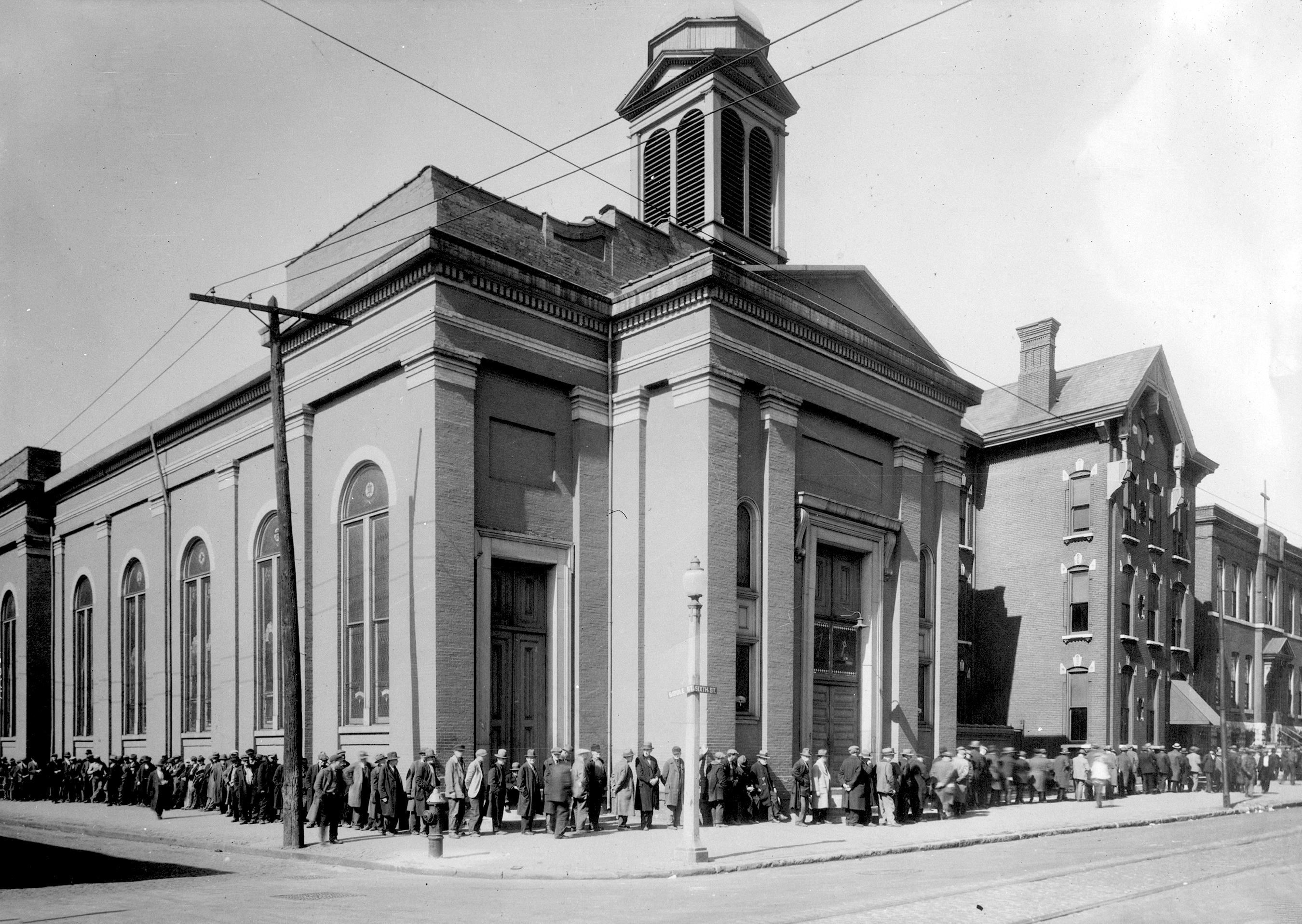
![St. Patrick’s Church, where Father Dunne served early in his St. Louis career. [Library of Congress, Prints and Photographs Division, HABS MO,96-SALU,33]](/sites/default/files/styles/article_header_image/public/2025-12/2.-father-dunne.jpg?itok=nG6r4bPK "St. Patrick’s Church, where Father Dunne served early in his St. Louis career. [Library of Congress, Prints and Photographs Division, HABS MO,96-SALU,33]")
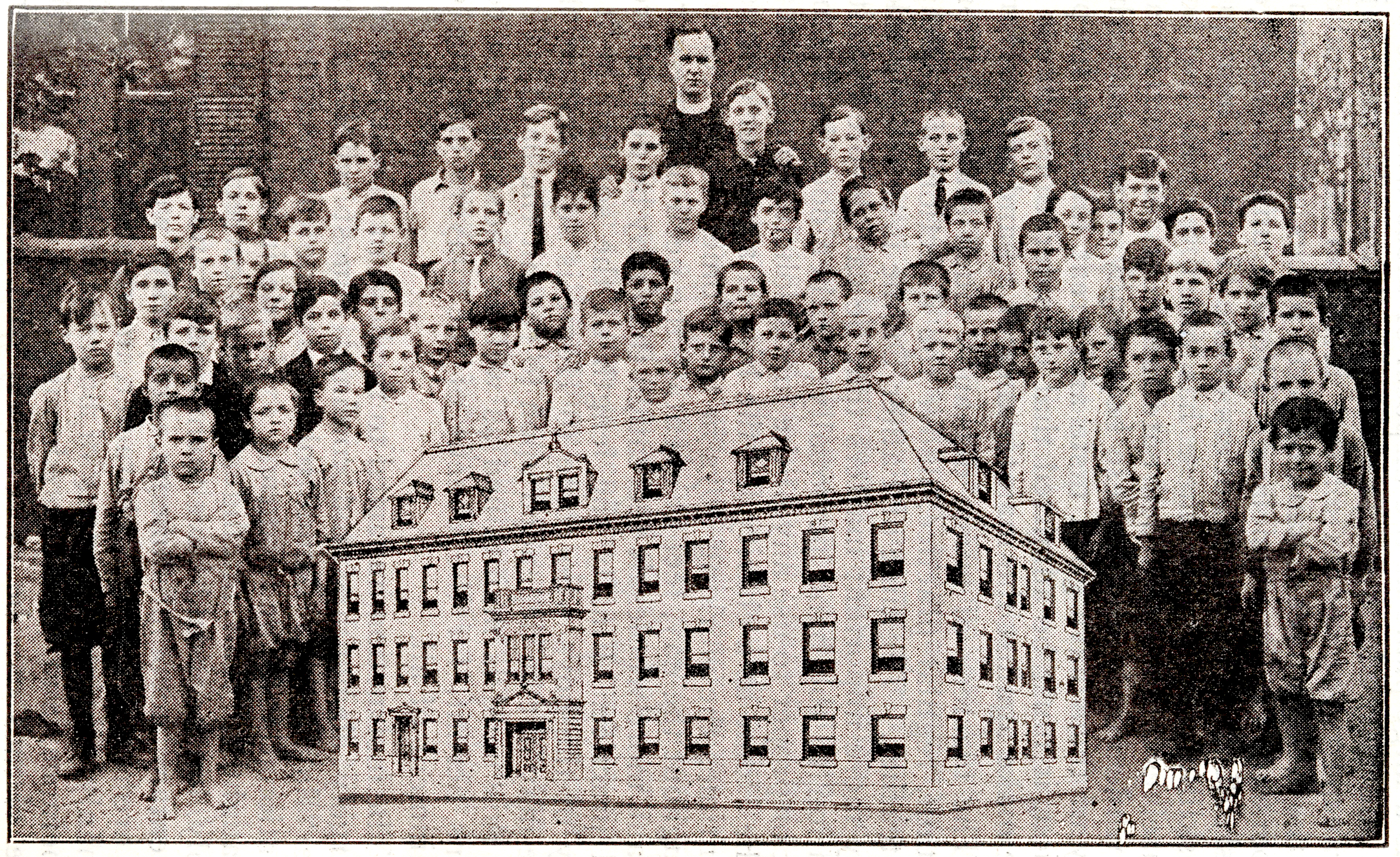
![Father Dunne with boys from the Newsboys' Home. [Rev. J. W. Gormley, History of Father Dunne’s News Boys Home and Protectorate]](/sites/default/files/styles/article_header_image/public/2025-12/3.-father-dunne.jpg?itok=2NfAFhZw "Father Dunne with boys from the Newsboys' Home. [Rev. J. W. Gormley, History of Father Dunne’s News Boys Home and Protectorate]")
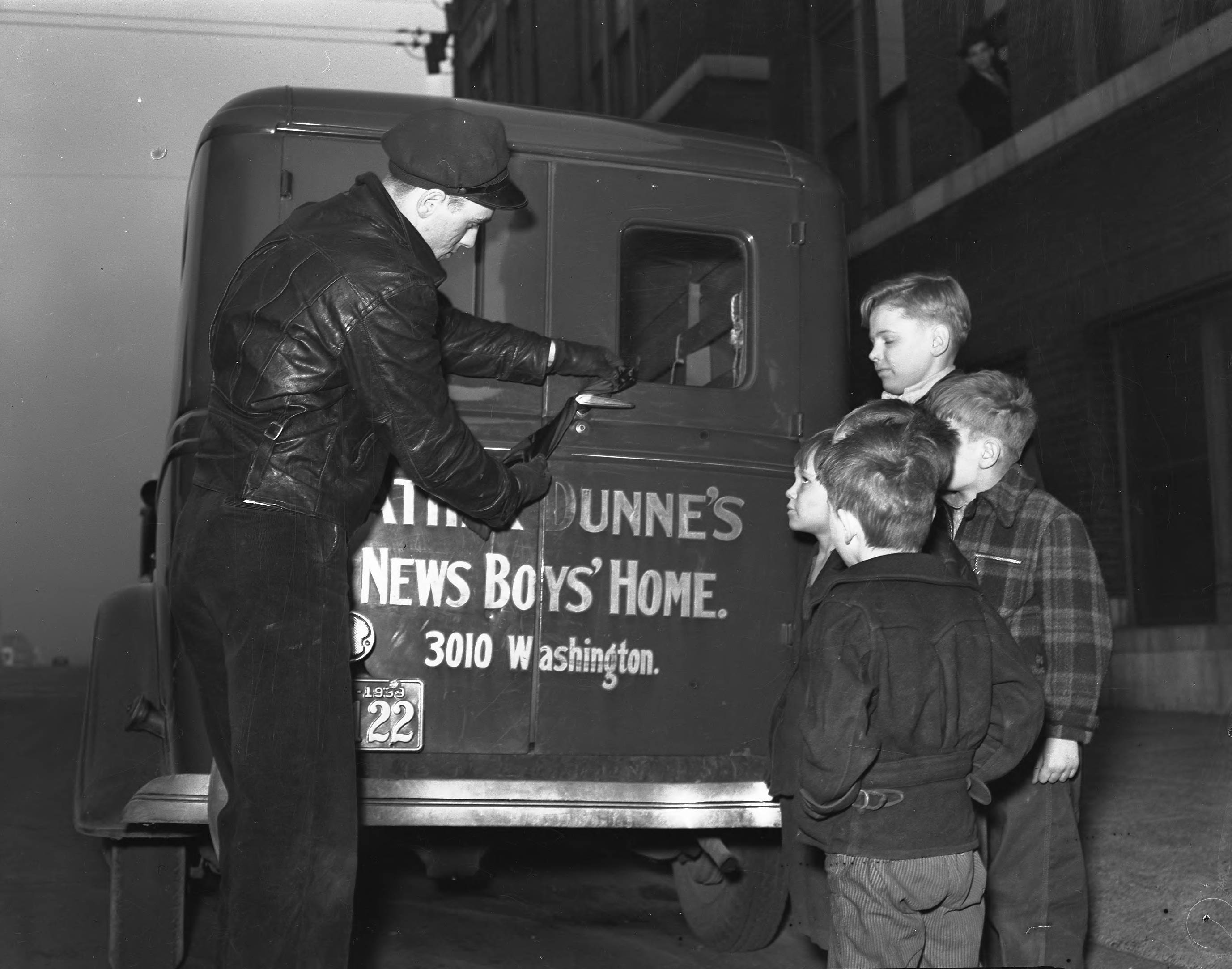
![Boys and a driver at the Newsboys' Home. [State Historical Society of Missouri, Arthur Witman Photograph Collection, S0717-93]](/sites/default/files/styles/article_header_image/public/2025-12/4.-father-dunne.jpg?itok=Sb4LJfiB "Boys and a driver at the Newsboys' Home. [State Historical Society of Missouri, Arthur Witman Photograph Collection, S0717-93]")
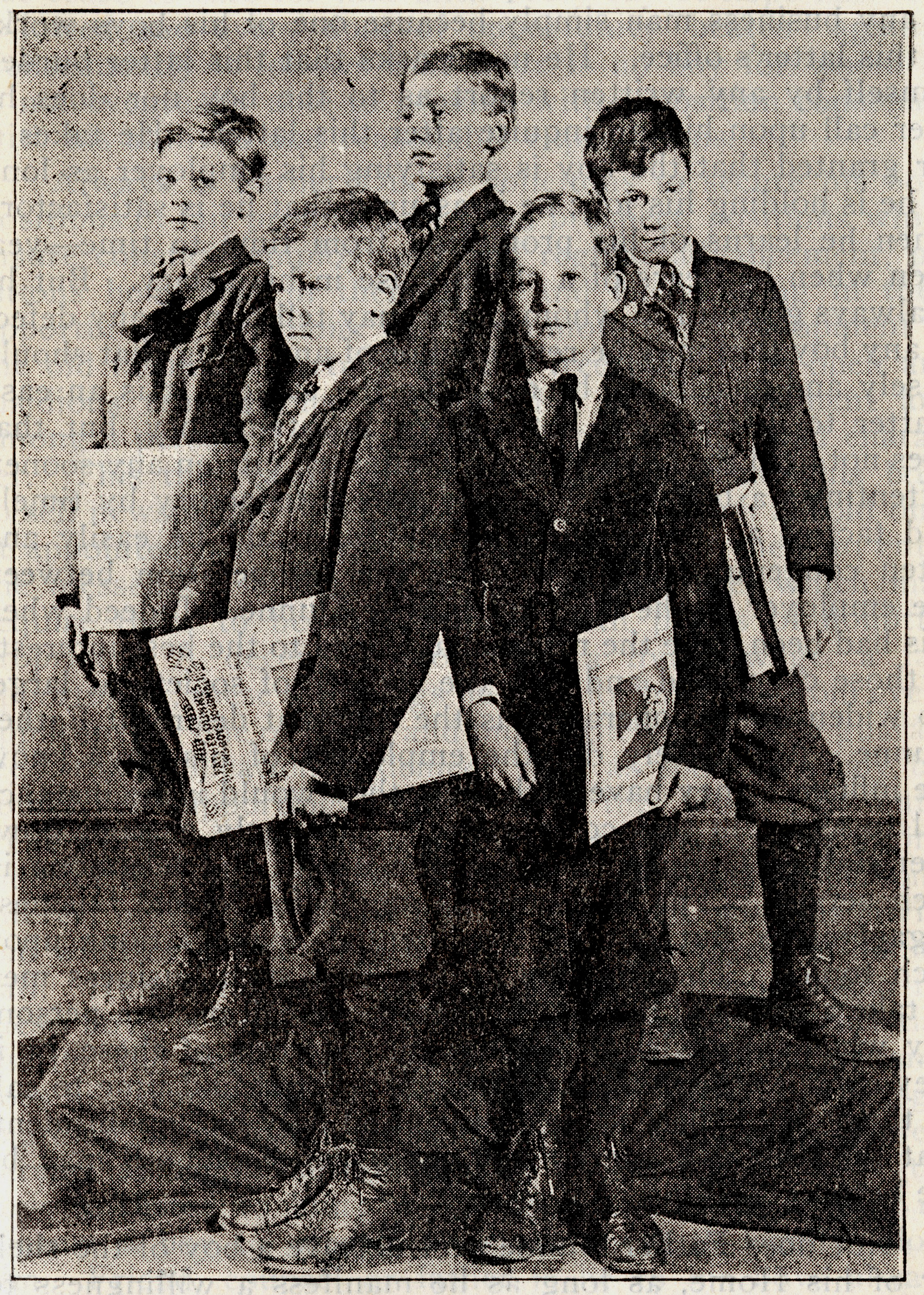
![Newsboys posing for a photo. [Rev. J. W. Gormley, History of Father Dunne’s News Boys Home and Protectorate]](/sites/default/files/styles/article_header_image/public/2025-12/5.-father-dunne.jpg?itok=zuT9Qwl3 "Newsboys posing for a photo. [Rev. J. W. Gormley, History of Father Dunne’s News Boys Home and Protectorate]")
Fighting Father Dunne, an RKO film, premiered in St. Louis on May 11, 1948. The black-and-white movie depicted the life of Peter Joseph Dunne, a local priest, who founded the St. Louis Newsboys’ Home and Protectorate in 1906. Father Dunne died in 1939, but the Newsboys’ Home continued to function until 2006 when it merged with other agencies associated with Catholic Services for Children and Youth.
Dunne was born in Chicago on June 19, 1870. After the great fire of 1871, his Irish-born parents, Patrick and Christina, moved with Peter and his sister Teresa to a farm in Ohio Township, Morris County, Kansas. By 1880 their family included Teresa, eleven, Peter, ten, Sarah, eight, Mary, six, and Joseph, one. When their parents died, Peter was about twelve years old. He and his siblings were placed in an orphanage near Kansas City, Missouri, where a nun taught Peter to read and write.
As a young man, he moved to St. Louis, worked at various jobs, and eventually found employment as a night watchman at Saint Louis University. The priests there took note of his sparkling intellect and sent him to St. Benedict’s College in Atchison, Kansas. After five years of study, he graduated at the head of his class, and in 1898 he moved to St. Louis, where he entered Kenrick Seminary, which later became Kenrick-Glennon Seminary. Kenrick traced its roots to the establishment, in 1818, of St. Mary’s of the Barrens Seminary in Perryville. Archbishop John Joseph Glennon (who later became Cardinal Glennon) ordained Peter as a priest in 1903. His sister Teresa also joined a religious order and served as a teaching nun at nearby St. Joseph’s Academy.
Father Dunne celebrated his first mass at St. Margaret’s Church, but soon found his way to St. Patrick’s Church at the corner of Sixth and Biddle Streets in the vicinity of slums, saloons, brothels, gambling dens, and rooming houses, where homeless men and boys sought shelter. He worked as an assistant to Father Timothy Dempsey, locally known as the “apostle of charity,” who became Dunne’s mentor. In the neighborhood of St. Patrick’s, Dempsey ran a hotel where a man could obtain a bed, bath, and food for a dime. He also opened a shelter for sex workers, a day nursery, and a convalescent home. When St. Louis’s first Newsboys’ Home closed its doors in 1904, Dempsey encouraged Dunne to open a new one. Archbishop Glennon gave him a lifetime commission to safeguard homeless boys.
In February 1906, Dunne rented a house at 1013 Selby Place and opened it as a shelter for his first group of boys. On their first night in the home, they had no furniture or bedding. A neighboring merchant gave them blankets, and other local businesses soon made donations. Among the first residents was a ten-year-old boy known as “Little Jimmie Fleming,” whom the priest had befriended. Ragged and unwashed, Jimmie had tried to sell newspapers on a streetcar. The driver made him get off, and Father Dunne followed him out into the street. Jimmie’s hardships and courage inspired the priest to reach out to other struggling boys, and soon he needed to find another place to house them. Six months later, he moved thirty-five boys to a house at 2737 Locust Street.
Through the generosity of an anonymous donor, the first Thanksgiving dinner at the Newsboys' Home was a catered affair for fifty-six residents. Year after year, the same donor spent a thousand dollars or more for a sumptuous feast accompanied by a string orchestra. Another donor, who did not remain anonymous, Augustus Busch, provided Christmas dinners. During these holiday events, Father Dunne praised the boys for their good behavior and led them in song. Their favorite tune reportedly was “Ireland Must Be Heaven Since My Mother Came from There.” The anonymous host of the Thanksgiving dinners turned out to be Hugh Campbell, a millionaire bachelor, who was the son of fur-trade tycoon Robert Campbell. When Hugh Campbell died in 1931, other benefactors continued to fund the holiday dinners.
Within a year of the first Thanksgiving dinner, with support from many donors, Father Dunne moved his shelter to a larger facility. The number of residents was growing rapidly, partly because the juvenile courts were sending delinquent boys to Father Dunne. In 1907, he purchased a lot at the intersection of Washington Avenue and Garrison Street. In June 1907, construction began on a three-story brick building with a two-story chapel wing at 3010 Washington Avenue. When the building opened on November 10 of the same year, the two upper stories contained dormitories, and the first floor contained music rooms, visiting parlors, a dining hall, a kitchen, and a priest’s office. By 1916, the residence housed 125 boys, mostly between the ages of five and fifteen.
The residents were not all newsboys. Some of them held other jobs, and some attended school. There was no strict age limit, but there was discrimination based on race. In 1931, more than twenty years after opening the Newsboys’ Home, Father Dunne purchased a house at 3028 Washington Avenue and opened it as a shelter for up to forty African American boys.
In 1927, the Pope bestowed a high honor on Father Dunne. For his twenty-one years of ministering to boys and young men, he received the title of papal chamberlain. This honorary office required him to serve the Pope for at least one week per year in official liturgical and state ceremonies. Archbishop Glennon made the announcement, allowing Father Dunne to wear the purple cassock and giving him the title of Right Reverend Monsignor Dunne. (In 1968, Pope Paul VI abolished the office of papal chamberlain. Priests who had been papal chamberlains were given the new title of Chaplain of his Holiness.)
Father Dunne died of pneumonia at the age of sixty-eight on March 16, 1939. On the day of his death, his sister Teresa waited for him to join her in celebrating her golden jubilee as Sister St. Flora of the Sisters of St. Joseph of Carondelet. Instead, she and a group of nuns of her order attended his funeral in Cathedral Basilica of St. Louis. Two hundred priests from the archdiocese and more than two hundred boys from Father Dunne’s homes were also in attendance. One hundred boys and men, some still in residence, others grown up and on their own, recited the rosary in unison. Archbishop Glennon officiated.
The movie Fighting Father Dunne borrowed freely from the 1938 film Boys Town, in which Spencer Tracy played Father Edward Flanagan, who founded a well-known refuge for troubled youth near Omaha, Nebraska, in 1917. In the 1940s, Reverend William Glynn, former director of the Newsboys’ Home, wrote to Pat O’Brien, a well-known Hollywood actor, asking him to play the role of Father Dunne. O’Brien broached the idea to the producer, Phil Ryan, who took on the project. A local writer, William Rankin, wrote the original story, on which the screenplay was based. When the film premiered at St. Louis’s Fox Theater on May 11, 1948, Pat O’Brien appeared on the stage.
The film portrayed the “fighting” priest as kind and patient rather than militant, but was unstinting in its depiction of the ugliness, squalor, and danger of the city streets. The sets, constructed in California, were faithful replicas of the original Newsboys’ Home and surrounding buildings as they appeared in the early twentieth century. An RKO production unit traveled to St. Louis to film the Eads Bridge, the waterfront, and many other background scenes. The plot, and especially the movie’s climax, had more than a dash of melodrama, but, overall, the film paid affectionate tribute to a man’s life and work.
“100 of Fr. Dunne’s Boys Say Rosary in Unison at Funeral.” St. Louis Globe-Democrat, March 22, 1939, 4.
Carter, Nick. “St. Louis ‘Fighting Father Dunne’ and His News Boys Headin’ for the Screen.” St. Louis Globe-Democrat, April 27, 1947, 53.
“Father Dunne Dies at 69.” St. Louis Globe-Democrat, March 17, 1939, 1, 6, 7.
Gormley, J. W. Father Dunne’s News Boys Home and Protectorate. St. Louis: Father Dunne’s Newsboys, n.d.
Lyons, Daniel. “Social Crusader: Msgr. T. Dempsey.” Irish Monthly 80, no. 946 (April 1952): 142–47.
Stepenoff, Bonnie. “Child Savers and St. Louis Newsboys, 1896–1948.”Missouri Historical Review 104, no. 3 (April 2010): 125–37.
———. Dead End Kids of St. Louis: Homeless Boys and the People Who Tried to Save Them. Columbia: University of Missouri Press, 2010.
“Thanksgiving Story: Father Dunne’s Boys and Hugh Campbell.” Campbell House Museum, November 27, 1913. https://campbellhousemuseum.wordpress.com/2013/11/27/father-dunne-campbell-connection/.
Published December 23, 2025
Creative Commons Attribution-NonCommerical-ShareAlike 4.0 International (CC BY-NC-SA 4.0)