 the State Historical Society of Missouri
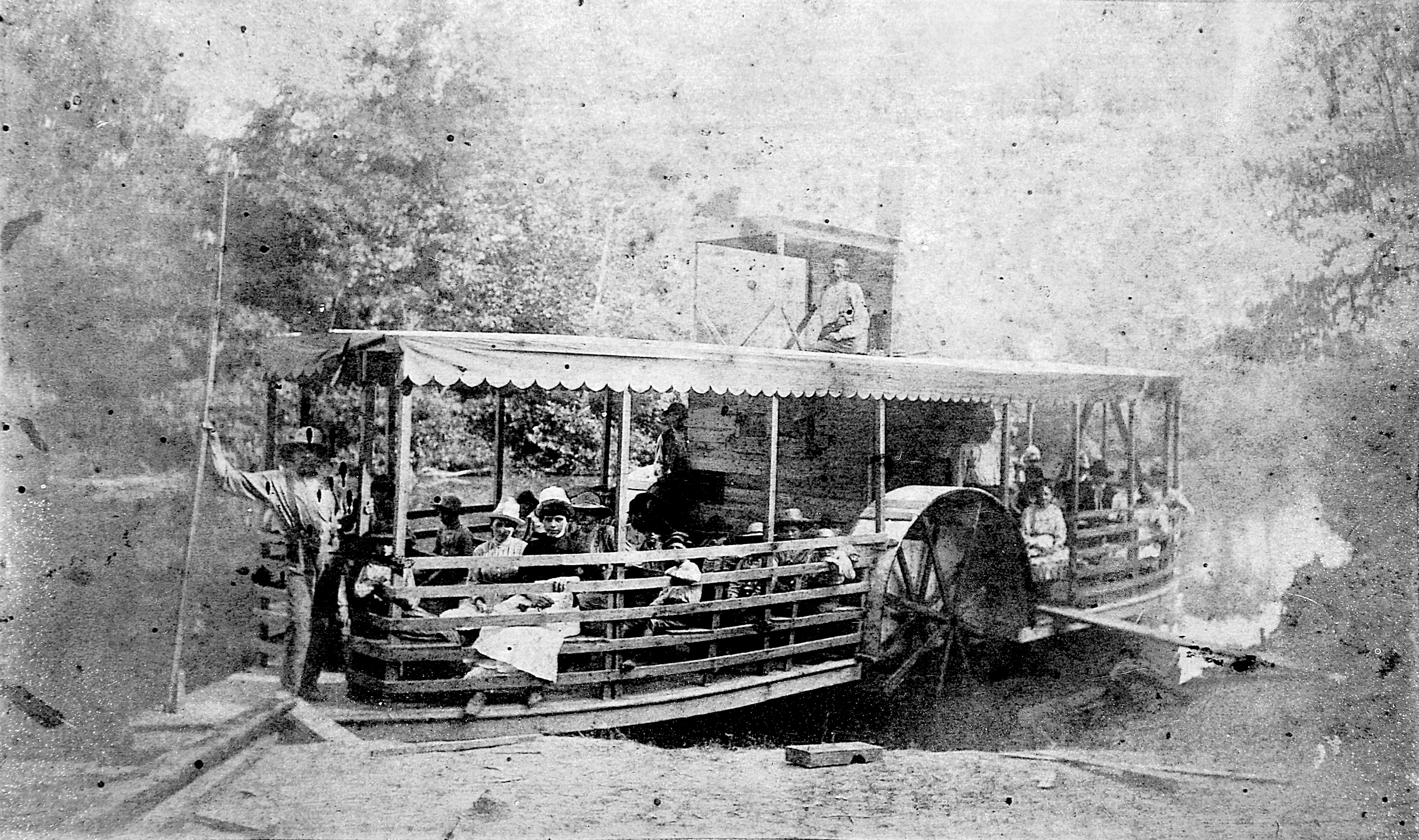
![This steamboat once graced northern Indian Creek in McDonald County, Missouri. [Courtesy of Ric Akehurst]](/sites/default/files/styles/article_header_image/public/2026-01/1.-indian-springs.jpg?itok=O0vOq6OB "This steamboat once graced northern Indian Creek in McDonald County, Missouri. [Courtesy of Ric Akehurst]")
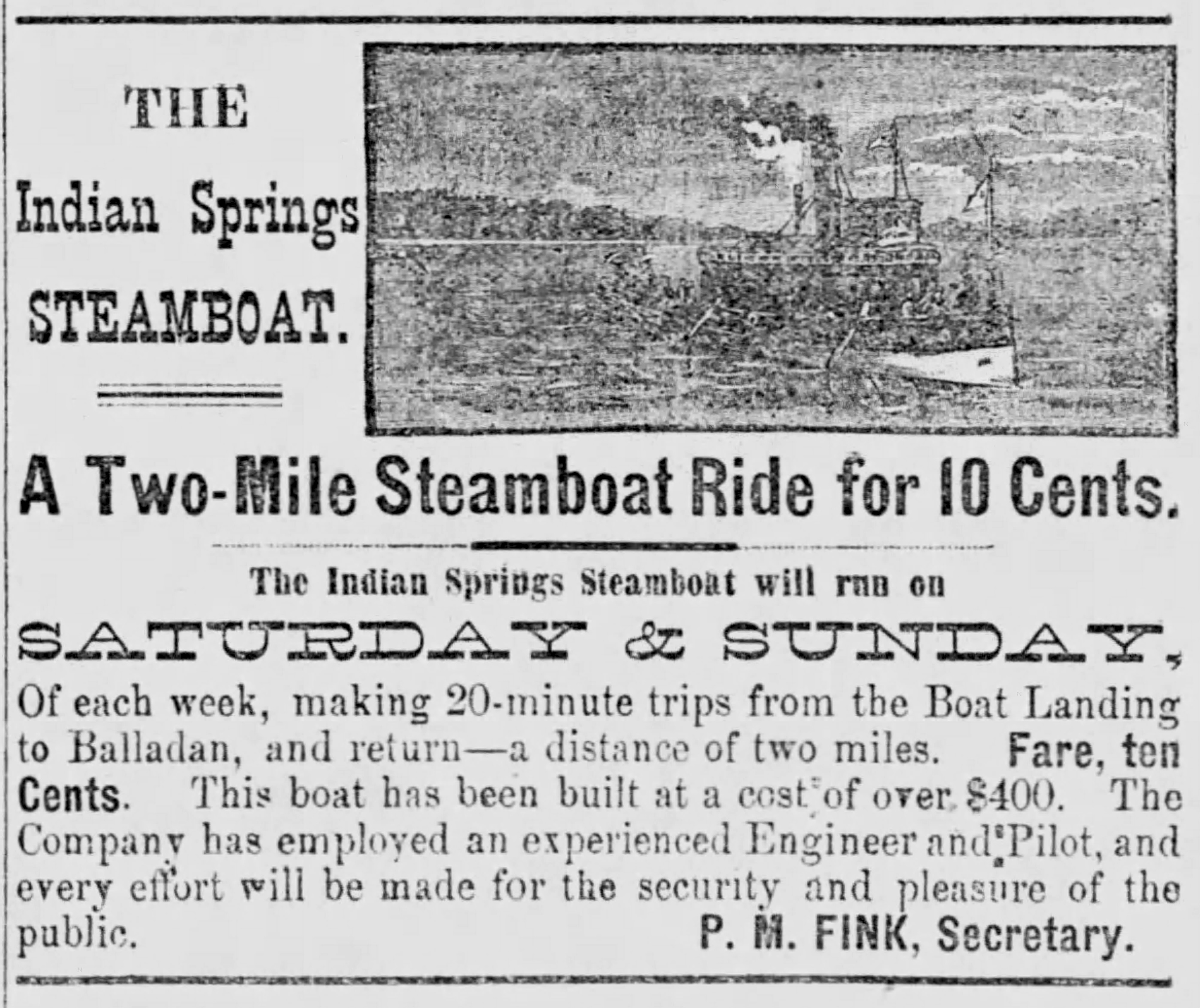
![An 1886 advertisement for the Indian Springs steamboat in the Pineville News. [Pineville News, October 10, 1886]](/sites/default/files/styles/article_header_image/public/2026-01/2.-indian-springs.jpg?itok=U0tELVzC "An 1886 advertisement for the Indian Springs steamboat in the Pineville News. [Pineville News, October 10, 1886]")
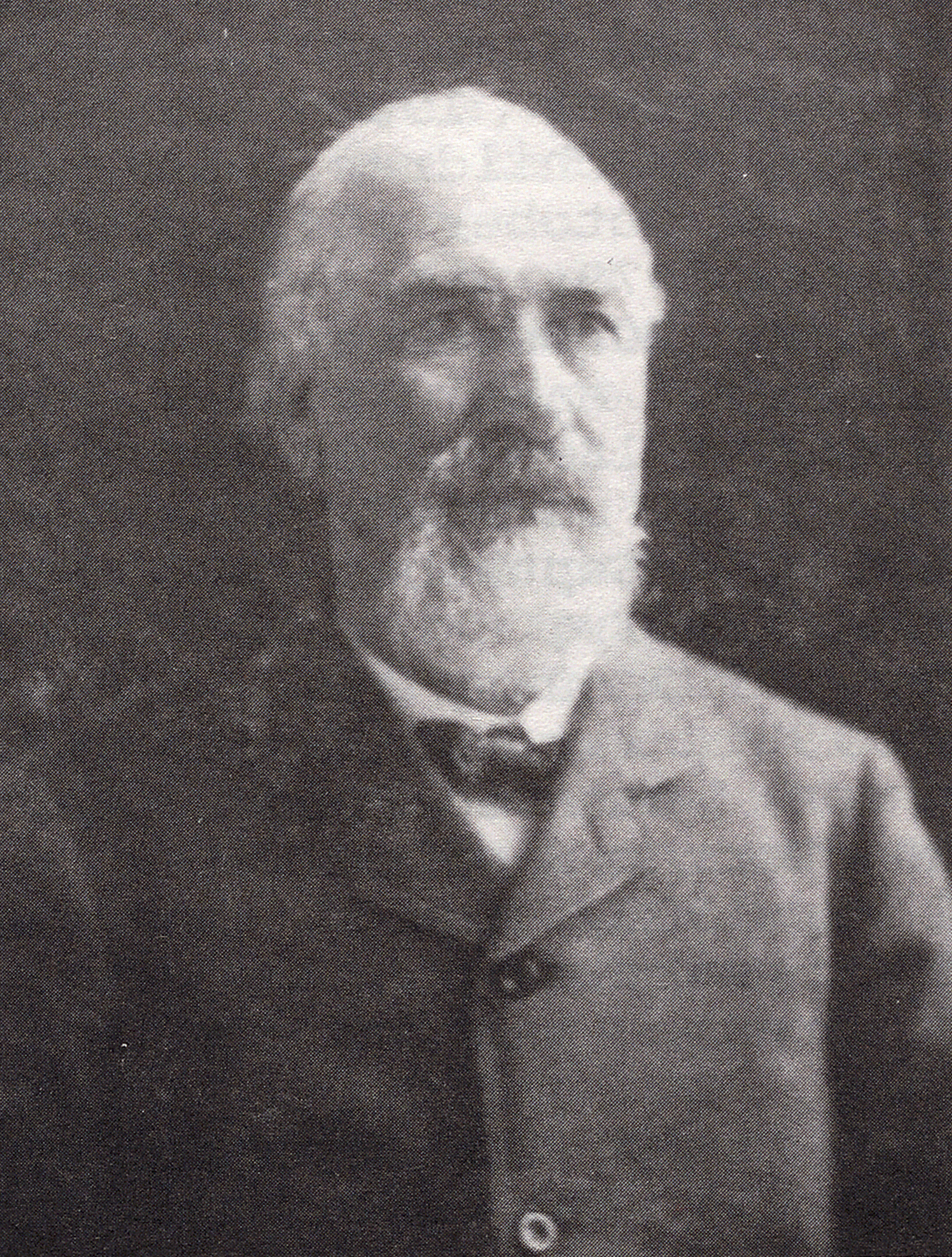
![John Jay McNatt. [Biographical Sketches of Newton County Families and their Neighbors: Volume 2]](/sites/default/files/styles/article_header_image/public/2026-01/3.-indian-springs.jpg?itok=vXBsx3OF "John Jay McNatt. [Biographical Sketches of Newton County Families and their Neighbors: Volume 2]")
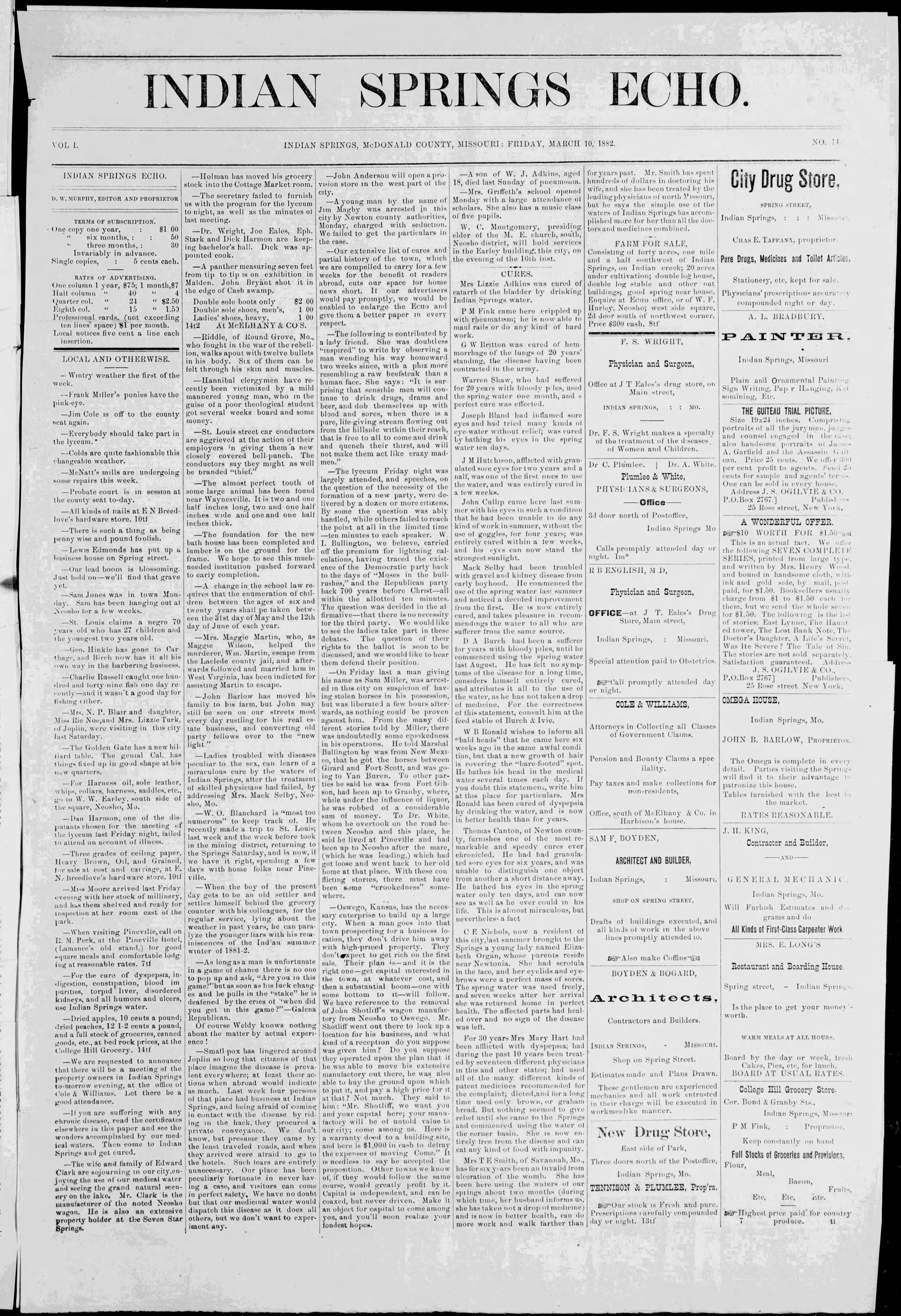
![Of the three newspapers that once existed in Indian Springs, this single edition of the Echo is the only known surviving copy. [Indian Springs Echo, March 10, 1882]](/sites/default/files/styles/article_header_image/public/2026-01/4.-indian_springs.jpg?itok=FzViMJHe "Of the three newspapers that once existed in Indian Springs, this single edition of the Echo is the only known surviving copy. [Indian Springs Echo, March 10, 1882]")
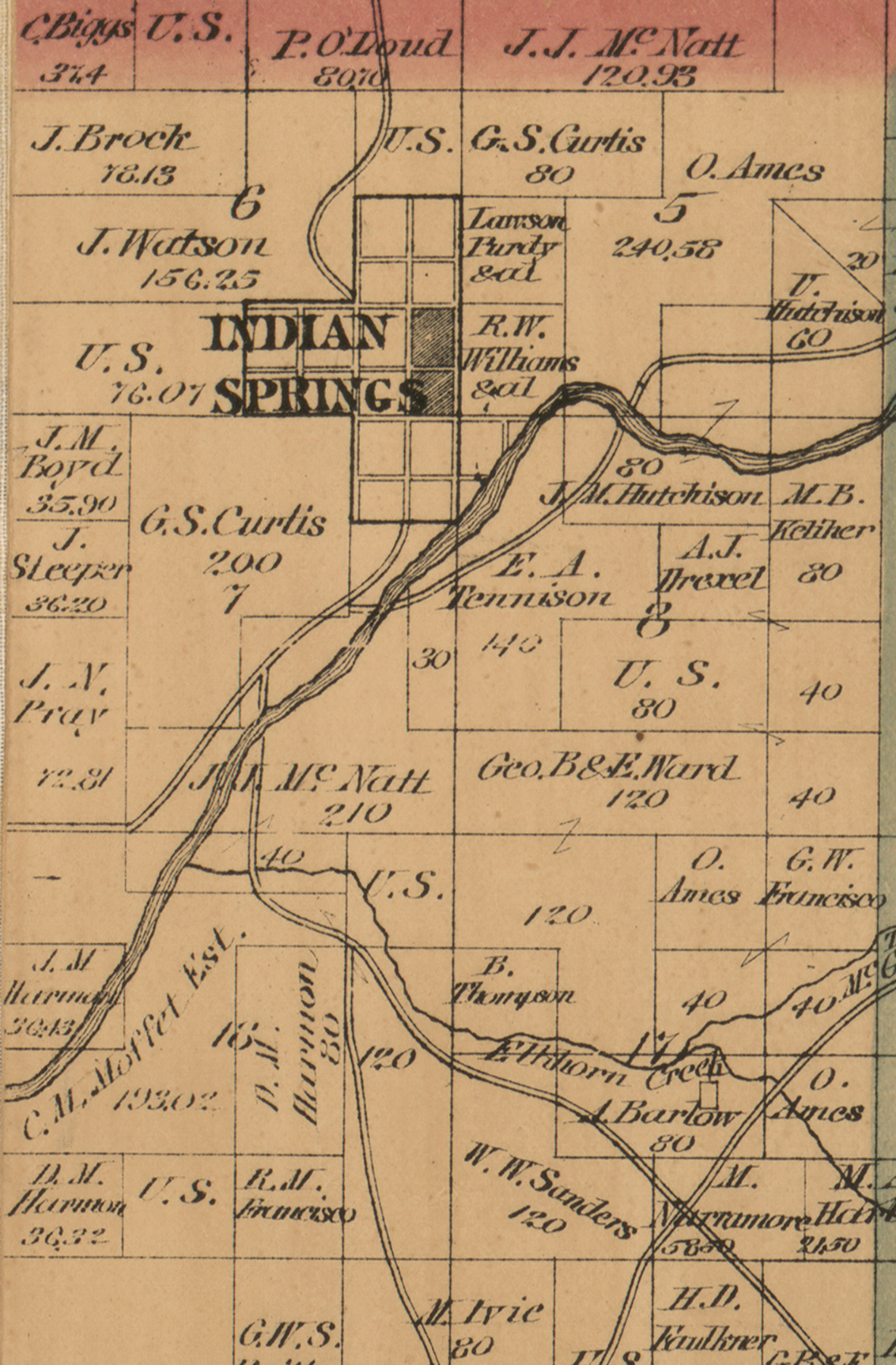
![Detail from an 1884 map of McDonald County showing the town of Indian Springs, Indian Creek, and properties of nearby landowners, including John Jay McNatt. [Library of Congress, Geography and Map Division, item 2012593038]](/sites/default/files/styles/article_header_image/public/2026-01/5.-indian-springs.jpg?itok=ZXyLvJdN "Detail from an 1884 map of McDonald County showing the town of Indian Springs, Indian Creek, and properties of nearby landowners, including John Jay McNatt. [Library of Congress, Geography and Map Division, item 2012593038]")
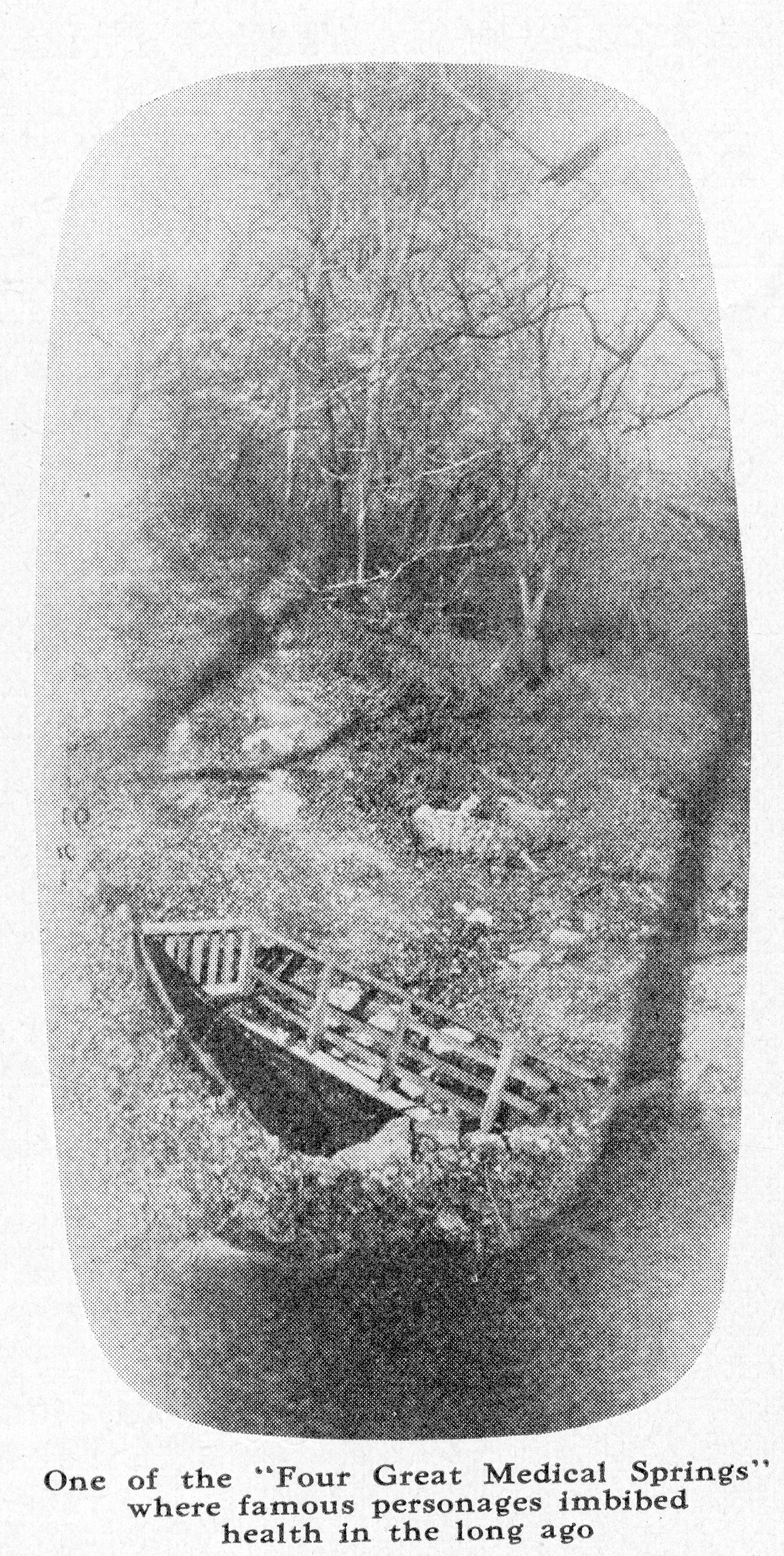
![One of the springs at Indian Springs, 1930. [Missouri, March 1930]](/sites/default/files/styles/article_header_image/public/2026-01/6.-indian-springs.jpg?itok=bEj056_P "One of the springs at Indian Springs, 1930. [Missouri, March 1930]")
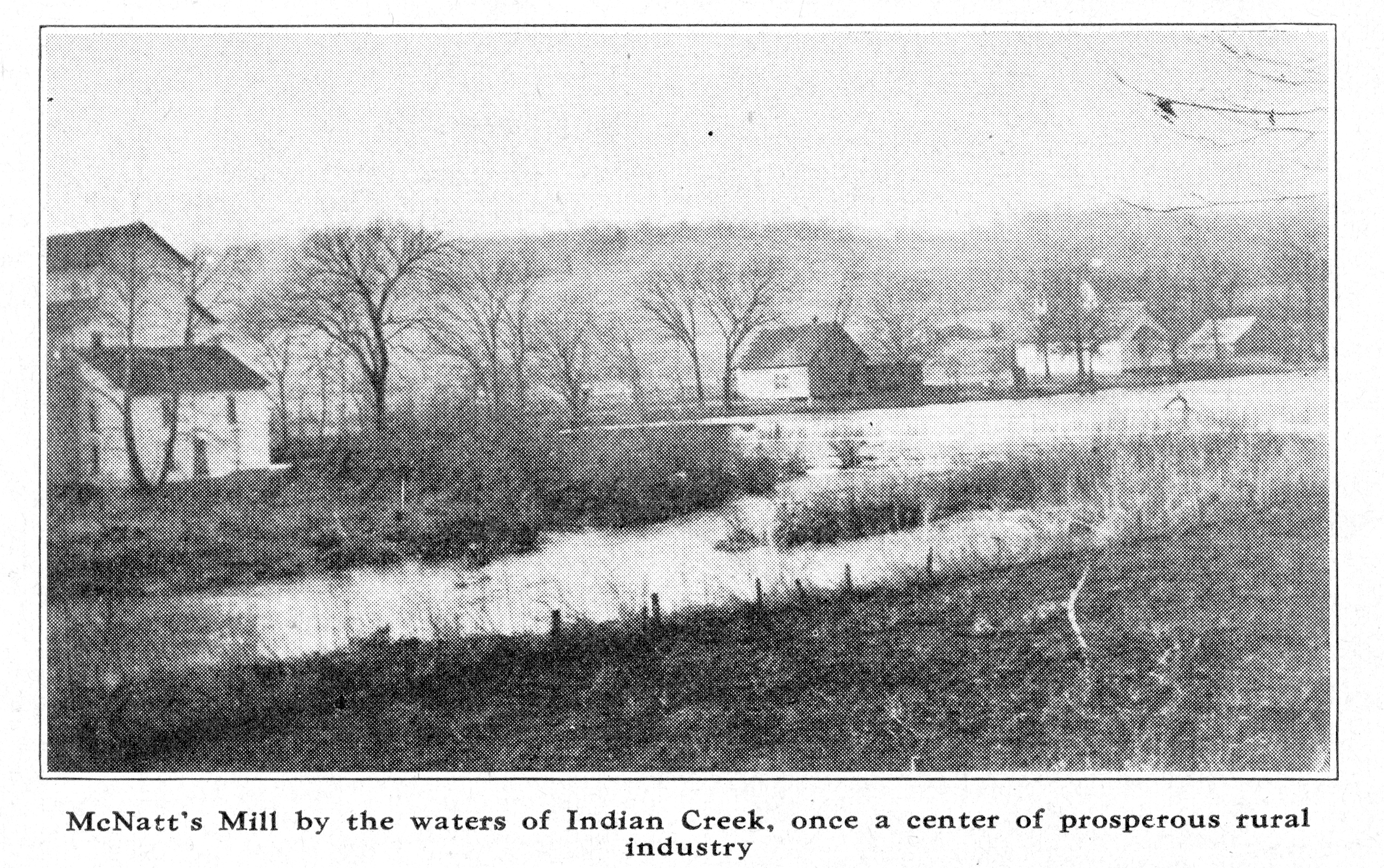
![McNatt’s Mill in a photo published after the demise of Indian Springs. [Missouri, March 1930]](/sites/default/files/styles/article_header_image/public/2026-01/7.-indian-springs.jpg?itok=F3J6n1RI "McNatt’s Mill in a photo published after the demise of Indian Springs. [Missouri, March 1930]")
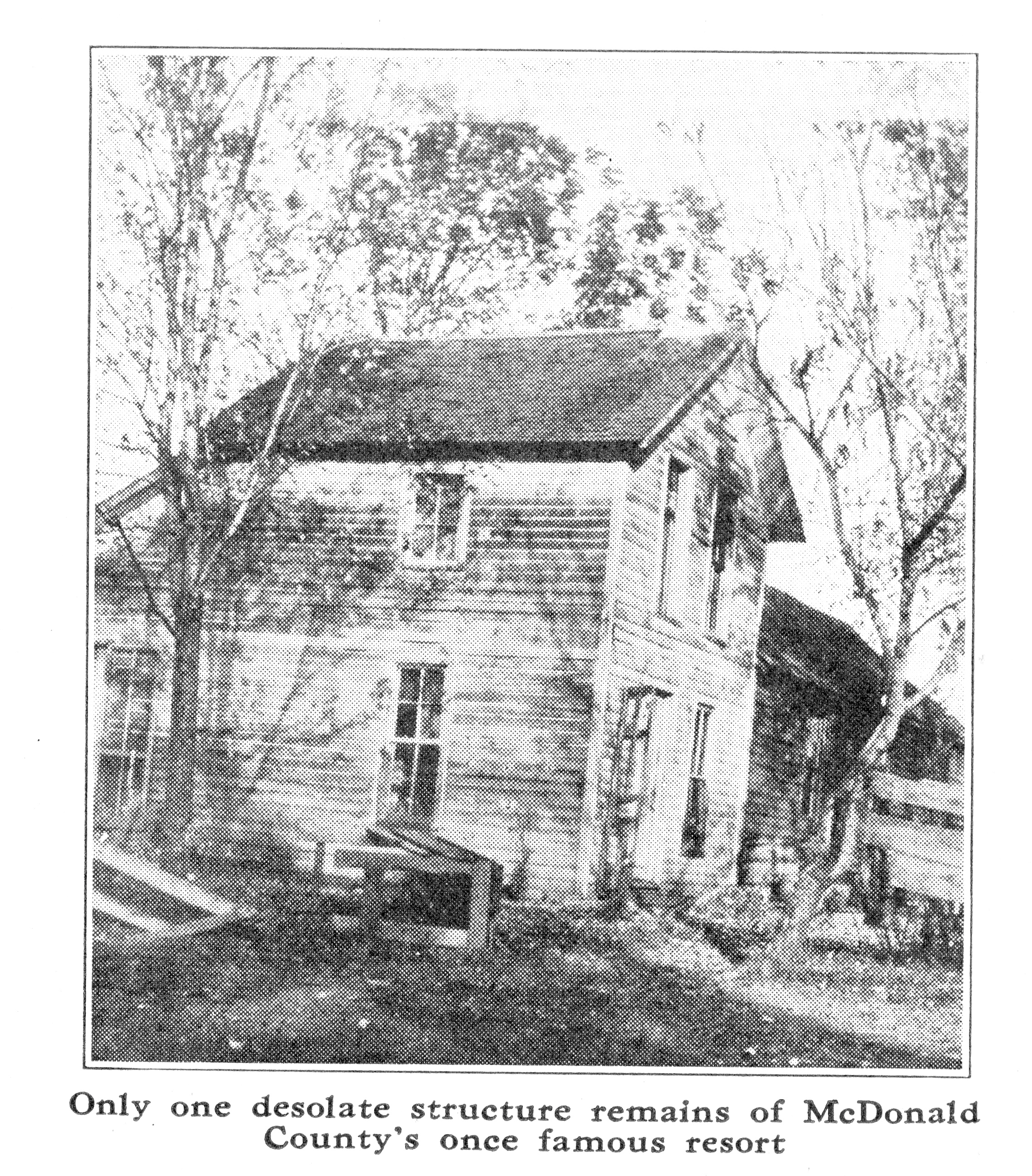
![The last building remaining in Indian Springs. [Missouri, March 1930]](/sites/default/files/styles/article_header_image/public/2026-01/8.-indian-springs.jpg?itok=PQHjsN7p "The last building remaining in Indian Springs. [Missouri, March 1930]")
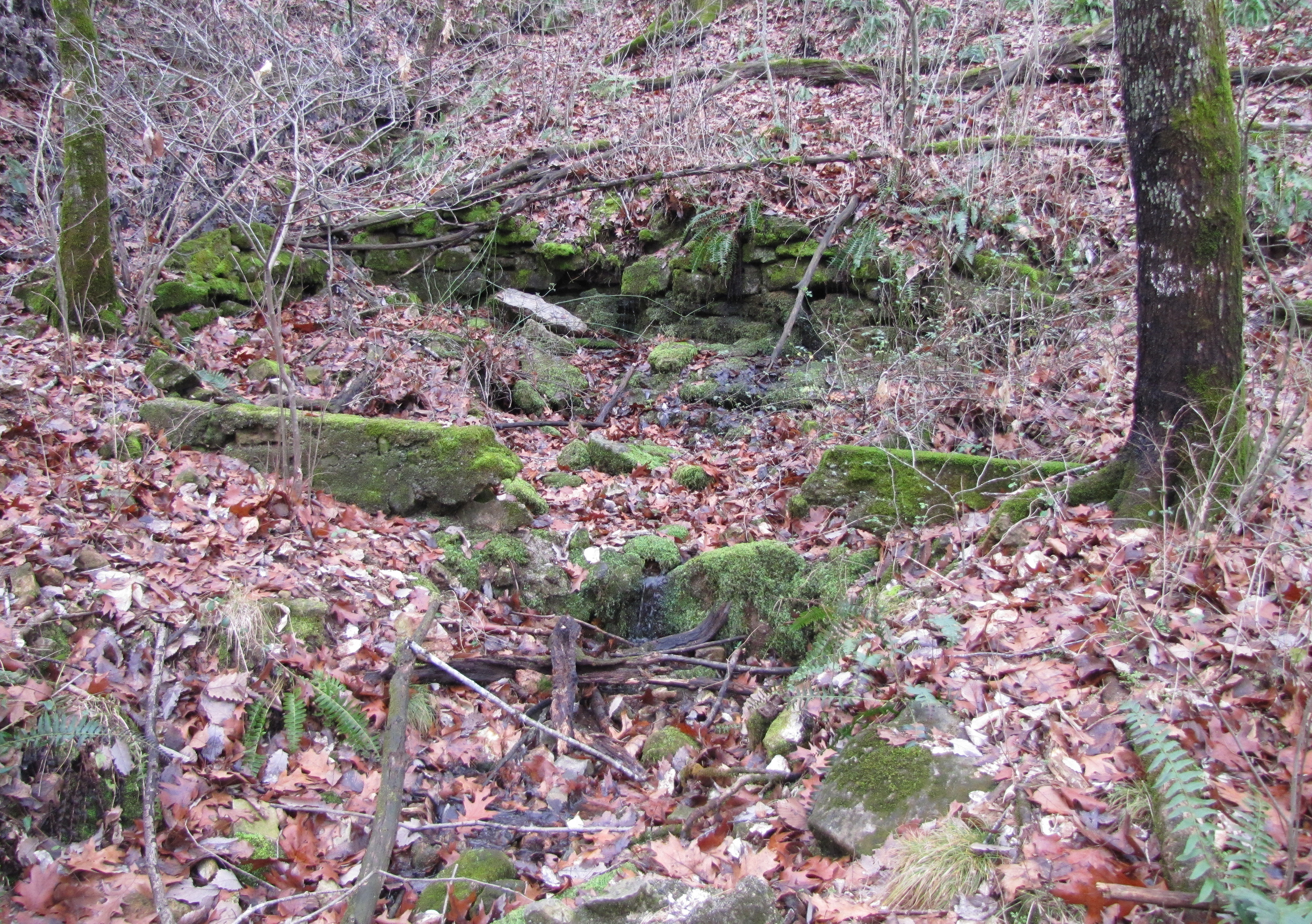
![View of a spring in the vicinity of Indian Springs. [Photo by Kimberly Harper]](/sites/default/files/styles/article_header_image/public/2026-01/9.-indian-springs.jpg?itok=EYnoFW_L "View of a spring in the vicinity of Indian Springs. [Photo by Kimberly Harper]")
Indian Springs was a resort town in McDonald County founded in 1881 during the nineteenth-century medicinal springs boom. Tucked away in scenic Indian Creek Valley in the northeastern part of the county, the springs were highly prized by Native Americans. In the 1830s a man named Friend, thought to be the first white settler on Indian Creek, sought out the springs for their alleged restorative properties; a few years later a woman known only as Mrs. Carroll reportedly used the water to great effect. The springs, however, remained virtually undisturbed until June 1871, when they were rediscovered by Drury Wilkerson, an employee at the nearby mill on Indian Creek. Another ten years passed, however, before Indian Springs became a regional phenomenon.
In 1874, John J. McNatt rented Baladan Mills on Indian Creek and opened a wool-carding mill. Log, saw, and grist mills had been operated previously on the site by Nathan Blair, John Plummer, and Elihu Blankenship. The springs were north of the mills. The McDonald County seat, Pineville, was eleven miles to the southwest, and the Newton County seat, Neosho, was twelve miles to the northwest. After one man claimed the spring water cured his chronic sore eyes, McNatt and other boosters—many of whom were Civil War veterans—embarked on creating a new resort town. On July 7, 1881, Baladan’s post office was transferred to Indian Springs, and the US Post Office gave it official recognition on November 4, 1881. Lots were laid out and the boom began.
McNatt and the other boosters hoped to capitalize on a widespread late nineteenth-century belief that mineral springs held medicinal qualities which could alleviate or even cure many ailments. Across the nation, and even globally, people flocked to health resorts and spas to “take the waters.” With its abundant natural springs, Missouri became the home of almost eighty health resorts in at least fifty-two counties scattered across the state. Visitors to such resorts could not only indulge in curative visits but also engage in leisurely outdoor activities such as camp meetings, fishing, swimming, boating, and horseback riding.
A frenzy of speculation enveloped Indian Springs. A few days after the town was established, P. R. Smith reported in the July 21, 1881, edition of the Neosho Times: “The water tastes and looks like the Eureka Springs [Arkansas] water and no doubt possesses the same curative properties. A number of cures of sore eyes, ulcers, kidney affections, &c., were given by several parties, showing the wonderful efficacy of the water.” He noted that in less than two weeks, two hundred lots had been sold, twenty houses constructed, and at least ten individuals had or were in the process of establishing businesses. Smith estimated that a thousand people had visited Indian Springs and noted the price of lots had soared from a dollar to $15 to $20 each. He observed, “If the [medicinal springs] craze will have the effect of making the human family bathe more freely in pure water … a great and permanent good will have been effected.”
Over time, four additions were made to the town, and a cemetery was established a short distance to the west. The promise of restored health attracted people over the ensuing years, though the trek to the springs, while picturesque, was less than ideal. Visitors had to use their own transportation or hire a hack in Neosho or Pineville; rail service was nonexistent, with the nearest train station in Neosho. Those intrepid enough to make the journey found a variety of amenities. Although the number and type of businesses changed with the ebb and flow of Indian Springs’s popularity, the town at various times boasted the Planter’s House Hotel, Joplin Hotel, and Sagoyewatha Hotel. Some visitors camped in tents during warmer months. Bathhouses were available. There was a drugstore, two general stores, butcher shop, wagon shop, smithy, photography studio, livery stable, soft-drink stand, post office, saloons, and a millinery store. According to some sources, saloons were discouraged by 1885; Goodspeed’s 1888 History of McDonald County stated, “for the last five years there have been no liquor dealers at Indian Springs.” That same year, however, the Eagle Saloon opened. Liquor dealers did not lack competition; a widow in a neighboring hollow allegedly manufactured and sold whiskey at lower prices. The town’s professional class varyingly consisted of a dentist, physicians, lawyers, and a real estate and pension agent. During its lifetime the town had three newspapers: the Indian Springs Herald, Indian Springs Echo, and Indian Springs Chief.
The springs themselves also offered options to those seeking a remedy. Inscriptions posted above each of the flowing springs helped visitors decide which would be best for their ailments. M. R. Nevins, who visited in 1881, observed, “Five springs flowing out of the bluff 20–25 feet from the bottom of the hollow, and 75 below the summit of the bluff … None of them is of strong or disagreeable taste; the water is soft and not very cold … I visited the beautiful lake [Lake McNatt], which is about a mile long … If the springs maintain their high reputation, this lake will be a great resort of visitors … On all sides I could hear the sounds of hammer and saw and see houses going up on every hill and in every hollow. Progress was signified by whatever was going on. The town looked as if it had grown by magic, and so it had, by the magic of its waters.”
The Indian Springs Echo and other newspapers recounted individual success stories. It claimed Pius M. Fink, once crippled by rheumatism, could again perform manual labor. Civil War veteran G. W. Britton, who suffered a lung hemorrhage while in the army, was restored to good health. But Indian Springs boosters did not rely solely on the springs’ purported medicinal qualities to attract clientele; they sought to make their health resort as attractive as possible. One of the most notable efforts was Lake McNatt, formed by the mill dam on Indian Creek. Visitors could rent rowboats for 25 to 35 cents an hour. A small steamboat, perhaps the first and last one to operate in McDonald County, was built by boosters for $400. Two-mile rides were available on Saturdays and Sundays for ten cents. Horse races, another popular pastime, drew clientele of a different kind; gamblers came to town to bet on the races and play poker. Religious camp meetings drew attendees from across the area.
From its beginnings as a tourist resort, Indian Springs became an established rural community. There were five churches and four fraternal organizations: Grand Army of the Republic, Independent Order of Odd Fellows, International Organization of Good Templars, and the Knights of Labor. A two-story schoolhouse was built on a knoll known as College Hill at a cost of $1,500. The town park’s rostrum and band stand were frequently used for political and social events. At Christmastime a community tree was created by stretching a double strand of rope across Main Street eight to nine feet high. Lanterns were hung from the rope before it was decorated with candy hearts featuring colored pictures, evergreen boughs, popcorn strings, and toy horses and guns. On Christmas Eve, residents from Bethpage, Erie, Elkhorn, McNatt, and Pineville arrived to hang gifts on the ropes. Santa Claus would then appear, call out the names on the presents, and pass them out to recipients.
Margaret Anderson, who grew up on a farm near Indian Springs, later recalled “little cottages built on the steep hill side close to a foot path going down to the springs.” Living in those cottages were “nicely dressed people.” Some “porches had swinging hammocks, a canary in a cage, a lady sewing on a sewing machine which none of us . . . had ever see [sic] before, and maybe a gent playing the violin or guitar. We would stop and stare at all the wonderful sights.” Anderson remembered three or four saloons, dance pavilions, and also attending bean dinners and Fourth of July celebrations over which John J. McNatt presided.
Those tight-knit communal bonds eventually frayed, however, due to external forces beyond the residents’ control. Indian Springs’s existence was, to some extent, always tenuous. In an isolated valley far from a rail line, its survival depended on the popularity of the health resorts. Just a few months after the town was founded, the staff of the Pineville News, following a merger with the Indian Springs Herald, refuted rumors that Indian Springs was already on the decline. By 1887 the town’s isolation and the rise of regional rival Eureka Springs prompted the Indian Springs Chief to unsuccessfully plead for a hack line (a horse-drawn carriage line) to be established between Indian Springs and the region’s commercial center in Joplin. Efforts to raise interest in potential lead, zinc, and silver deposits allegedly found near Indian Springs also failed to pique interest from investors. The town’s dim hope of survival hinged on Dr. Julius C. PeTit’s acquisition of the Planter’s Hotel in 1887; he operated it as a hotel, medical and surgical sanitarium, and printing office. But PeTit’s efforts to revive interest in Indian Springs ended in failure. He sold his stock of medical drugs to S. D. Preston, who moved them to Pineville. In October 1889 the legal trustees of the town of Indian Springs sold the hotel and sections of the Williams and Tennison addition. Indian Springs was nearing its end.
When it was first established, Indian Springs attracted weekend crowds of up to 1,500, but it likely never boasted a large number of permanent residents. While no official population count exists prior to 1890, in 1882 the Indian Springs Echo estimated the population at 1,500 and in 1884 it was estimated at 500. Just how accurate these estimates were is unknown. Within four years the population allegedly stood at 400. In 1890 the US Census reported a population of 131 residents. By 1900 it had dropped to 55. Advances in science and medicine led many to rely less on holistic cures and more on pharmaceutical drugs and professionally trained physicians. The growth of resort areas along Elk River around Noel and Elk Springs in the southern half of McDonald County offered new ways to spend leisure time, too. By 1915 the widespread adoption of the automobile provided new opportunities for travel and recreation. Although some accounts claim visitors came from as far away as New York, the town’s boosters likely never invested heavily in advertising, thus limiting its exposure to prospective clientele. Eureka Springs, which developed around the same time as Indian Springs, became the most popular Victorian health resort in the Ozarks. Serviced by the St. Louis and San Francisco Railway, it attracted visitors from across the country. It also appears that no effort was made to bottle Indian Springs water for commercial purposes, which would likely have been impractical given the difficulties of getting it to market.
Slowly the town faded. Many buildings fell victim to neglect, time, and scavengers. Some were destroyed by fire; others were moved to nearby towns such as Erie, Goodman, and Stella. Lumber from the Planter’s House Hotel was repurposed to build local farmhouses. By 1930 only one building remained. In 1941 the federal government acquired thousands of acres of land in McDonald and Newton Counties for Camp Crowder, a military installation; the land Indian Springs was situated on was within the boundaries of the camp. After World War II, Camp Crowder was deactivated and the Indian Springs site was returned to private ownership. The only vestiges of the town that remain are the springs and nearby Indian Springs Cemetery.
Bullard, Loring. Healing Waters: Missouri’s Historic Mineral Springs and Spas. Columbia: University of Missouri Press, 2004.
Carnell, Pauline, and Ralph Pogue. “Indian Springs Sprung Up—Flourished then Fizzled.” McDonald County News-Gazette, September 1, 1993.
History of Newton, Lawrence, Barry, and McDonald Counties. Chicago: Goodspeed Pub. Co., 1888.
Mickey, Roxy. “Indian Springs Now a Phantom Town.” Missouri (March 1930).
Schweitzer, Paul. A Report on the Mineral Waters of Missouri. Vol. 3. Jefferson City: Missouri Geological Survey and Water Resources, 1892.
Slankard, Thelma. “Indian Springs Once a Thriving Village.” Neosho Miner and Mechanic, April 10, 1959.
Sturges, J. A. Illustrated History of McDonald County Missouri. Pineville, MO: J. A. Sturges, 1897.
Published January 22, 2026; Last updated January 23, 2026
Creative Commons Attribution-NonCommerical-ShareAlike 4.0 International (CC BY-NC-SA 4.0)