 the State Historical Society of Missouri
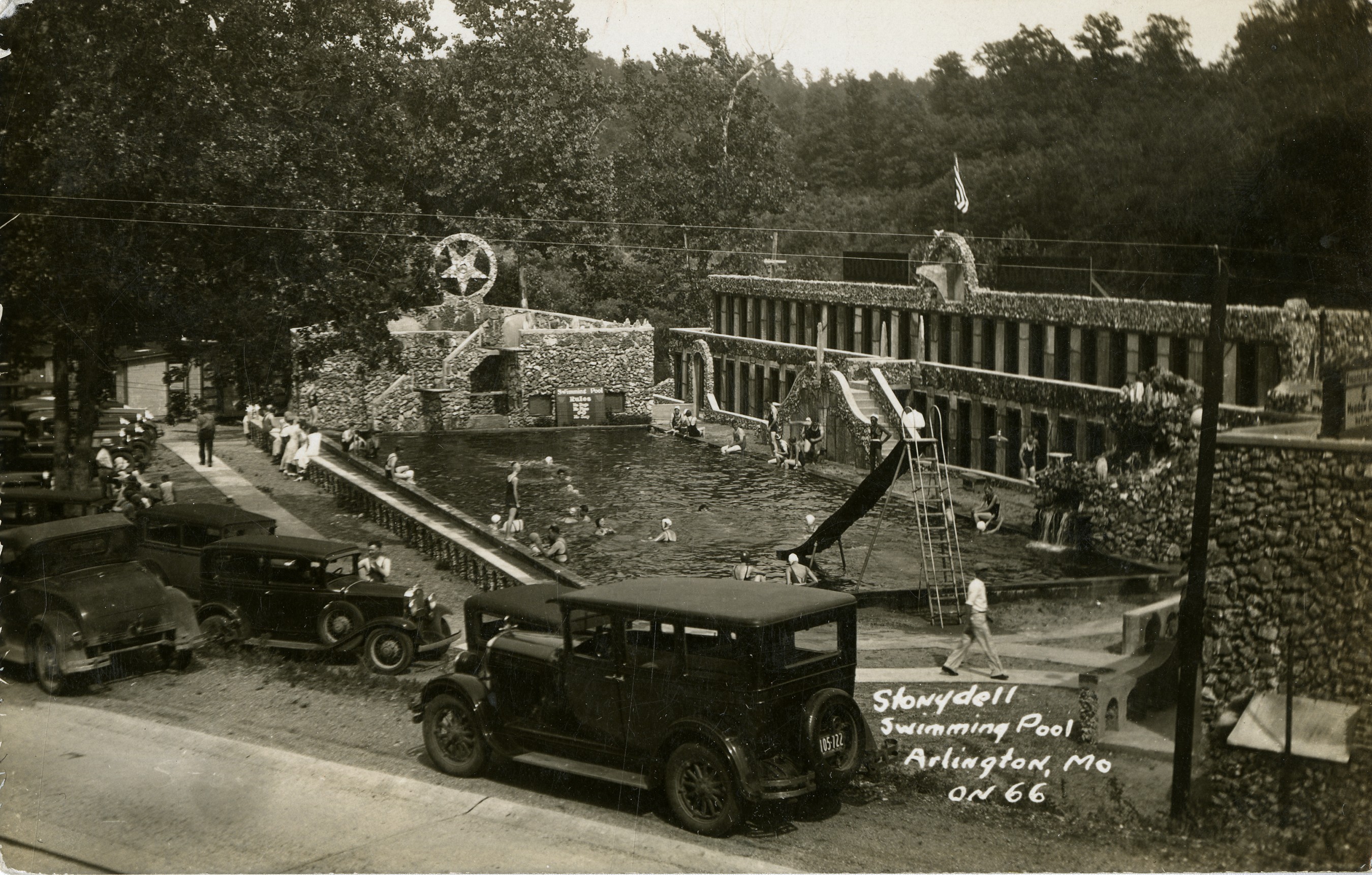
![Stony Dell. [State Historical Society of Missouri, John F. Bradbury Postcard Collection, R1551]](/sites/default/files/styles/article_header_image/public/2026-03/1.-stony-dell.jpg?h=46c2bdcb&itok=mUWj6J7A "Stony Dell. [State Historical Society of Missouri, John F. Bradbury Postcard Collection, R1551]")
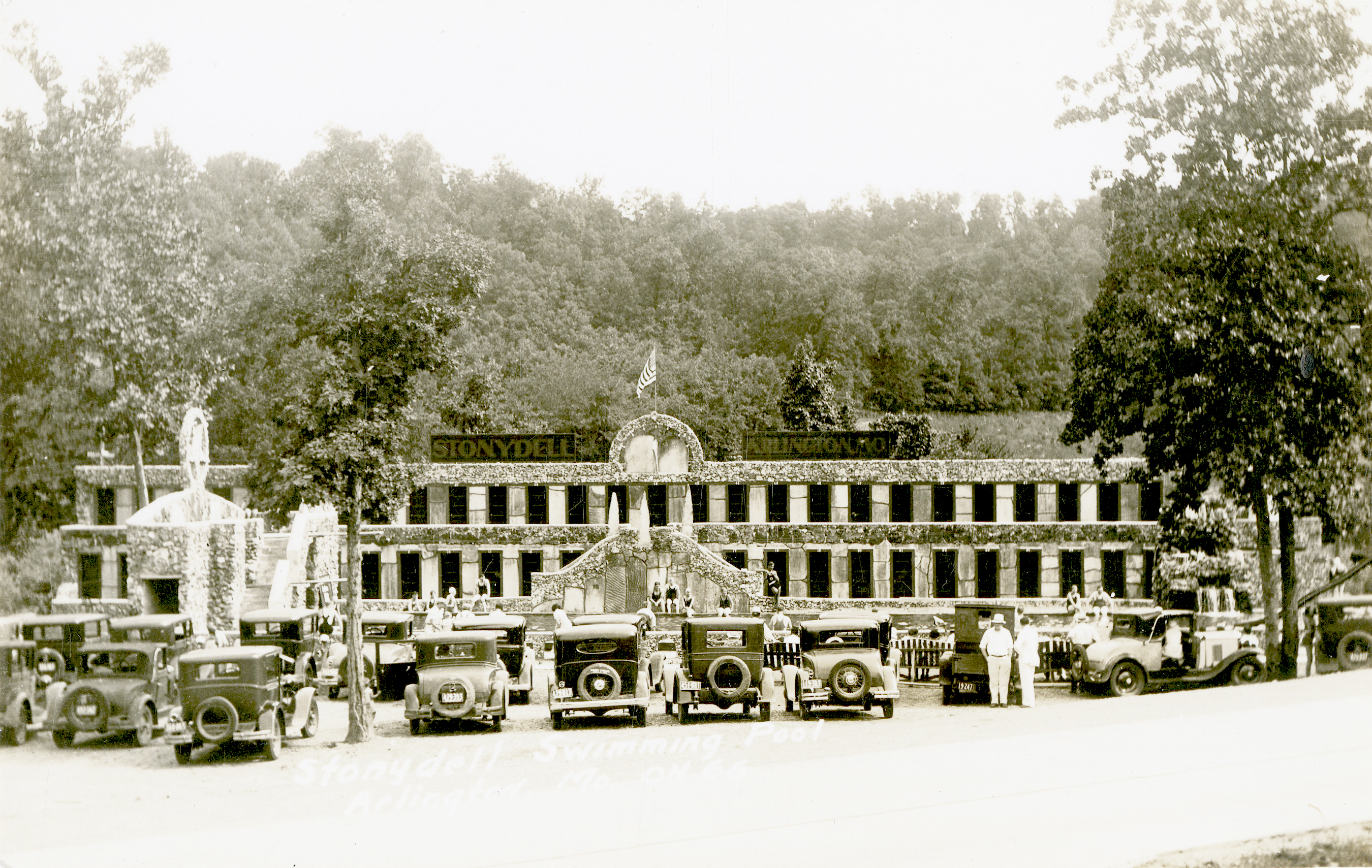
![A view of Stony Dell’s two-story bathhouse with changing rooms overlooking the pool. [State Historical Society of Missouri, John F. Bradbury Postcard Collection, R1551]](/sites/default/files/styles/article_header_image/public/2026-03/2.-stony-dell.jpg?itok=nv3_xNyW "A view of Stony Dell’s two-story bathhouse with changing rooms overlooking the pool. [State Historical Society of Missouri, John F. Bradbury Postcard Collection, R1551]")
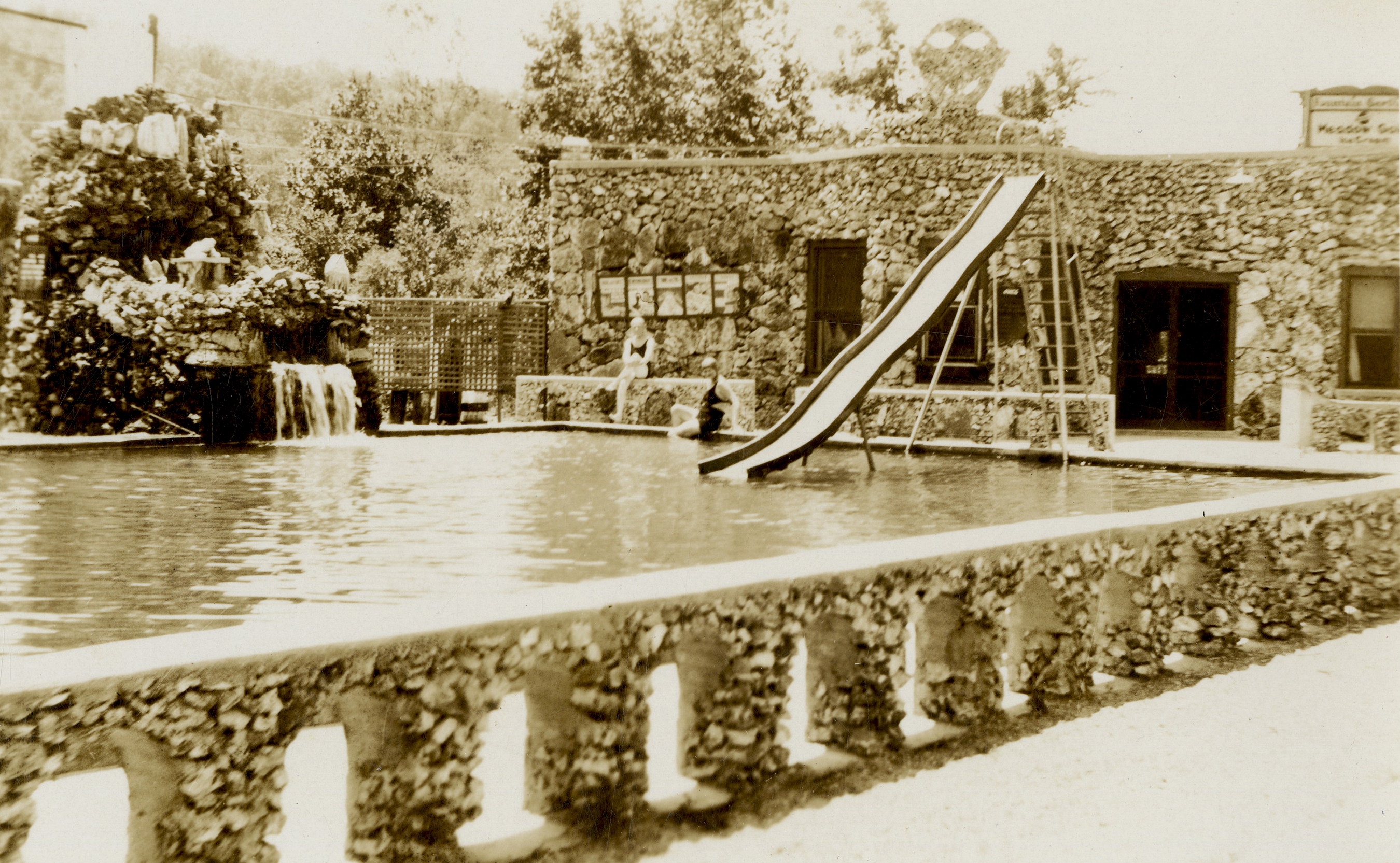
![Water from artesian wells flowed up and out of a rock fountain visible at left. [State Historical Society of Missouri, John F. Bradbury Postcard Collection, R1551]](/sites/default/files/styles/article_header_image/public/2026-03/3.-stony-dell.jpg?itok=PO8Vt6MS "Water from artesian wells flowed up and out of a rock fountain visible at left. [State Historical Society of Missouri, John F. Bradbury Postcard Collection, R1551]")
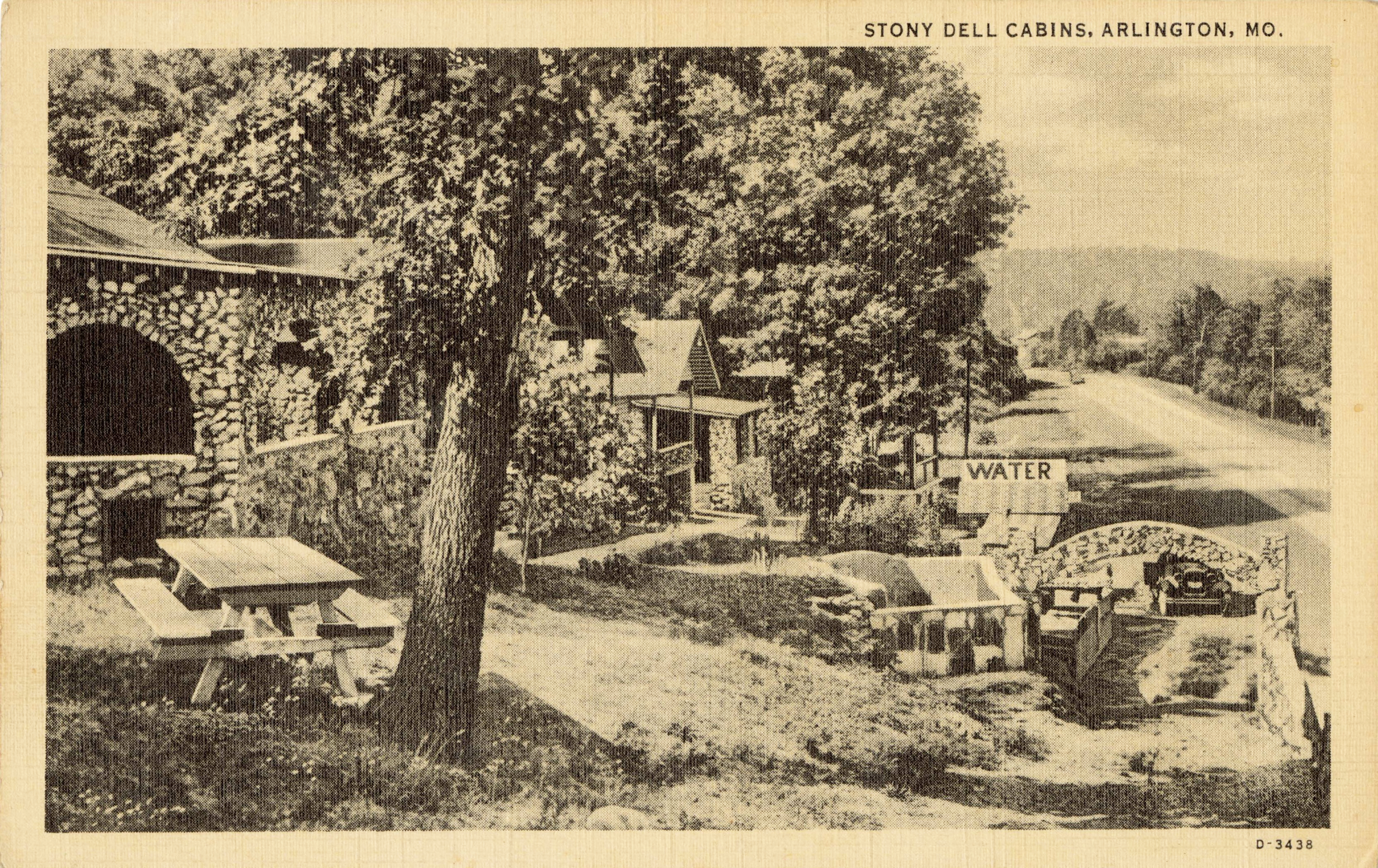
![Stony Dell was located on both sides of Route 66; this view of the cabins shows the north side of the complex. [State Historical Society of Missouri, John F. Bradbury Postcard Collection, R1551]](/sites/default/files/styles/article_header_image/public/2026-03/4.-stony-dell.jpg?itok=XK12vy5- "Stony Dell was located on both sides of Route 66; this view of the cabins shows the north side of the complex. [State Historical Society of Missouri, John F. Bradbury Postcard Collection, R1551]")
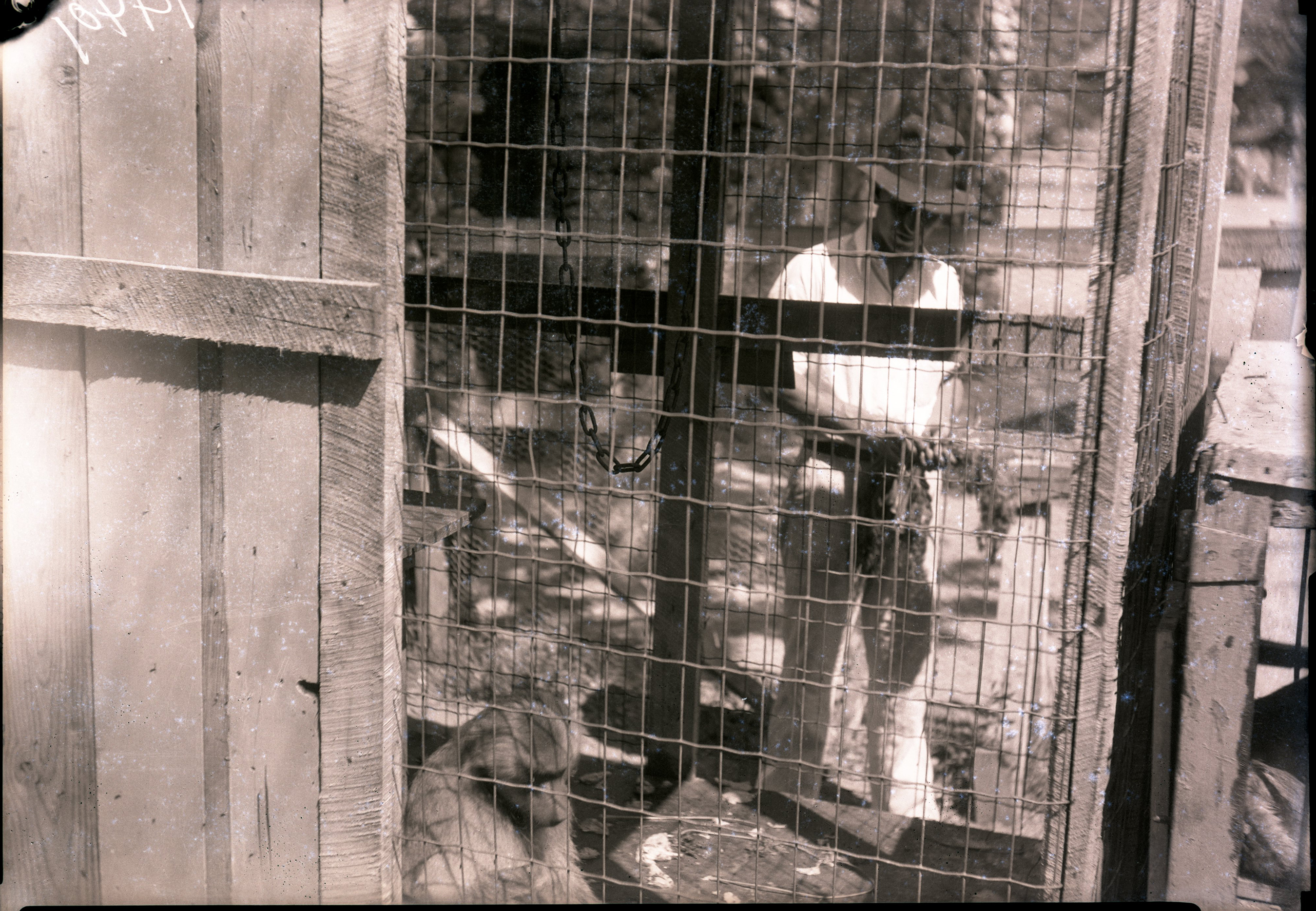
![Vern Prewett with a baboon at the small zoo he added to Stony Dell. [State Historical Society of Missouri, Israel Jacob Baumgardner Photograph Collection, R1299]](/sites/default/files/styles/article_header_image/public/2026-03/5.-stony-dell.jpg?itok=FIHWx7xF "Vern Prewett with a baboon at the small zoo he added to Stony Dell. [State Historical Society of Missouri, Israel Jacob Baumgardner Photograph Collection, R1299]")
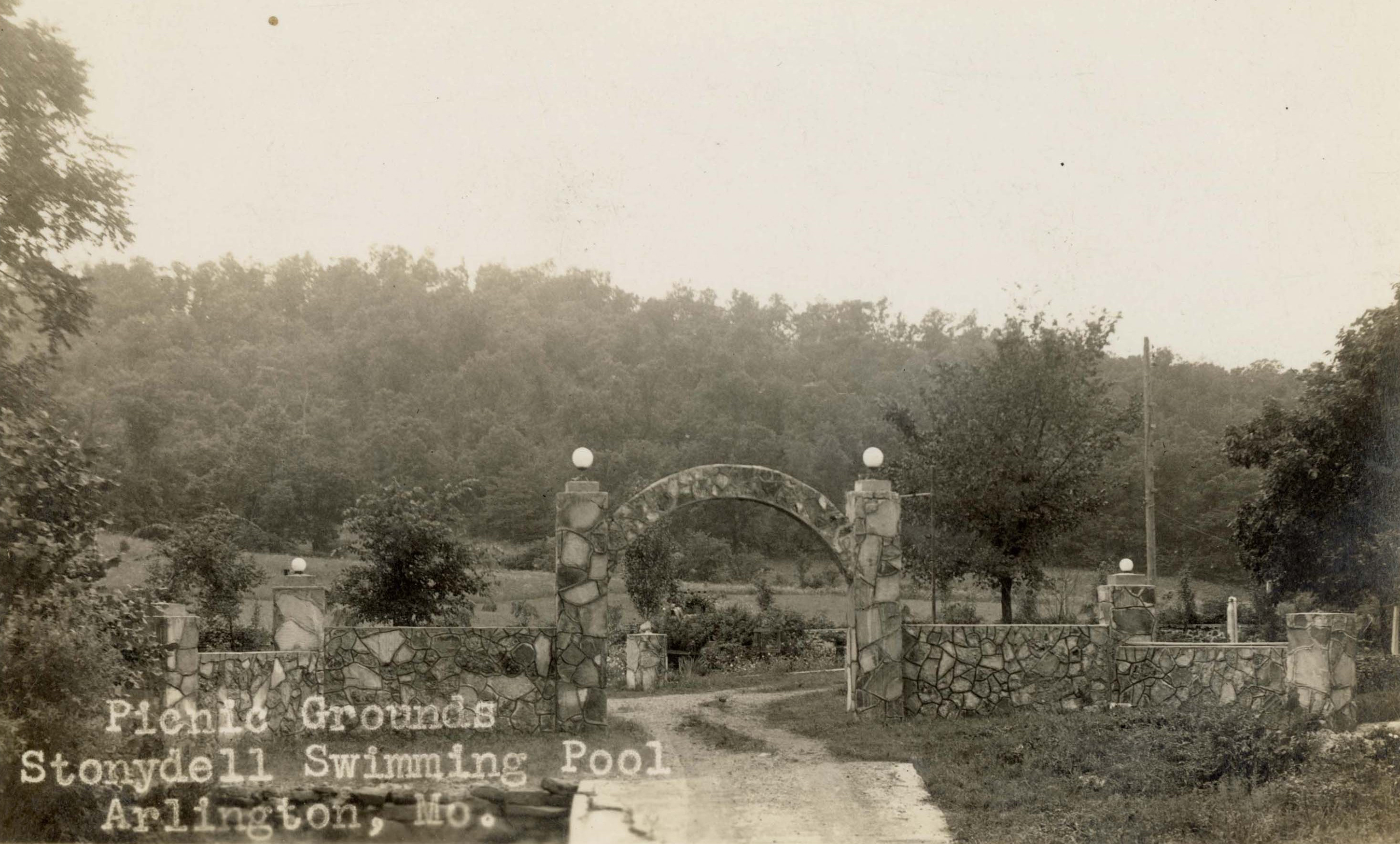
![Vern Prewett added the picnic grounds a few years after building the cabins, bathhouse, and pool. It offered swings and a teeter board for children as well as picnic tables. [State Historical Society of Missouri, John F. Bradbury Postcard Collection, R1551]](/sites/default/files/styles/article_header_image/public/2026-03/6.-stony-dell.jpg?itok=HcfpBS8u "Vern Prewett added the picnic grounds a few years after building the cabins, bathhouse, and pool. It offered swings and a teeter board for children as well as picnic tables. [State Historical Society of Missouri, John F. Bradbury Postcard Collection, R1551]")
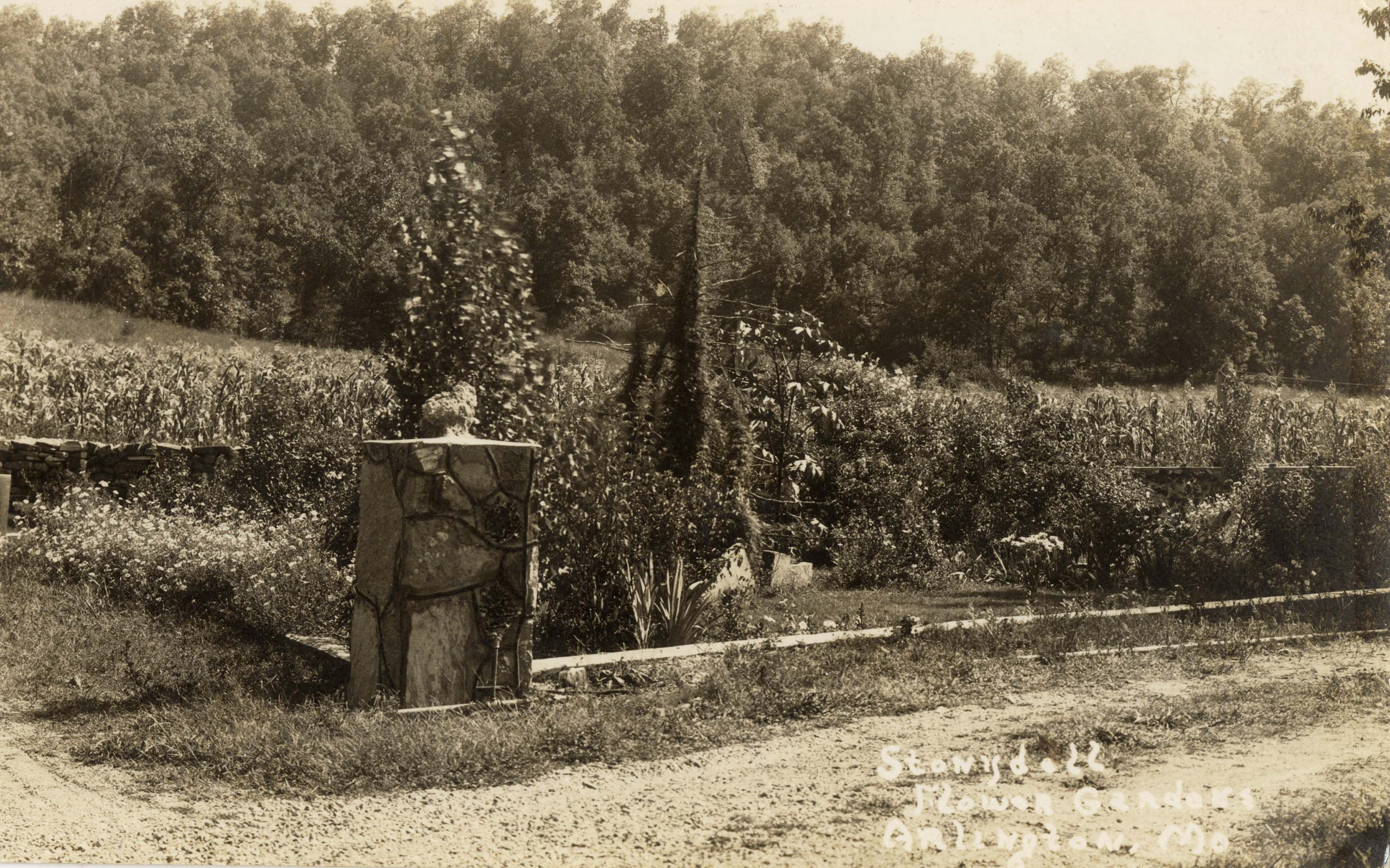
![Another view of Stony Dell’s grounds. [State Historical Society of Missouri, John F. Bradbury Postcard Collection, R1551]](/sites/default/files/styles/article_header_image/public/2026-03/7.-stony-dell.jpg?itok=P3FEdwAl "Another view of Stony Dell’s grounds. [State Historical Society of Missouri, John F. Bradbury Postcard Collection, R1551]")
Stony Dell, fourteen miles west of Rolla, was one of the central Missouri Ozarks’ premier tourist destinations on Route 66 during the mid-twentieth century. Built from native rock and stone, the commercial tourist complex’s distinctive façade and swimming pool distinguished it from other contemporary resorts. Historian John F. Bradbury asserted, “the commercial development at Stony Dell was this area’s greatest example of building in native stone. It was meant to be a commercial attraction on the new highway but the combination of swimming pool, restaurant, rock garden, and rustic cabins represented more than just building in stone. It was a work of folk art as well, built in a time when things local were still in vogue.”
In the late nineteenth century, the central Missouri Ozarks were rife with resorts built by local entrepreneurs seeking to capitalize on the influx of St. Louis urbanites summering on the Gasconade River. Within a few decades, the automobile era and the corresponding success of the Good Roads movement in America reshaped roadside tourism and recreation in the Ozarks and the greater United States. Route 66 was part of that movement. Created in 1926, Route 66 crossed Phelps County on its southwestern trajectory to Kansas and beyond, bringing opportunities for new roadside commercial ventures launched by mom-and-pop entrepreneurs.
Phelps County native Clarence “Vern” Prewett was one of many ambitious individuals who recognized the possibilities of the new highway. His father George’s success as a farmer and merchant likely emboldened Prewett to pursue his own economic endeavors after working in construction and as a truck driver. When he began building the resort, Prewett may not have anticipated that it would become a landmark on the Mother Road. Situated on his father’s land, Stony Dell was a stone’s throw from George Prewett’s Hi-Wa Trading Company store and filling station. Like many roadside entrepreneurs, Vern Prewett used inexpensive, locally available materials to save money. Relying on rocks and stones harvested from the rugged Missouri Ozarks, Prewett likely began construction in the late 1920s with the help of local laborers. At first the development was referred to by newspapers as “Hiwa,” but the name apparently never caught on, so Prewett adopted the far more descriptive “Stony Dell.”
In May 1932, Stony Dell opened to the public. Visitors were greeted by a rustic but charming resort that featured rock cabins, an on-site restaurant, a two-story bathhouse with more than fifty changing rooms, and a concrete swimming pool clad in stone. Freshwater from artisan wells flowed from a large, imposing rock fountain into the pool, which was one hundred feet long, forty-four feet wide, and ranged from three to twelve feet deep. Even though the pool proved popular with locals and travelers alike, Prewett went further by engaging professional divers for public exhibitions. Admission was fifty cents for adults and thirty-five cents for children. Despite the crowds, there were no published reports of anyone drowning at Stony Dell, which is remarkable given that the pool held hundreds of swimmers on busy weekends, making it easy for a struggling swimmer to go unnoticed.
Despite his initial success, Prewett continued to seek ways to attract new customers. In 1935 he opened Stony Dell Park, a landscaped picnic area encircled by an ornate stone wall. Prewett also added a small zoo, but it was seemingly short-lived. Yet even without the allure of exotic animals, Stony Dell was a magnet for local groups and motorists traveling on Route 66. On weekends, Missouri State Highway patrolmen stationed themselves at the resort to direct traffic.
After almost a decade, Prewett’s time at Stony Dell ended with US entry into World War II. After the 1941 season he left Missouri to aid the war effort as a civilian federal worker. Upon returning to Phelps County four years later, he worked as a mason, building a number of rock buildings, sidewalks, walls, and other projects in the area. Years of working with rock and stone took their toll, however, as Prewett may have suffered from silicosis or a similar affliction. He later moved to Kingsport, Tennessee, where he died in 1977. Prewett’s father sold Stony Dell to W. R. Brown sometime around 1950; it changed hands again in 1954 when Fred and Esther Widener purchased the resort from Brown. The Wideners operated Stony Dell until 1965, when I-44’s realignment claimed the pool and several buildings on the southern side of Route 66. The rest of Stony Dell, on the northern side, was demolished. Memories of the resort, however, live on in the multitude of real photo postcards that document its status as one of the most creative expressions of Ozark ingenuity on Route 66.
Beydler, Van. “Stonydell.” Show Me Route 66 8, no. 2 (Summer 1996): 9–11.
Bradbury, John F. “Native Stone, Concrete Swimming Holes, and ‘The One and Only’ Stony Dell on Route 66.” Old Settlers Gazette (2020): 46–53.
———. “Route 66 East to West: A Self-Guided Tour through Phelps County.” Newsletter of the Phelps County Historical Society (April 1994): 23–24.
Sonderman, Joe. “Stonydell, Missouri.” Show Me Route 66 21, no. 2 (Year): 21–23.
Published March 5, 2026
Creative Commons Attribution-NonCommerical-ShareAlike 4.0 International (CC BY-NC-SA 4.0)