 the State Historical Society of Missouri
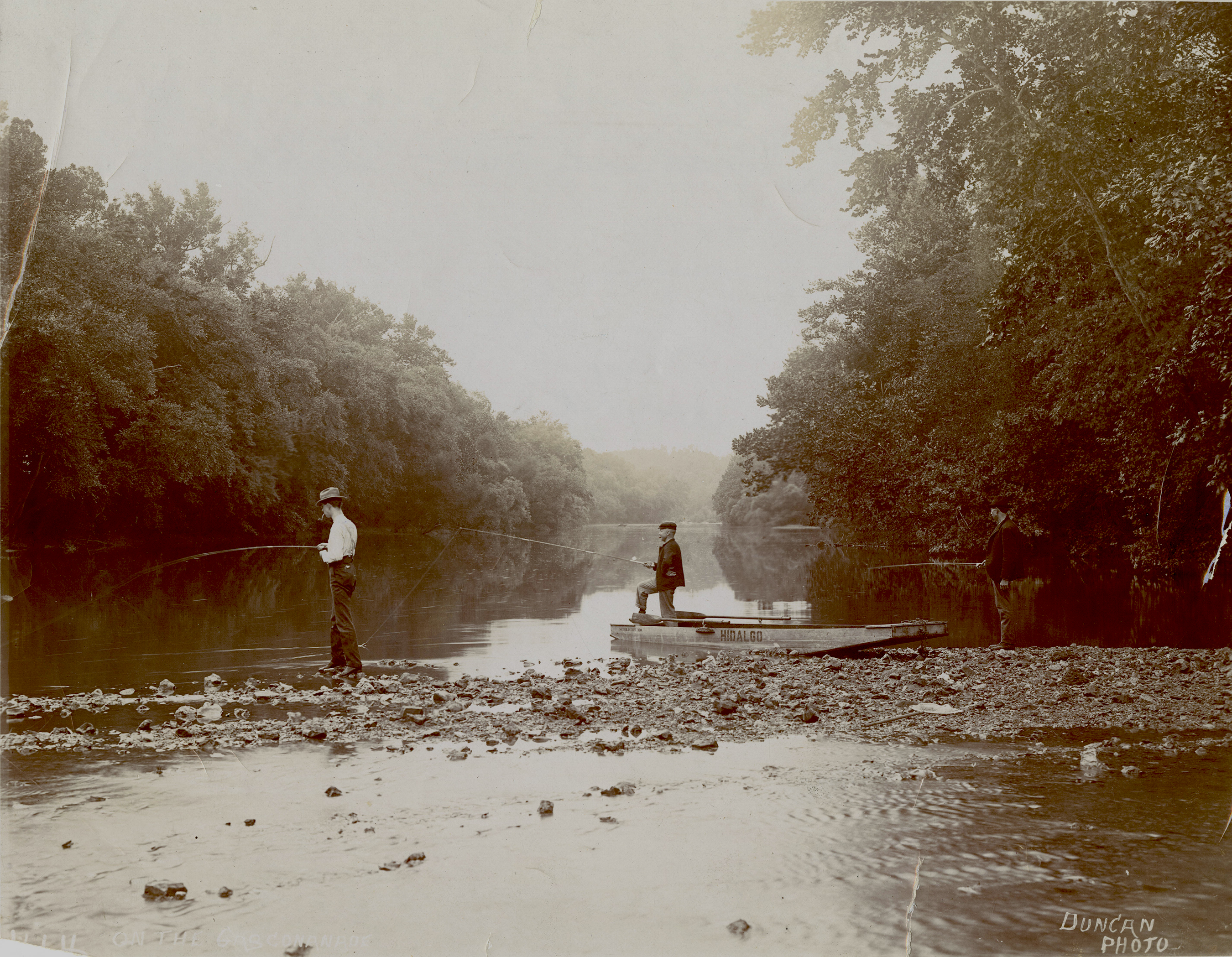
![Three men fishing on an Ozarks river; one stands in a johnboat named Hildalgo. [State Historical Society of Missouri, State of Missouri Collection, P0018]](/sites/default/files/styles/article_header_image/public/2026-06/1.-johnboats.jpg?itok=5zaorYjm "Three men fishing on an Ozarks river; one stands in a johnboat named Hildalgo. [State Historical Society of Missouri, State of Missouri Collection, P0018]")
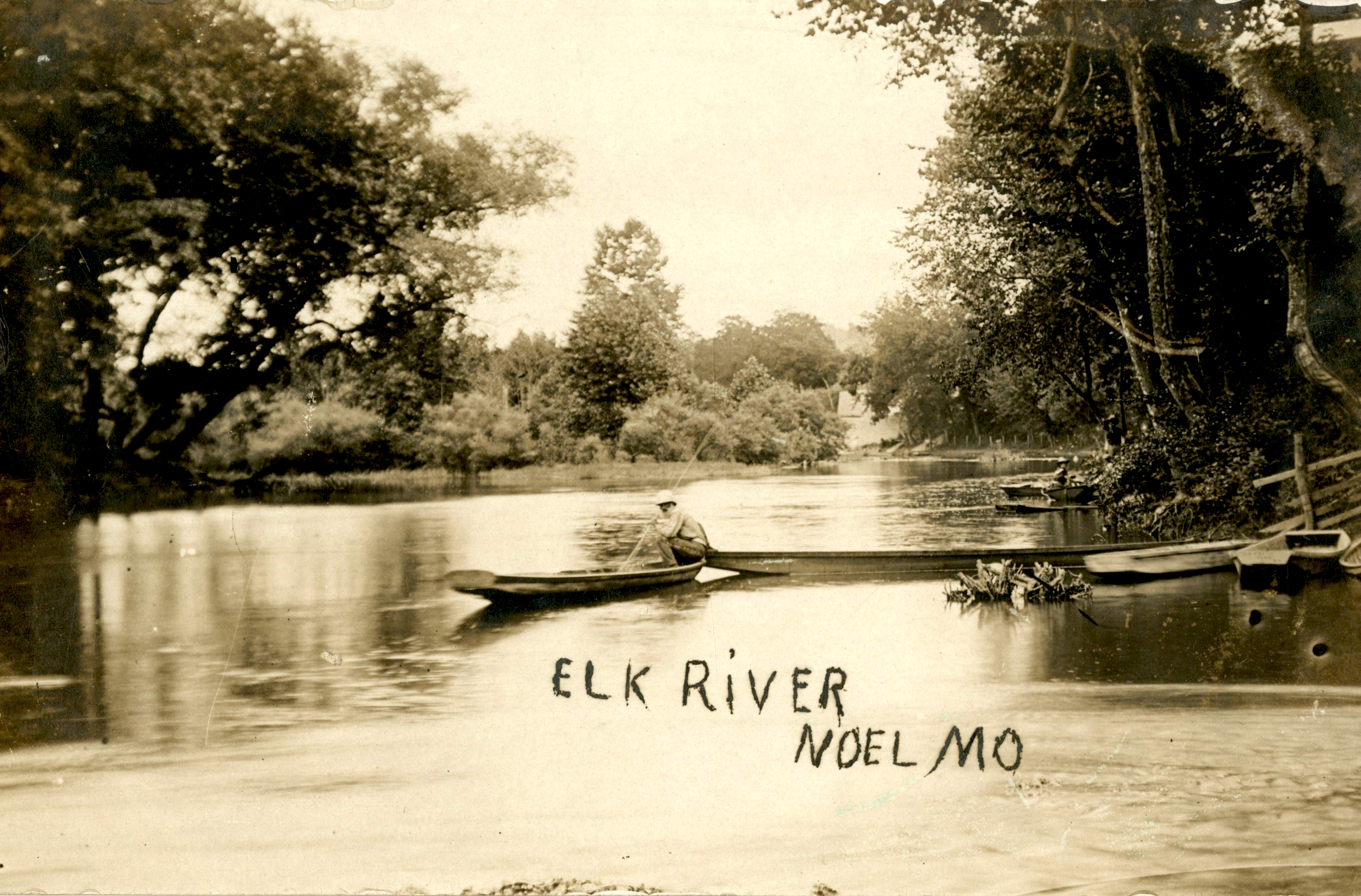
![A johnboat on the Elk River in McDonald County, Missouri. [State Historical Society of Missouri, Lynn Morrow Collection, R1523]](/sites/default/files/styles/article_header_image/public/2026-06/3.-johnboats.jpg?itok=QfaCjixL "A johnboat on the Elk River in McDonald County, Missouri. [State Historical Society of Missouri, Lynn Morrow Collection, R1523]")
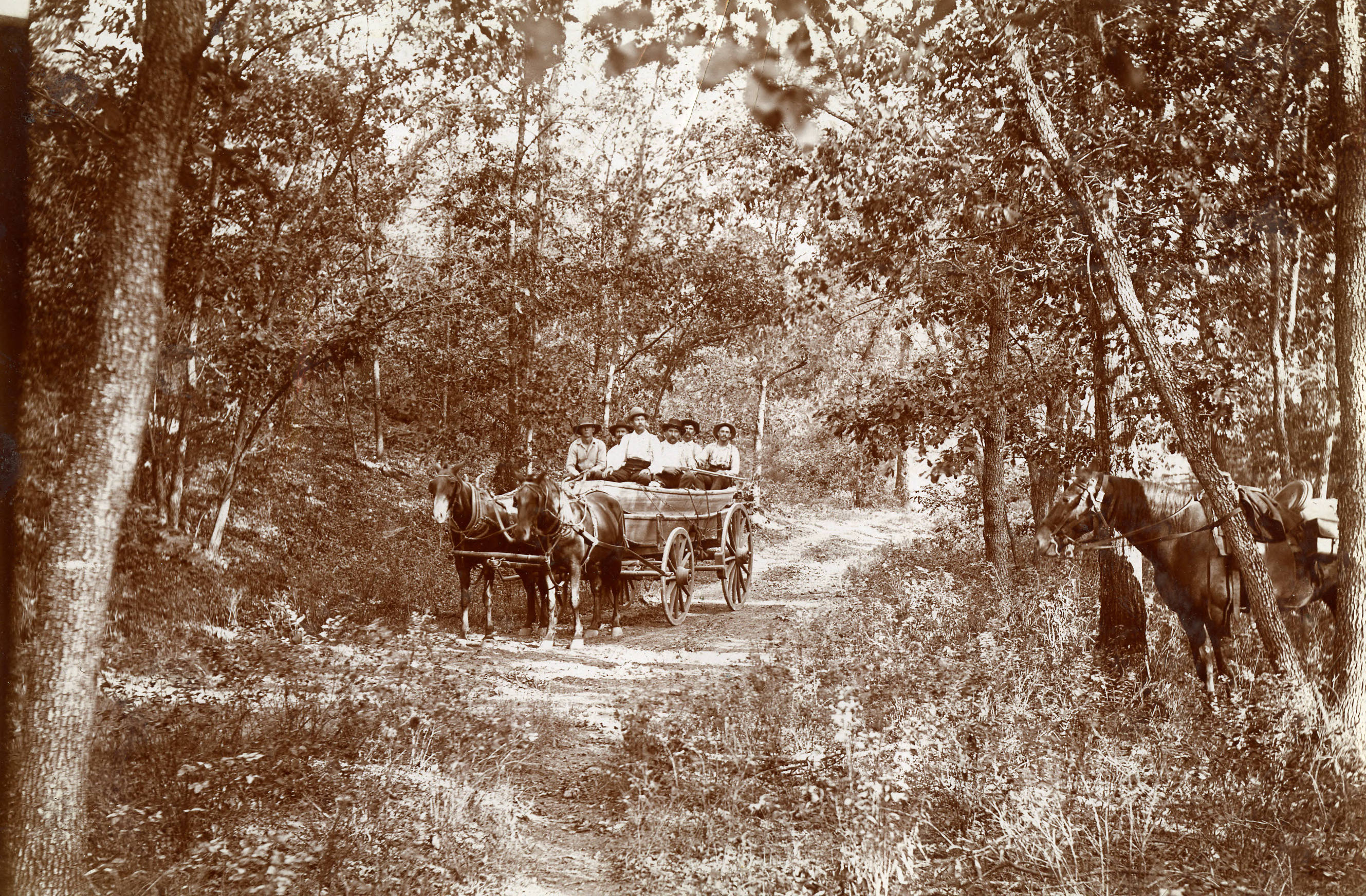
![A johnboat being transported by wagon in Taney County, Missouri. [State Historical Society of Missouri, Johnson Family Papers Collection, SP0085]](/sites/default/files/styles/article_header_image/public/2026-06/4.-johnboats.jpg?itok=VOEkDfLY "A johnboat being transported by wagon in Taney County, Missouri. [State Historical Society of Missouri, Johnson Family Papers Collection, SP0085]")
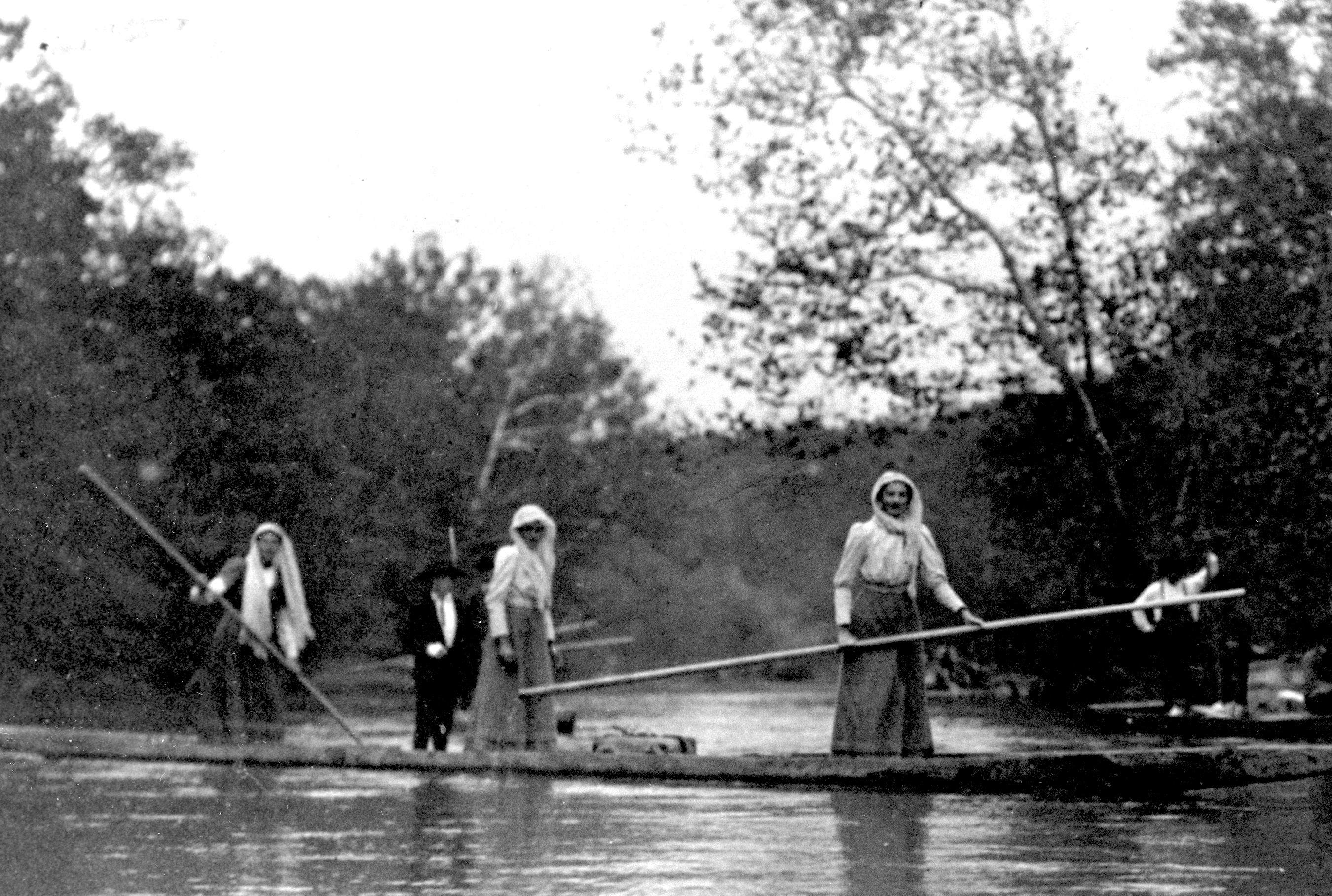
![Women liked johnboats because they offered greater stability in the water. [State Historical Society of Missouri, Lynn Morrow Collection, R1523]](/sites/default/files/styles/article_header_image/public/2026-06/5.-johnboats.jpg?itok=L7HQtjky "Women liked johnboats because they offered greater stability in the water. [State Historical Society of Missouri, Lynn Morrow Collection, R1523]")
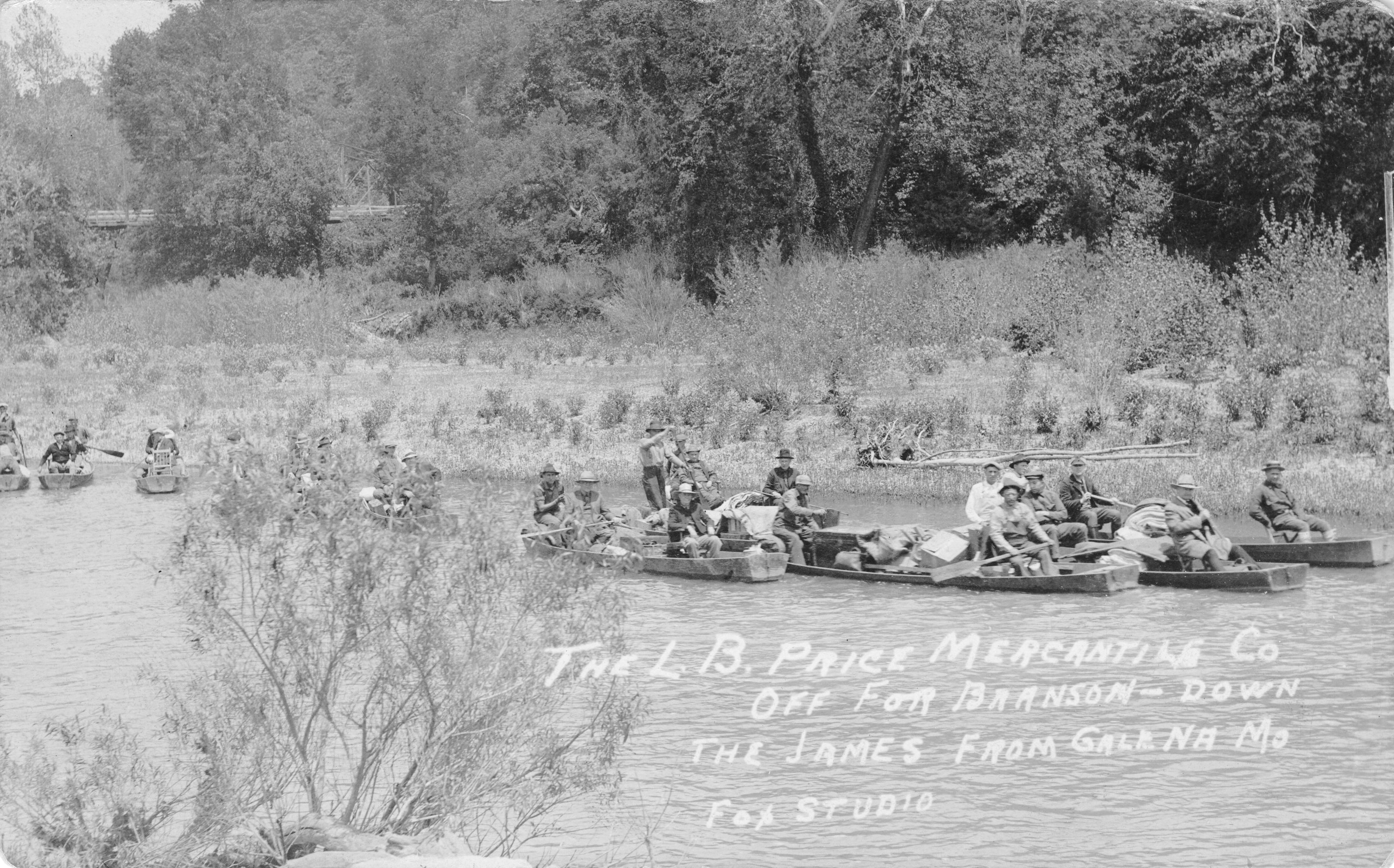
![A group of outdoorsmen on a guided float trip down the James River. The classic Galena-to-Branson float took five or six days. [State Historical Society of Missouri, Lynn Morrow Collection, R1523]](/sites/default/files/styles/article_header_image/public/2026-06/6.-johnboats.jpg?itok=GerveekY "A group of outdoorsmen on a guided float trip down the James River. The classic Galena-to-Branson float took five or six days. [State Historical Society of Missouri, Lynn Morrow Collection, R1523]")
Sportsmen tourists in flat-bottom boats that became known as “johnboats” are the parents of Ozarks commercial tourism. They came especially from St. Louis—wealthy urbanites who boarded trains to seek adventure at the end of, and along, new railroad lines. By the 1870s they traveled along the St. Louis–San Francisco Railway (Frisco) in Missouri, but others rode the St. Louis, Iron Mountain, and Southern Railway (now Iron Mountain Railway) as far as Arkansas. By the 1890s their wives as well as single women fished with them from flat-bottom boats on Ozark rivers.
These sportsmen brought their own boats by rail car and sought out local guides, many of whom worked for timber companies in the region, were experienced in carpentry, and had spent time floating railroad ties or lumber rafts, or sawing and hauling logs to mills. They eventually built commercial flatboats. Before then, Ozark guides experimented with boat style and form during the 1870s and 1880s, and especially in the 1890s, before many reliable, locally built flatboats were commonly used on long-distance recreational or commercial floats.
The first commercial business that built and reused flat-bottom boats for floating was founded in 1896 by lumberman Perry Andres at the towns of Arlington and Jerome on the Gasconade River. He offered comprehensive services that included boats, a boathouse, a boatswain, guides, ice, tents, and transportation of customers upriver and retrieval from downriver. Recreationists who traveled on the Frisco and took part in St. Louis sporting clubs were his primary guests.
The term “johnboat” emanates from the lumbermen’s woods. The Forest Republican, a newspaper in Forest County, Pennsylvania, on the Allegheny River, used the word in its pages on December 17, 1870. Thus, it was already in vernacular use among Pennsylvania timber workers by that date. It moved south into Ohio River towns, where it was in prominent use during the 1870s–1880s, including in an East Maysville, Kentucky, johnboat factory. The crowded Ohio soon sent the term into the large Mississippi and Missouri River drainages, where users took the “johnboat” up the various tributaries. Newspapers in communities along the Ohio River, which teemed with large and small watercraft, often reported johnboat accidents as well as their use in rescuing people and recovering property during flooding.
In Missouri, two popular outdoorsmen mentioned johnboats in their writing and presentations. Horace Kephart, an Eastern-educated bibliophile and scholar at the Mercantile Library in St. Louis, rode the Iron Mountain Railway to Ozark upland and Missouri and Arkansas lowland hunting and fishing camps during the early 1890s, often living for several weeks in the wild. Outdoorsmen frequently came to his St. Louis office seeking his advice. In a column in the August 3, 1895, issue of Forest and Stream, the most influential outdoors magazine in the country, Kephart published an article with a photograph of “The John-boat.”
Kephart favored sport from Poplar Bluff on the Black River in Missouri and Arkansas, where sportsmen had clubhouses and the railroad sidetracked a car for the larger clubs. Kephart wrote that the “John-boat” was “clumsy as a raft—its name is a swamp vernacular for sort of a punt, built for paddling, out of 1¾ inch plank and costing about four hours of deliberate use of saw and hammer. It transported whiskey inconspicuously.” “Flat boat” had been the usual term among boaters, but river folks used a variety of eclectic names like float boat, skiff, scow, punt, jack boat, box, shed, and others.
As Kephart suggested, the “John-boat” name became part of an indiscriminate use of vernacular names, but it was primarily attached to commercial outings with sportsmen tourists. Sportsmen favored its stability, which allowed them to stand up and fly-fish in shallow water. Users poled, pushed, or paddled the boat. Soon the Iron Mountain Railway’s promotional brochures were advertising “floats with a guide into the swamps with a batteau, skiff, or John-boat large enough to float their belongings.” Craftsmen in all major Ozark basins improved the reliability of the flatboats, especially for long float trips, and built johnboats that could be reused in the coming years. The Frisco Railroad published “A Study in Boats” in a 1900 promotional pamphlet that drew attention to improved flat-bottom boat construction.
The second Missouri popularizer of johnboats, John B. Thompson, was a decade younger than Kephart and the scion of a wealthy St. Louis family. Thompson was educated in France and moved to Ripley County, Missouri, in 1892 to live on a small farm southeast of Doniphan. He became an outdoors naturalist and bred hunting dogs commercially. Urban sportsmen had frequented Doniphan and the Current River since 1883 after the Iron Mountain Railway built a branch line to it. Thompson developed his outdoors writing talent in the local newspaper, the Prospect-News, and in sportsmen magazines for appreciative audiences, and soon had cultural elites at his doorway seeking him as a guide. Thompson and the Prospect-News printer became outdoors pals, and the printer used the term “johnboat” frequently in local reporting. Thompson published under half a dozen pen names until settling on “Ozark Ripley” in 1921.
Thompson’s popularity among sportsmen led to his publishing with national magazines. Sportsmen groups with their expensive guns, dogs, tents, and commissary items for camping led local boat builders to craft larger flat-bottom boats than locals normally used. Railroad companies gave permission for the urban clubs to use their tram lines in the forest to move around to different fishing and hunting sites. The boats had distinctive squared ends for safety, a sloping front bow rake of several degrees, uncushioned wooden seats, different designs in structural ribbing, and a capacity to haul fifteen hundred pounds of gear. On October 12, 1907, Thompson published “The Missouri Jack Salmon” in Forest and Stream. The article included a photo of a johnboat floating sideways at Doniphan, with one person seated and two men with poles for moving it on the river. That same month, members of the Missouri Press Association vacationed on the Current River and fished in a “fleet of John boats, a slim craft propelled with poles, 26 feet long and 26 inches wide.” Over time, boat builders on the Current River kept their boats longer than those on other Ozark waterways, with boats varying from sixteen to twenty-four feet in length and three to four feet wide. Occasionally, locals removed wagon boxes from their wheels, put johnboats on the axles, and used horses to pull the occupants to rivers.
During the twentieth century, johnboats came into widespread use across the Ozark riverways. The St. Louis Globe-Democrat’s Rod and Gun column was the most influential voice in outdoors journalism in Missouri. Editor Ellsworth T. Grether first used the term “johnboat” on June 18, 1911. The Jim Owen Boat Line had a well-known guide and boat builder in Charley Barnes. During the 1930s, Owen hired Barnes to take float trip groups in trucks across the Ozarks. In an interview, Barnes said he had never heard of the johnboat until he took a group to the Current River. Upon his return, he and the Owen Boat Line adopted it.
In subsequent years, johnboats became ever more closely associated with the pleasant recreation of camping on clean gravel bars, floating on scenic rivers, and enjoying still nights in the Ozarks. In his award-winning book Ozark Country, published in 1995, William K. McNeil concluded that “probably the most famous craft product in the Ozarks is the wooden johnboat.”
Morrow, Lynn. “True Sportsmen, Float Trips, and Ozark Ripley’s Johnboat.” OzarksWatch (Fall/Winter 2019): 48–57.
——. “What’s in a Name, Like John Boat.” White River Valley Historical Society (Winter 1998): 9–24.
John F. Bradbury Jr. Papers. RA1652. State Historical Society of Missouri.
Lynn Morrow Papers. R1000. State Historical Society of Missouri.
Lynn Morrow, Johnboats & Riverways Collection. R1523. State Historical Society of Missouri.
Published June 3, 2026; Last updated June 4, 2026
Creative Commons Attribution-NonCommerical-ShareAlike 4.0 International (CC BY-NC-SA 4.0)