 the State Historical Society of Missouri
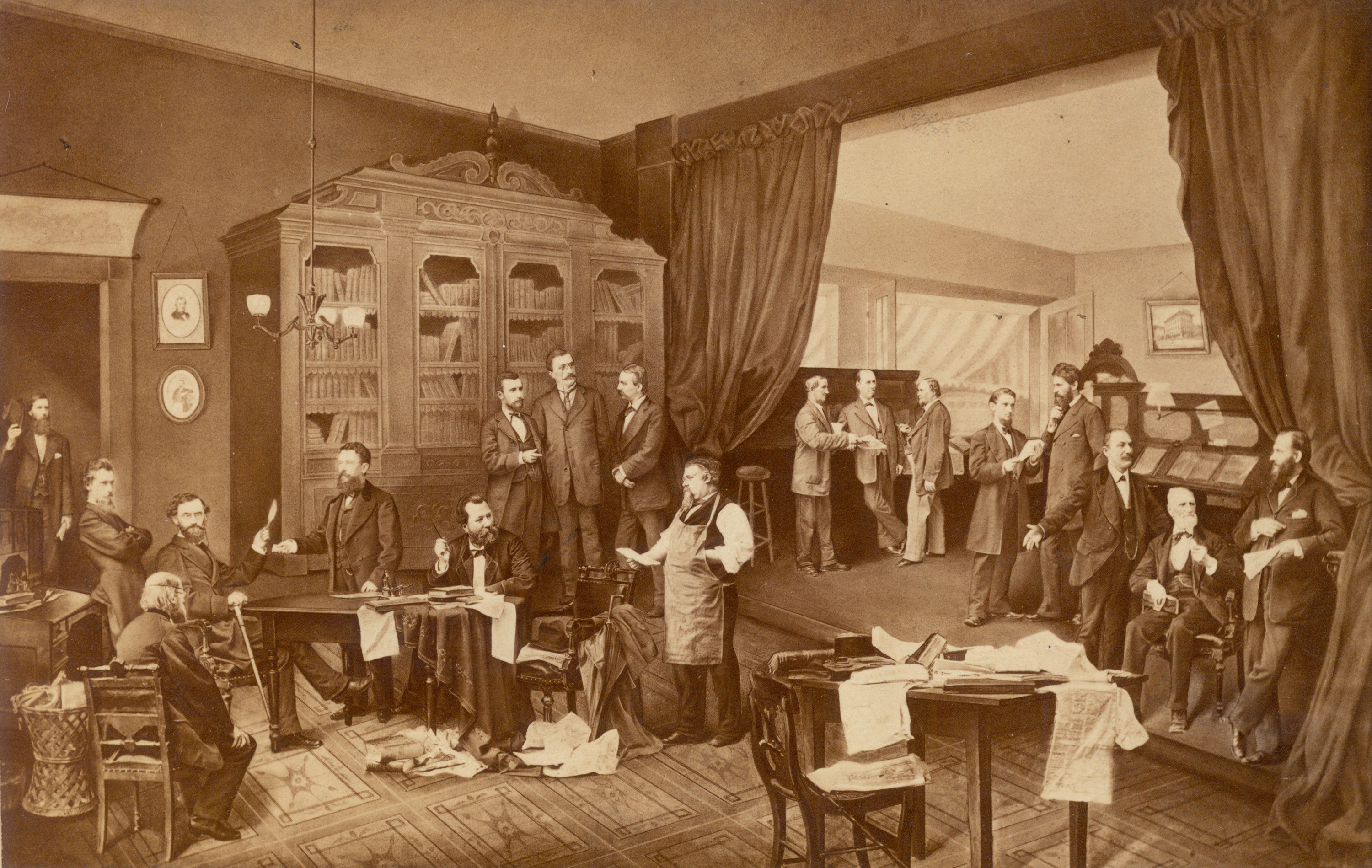
![The editorial room of the Westliche Post, circa 1870. The paper’s prominent figures included Carl Schurz (fourth from left, seated at table), Emil Preetorius (sixth from left), and Joseph Pulitzer (not pictured). [Missouri Historical Society, St. Louis, Photographs and Prints Collection, N01710]](/sites/default/files/styles/article_header_image/public/2026-01/1.-german-press-in-missouri.jpg?h=afc47d21&itok=XA2t2vBK "The editorial room of the Westliche Post, circa 1870. The paper’s prominent figures included Carl Schurz (fourth from left, seated at table), Emil Preetorius (sixth from left), and Joseph Pulitzer (not pictured). [Missouri Historical Society, St. Louis, Photographs and Prints Collection, N01710]")

![Anzeiger des Westens building, 1893. [Missouri Historical Society, St. Louis, Photographs and Prints Collection, P0028-00002]](/sites/default/files/styles/article_header_image/public/2026-01/2.-german-press-in-missouri.jpg?itok=uUyzzMA6 "Anzeiger des Westens building, 1893. [Missouri Historical Society, St. Louis, Photographs and Prints Collection, P0028-00002]")

![The decorative title page of Der Lutheraner, January 7, 1902, edition. [State Historical Society of Missouri, Mit Feder Und Hammer: The German Experience in St. Louis Collection, S0941.211]](/sites/default/files/styles/article_header_image/public/2026-01/3.-german-press-in-missouri.jpg?itok=16iJjFxF "The decorative title page of Der Lutheraner, January 7, 1902, edition. [State Historical Society of Missouri, Mit Feder Und Hammer: The German Experience in St. Louis Collection, S0941.211]")
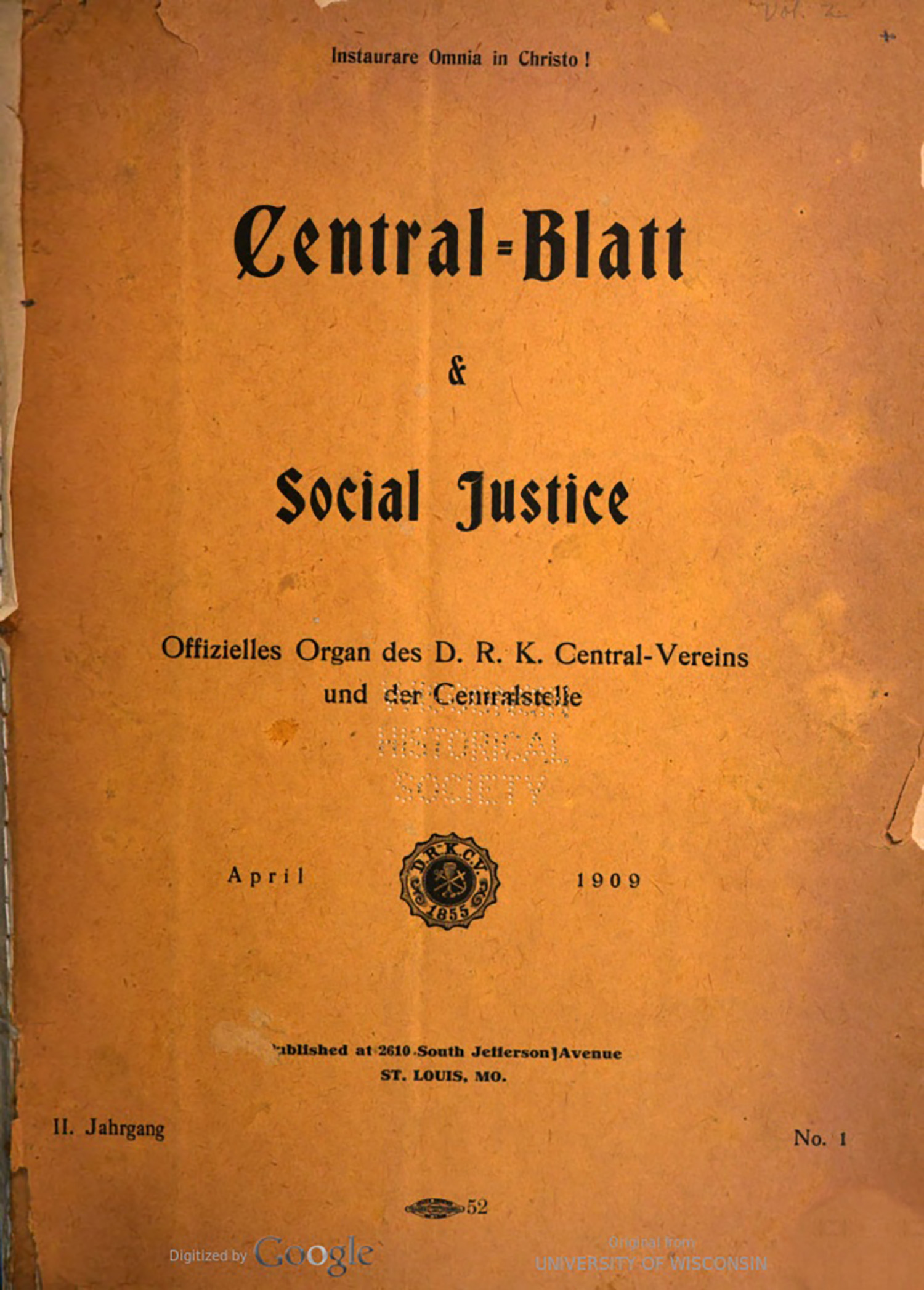
![The April 1909 cover of Central-Blatt and Social Justice. [HathiTrust Digital Library]](/sites/default/files/styles/article_header_image/public/2026-01/4.-german-press-in-missouri.jpg?itok=1wqt9adt "The April 1909 cover of Central-Blatt and Social Justice. [HathiTrust Digital Library]")
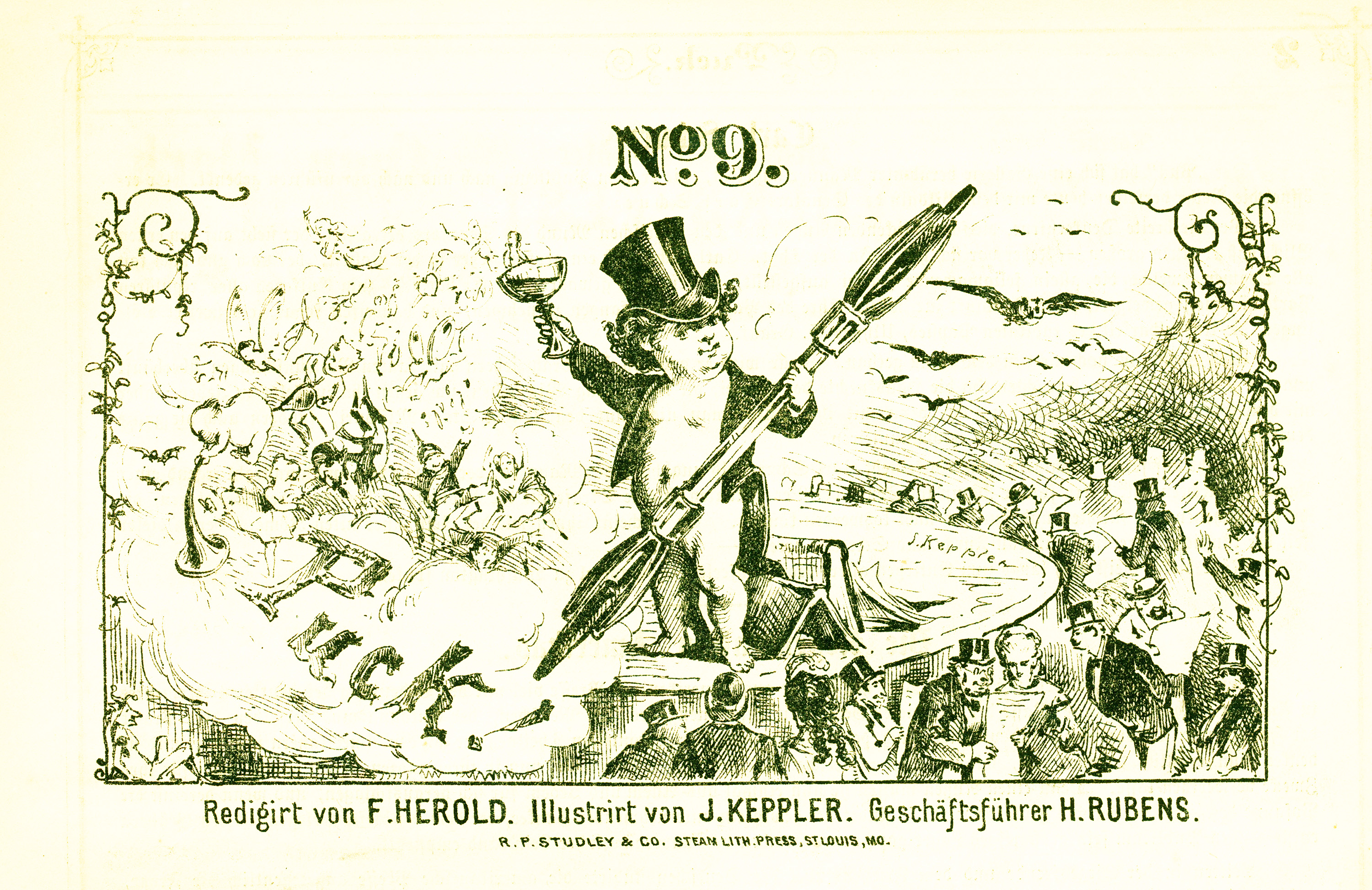
![A cartoon from Puck, a St. Louis German satirical paper that launched the career of cartoonist Joseph Keppler. [Missouri Historical Society, St. Louis, Library Collection, GRA00038]](/sites/default/files/styles/article_header_image/public/2026-01/5.-german-press-in-missouri.jpg?itok=rFR0quSn "A cartoon from Puck, a St. Louis German satirical paper that launched the career of cartoonist Joseph Keppler. [Missouri Historical Society, St. Louis, Library Collection, GRA00038]")
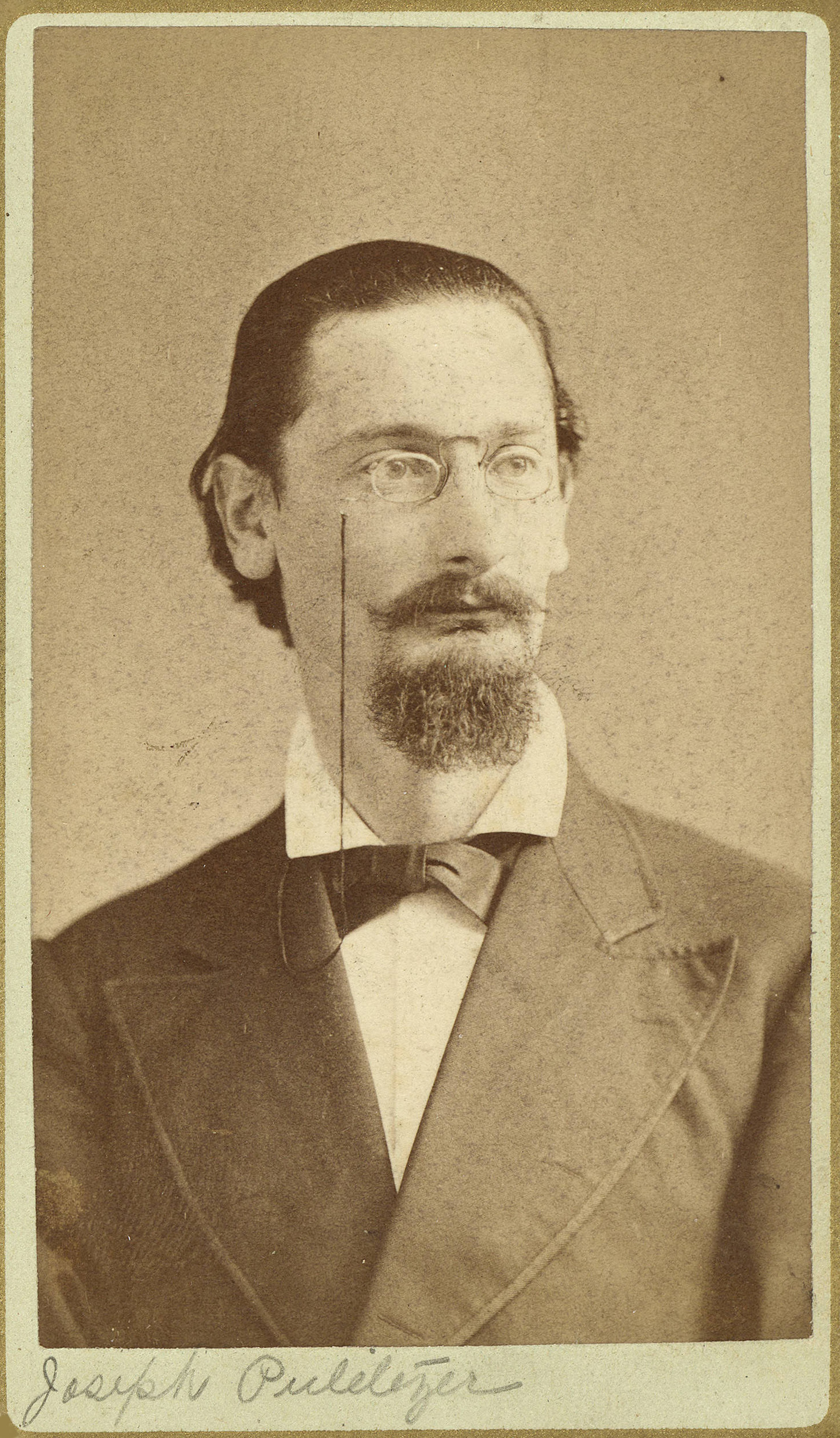
![Joseph Pulitzer began his career in Missouri’s German press before his ascent as publisher of the St. Louis Post-Dispatch and the New York World. [State Historical Society of Missouri, Victoria Branham Photograph Collection, P0213-018835]](/sites/default/files/styles/article_header_image/public/2026-01/6.-german-press-in-missouri.jpg?itok=m0HO36Tn "Joseph Pulitzer began his career in Missouri’s German press before his ascent as publisher of the St. Louis Post-Dispatch and the New York World. [State Historical Society of Missouri, Victoria Branham Photograph Collection, P0213-018835]")
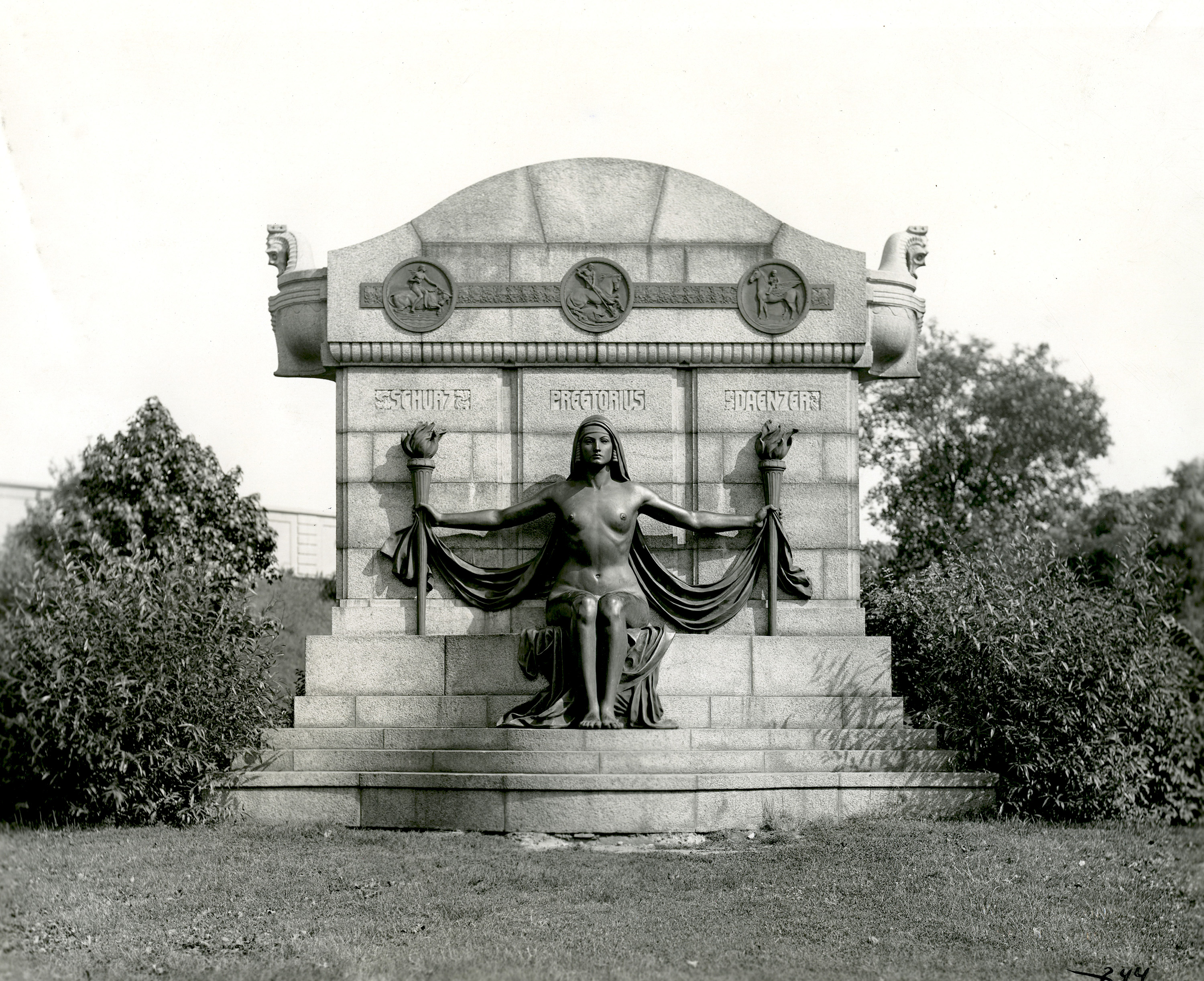
![Naked Truth, commemorating Carl Schurz, Emil Preetorius, and Carl Dänzer, all editors of the Westliche Post. [Missouri Historical Society, St. Louis, Photographs and Prints Collection, P0177-00002]](/sites/default/files/styles/article_header_image/public/2026-01/7.-german-press-in-missouri.jpg?itok=VqGWhJP9 "Naked Truth, commemorating Carl Schurz, Emil Preetorius, and Carl Dänzer, all editors of the Westliche Post. [Missouri Historical Society, St. Louis, Photographs and Prints Collection, P0177-00002]")
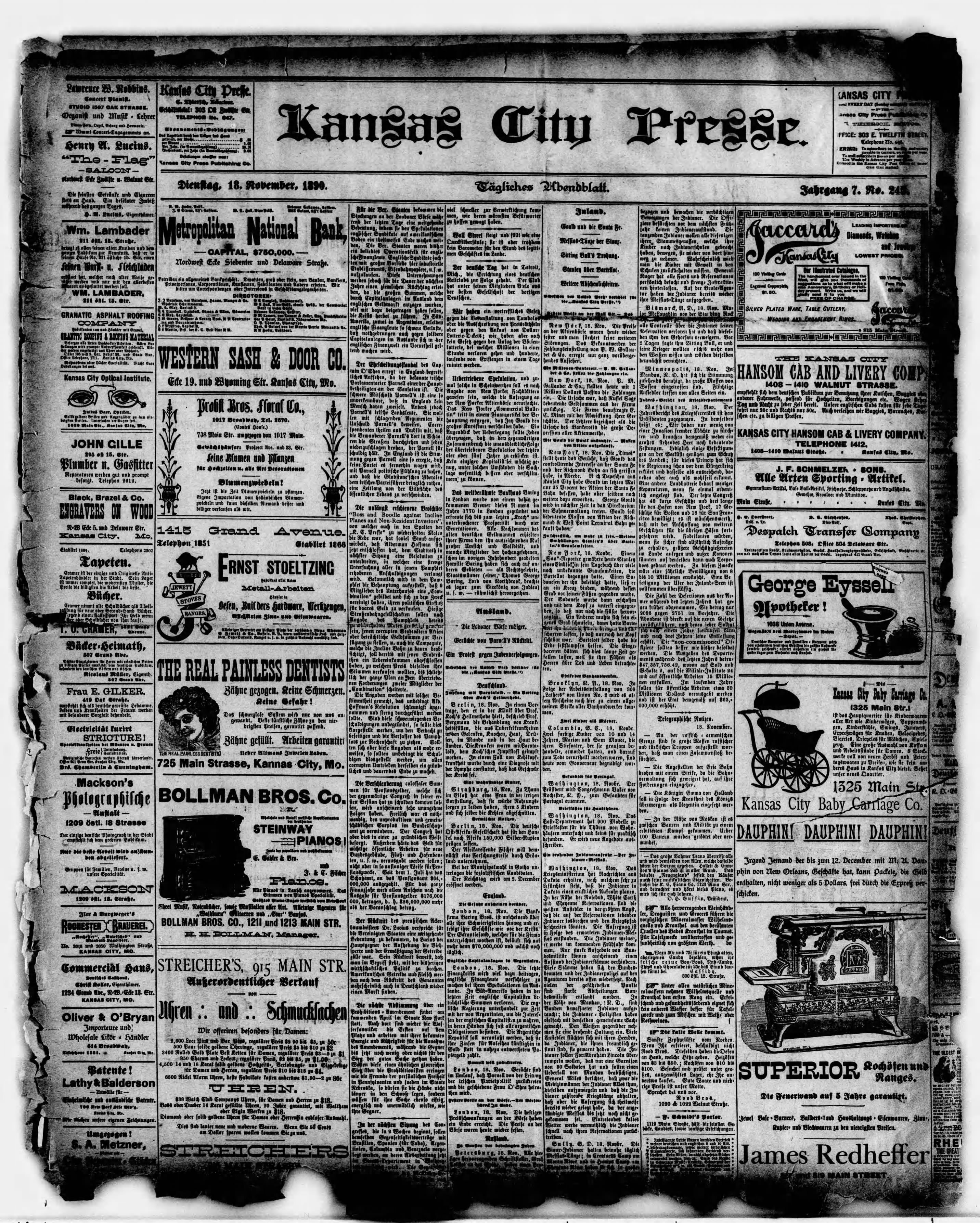
![The Kansas City Presse was the last German-language daily newspaper in Missouri, surviving until 1941. The November 18, 1890, edition is pictured here. [State Historical Society of Missouri, Newspaper Collection]](/sites/default/files/styles/article_header_image/public/2026-01/8.-german-press-in-missouri.jpg?itok=FqKIXvlN "The Kansas City Presse was the last German-language daily newspaper in Missouri, surviving until 1941. The November 18, 1890, edition is pictured here. [State Historical Society of Missouri, Newspaper Collection]")
Of all the ethnic groups to settle in Missouri, none embraced the press more vigorously than the Germans. Starting with the Anzeiger des Westens in 1835, German speakers launched over 250 newspapers and periodicals in at least thirty-two Missouri cities and towns. Although varied in their subject matter, the most common German publications were strongly partisan political newspapers, followed by religious publications. At its height from the 1850s to the 1870s, German publishing constituted about 10 percent of all publications issued in the state. After peaking in the 1870s, launches of new German-language publications trailed off. A few long-running publications survived the pressure of anti-German sentiment with the first World War, but by the end of World War II the Missouri German press was nearly defunct.
The Dreissigers
Some early German immigrants were inspired to choose Missouri partly by the writings of Gottfried Duden, whose book Report on a Journey to the Western States of North America: And a Stay of Several Years along the Missouri (Bericht über eine Reise nach den westlichen Staaten Nordamerika’s und einen mehrjährigen Aufenthalt am Missouri), first published in Germany in 1829, was widely read in Europe. The Dreissigers (political refugees who emigrated during the 1830s) established significant settlements in Hermann, Missouri, as well as in St. Louis, St. Charles, and Warren Counties. These highly educated Germans became known as the “Latin farmers” in reference to their better grasp of Latin than of agriculture. A number of these took up residence in St. Clair County, Illinois, around Belleville in order to live in a free rather than a slave state; their influence spread across the state line to Missouri and beyond, and their opinions were widely published and discussed in the Missouri German press.
German speakers across the political and religious spectrum participated vigorously in the political, social, cultural, and spiritual milieus of their day. Dreissiger immigrants who became opinion leaders in the Missouri German press included Friedrich Muench at Dutzow and Edward Muehl in Hermann, who launched the Licht–Freund, a Freethought philosophical journal advocating the abolition of slavery; Wilhelm Weber in St. Louis, under whose editorship the Anzeiger des Westens flourished; and Heinrich Koch, whose radical St. Louis paper, Der Antipfaff (later titled Vorwarts), attracted much notice during its run in the mid-1840s. Around the same time as the politically active Dreissigers, adherents of the Evangelical and Lutheran religious traditions first settled in Missouri. In the coming years their respective theological positions would come to be developed and articulated through publishing houses operating in tandem with seminaries.
The Forty-Eighters
Starting in the late 1840s, the Dreissigers were joined by political exiles from the failed European revolutions of 1848. A handful of the most radical became highly influential in the German press. Heinrich Börnstein took over the editorship of the St. Louis Anzeiger des Westens and used that platform as well as other publications for violent attacks on religion along with support for the free-soil Benton wing of the Democratic Party. Other political papers were launched during this era, but few were long-lasting. One notable exception was the Westliche Post, which Carl Dänzer initiated in St. Louis in 1857. Of all the German-language Missouri daily newspapers, it would be outlived only by the Kansas City Presse. In contrast to most cities with competing papers allied with rival parties, both the Westliche Post and the Anzeiger supported the Republicans in 1860, although the latter evolved into a Democratic paper and would later be absorbed by its more radical competitor. Many of these publications, with a broad audience beyond the city, helped St. Louis become a center of German intellectual life in the region as well as across German-speaking North America.
Newspaper editors’ status as opinion leaders of the community often served as a springboard to political office. German American newspaper editors and contributors who were elected to legislative office included Arnold Krekel, editor of the antislavery St. Charles Demokrat; Muench, contributor to many German papers under the byline “Far West”; Carl Schurz, contributor to the Westliche Post, and Emil Preetorius, its longtime editor; John Gabriel Wörner and Richard Bartholdt, editors at different times of the Tribüne; and Börnstein, publisher of the Anzeiger des Westens.
The Religious Press
German immigrants to Missouri practiced a great diversity of religious faiths. They launched newspapers and, in some cases, entire publishing houses espousing and disseminating their beliefs. Newspapers of varying duration represented Jewish, freethinker, Catholic, anti-Catholic, and a variety of Protestant views. Music publishing, including the production of hymnals, songbooks, and sheet music, was another channel by which German American religious communities disseminated devotional and cultural standards for their adherents.
Two distinct groups of immigrants with roots in European Protestantism launched competing publishing houses in 1869. Der Lutheraner, begun in 1844 as a parish paper for Trinity Lutheran Church in St. Louis, would grow in influence well beyond the parish borders. Under the leadership of C. F. W. Walther, a leading theologian who established Concordia Publishing, the paper was expanded in scope and became a major organ for disseminating the theology of the Lutheran Church–Missouri Synod. Eden Publishing, also established in 1869, was the official press of a German Protestant tradition, the German Evangelical Synod of North America, which would eventually become one of the faith traditions forming the United Church of Christ in 1957. Both Eden and Concordia Publishing issued serials for several segments of their audience, including clergy, congregants, and youths.
The first long-running German Catholic weekly was the St. Louis Herold des Glaubens (1850–1920), which may have formed in response to the 1840s anti-Catholic publication Der Antipfaff, or to the vigor with which the Lutherans and Evangelicals were utilizing the press. Other significant German-language Catholic publications included the semi-weekly St. Louis Tages-Chronik (1849–1861); the monthly Pastoral-Blatt (1866–1925), a theological publication for priests; the Katholischer Hausfreund (1883–1910), a family-oriented weekly published in O’Fallon, Missouri; and Amerika (1872–1924), a highly influential St. Louis German daily newspaper that developed a national circulation.
The German Press after the Civil War and the Fight for Bilingual Education
One of Missouri’s claims to fame in post–Civil War publishing was the innovative cartooning of Joseph Keppler, son of a Forty-Eighter who moved his family to Saline County, Missouri. Keppler’s satirical lithographs with bilingual German and English captions appeared in three St. Louis publications: Die Vehme (1869–1870); Puck (1871–1872); and Unser Blatt (1872). Although all three were short-lived, Keppler honed his craft and, moving to New York in 1872, became a cover artist for the nationally circulated Frank Leslie’s Illustrated Newspaper and later cofounded and launched another, more successful version of Puck.
Joseph Pulitzer, a Hungarian immigrant who would become one of the best-known names in journalism, worked at the German-language Westliche Post before purchasing the Dispatch and launching the St. Louis Post-Dispatch in 1878.
English language assimilation by the American-born children of the immigrants had a significant impact on the survival of the Missouri German press over time. Advocates for the use of German in St. Louis school systems and parishes prevailed for a period after the Civil War; many Germans got elected to the school board, and from 1866 to 1888 the St. Louis Public Schools offered elementary German instruction integrated throughout the curriculum. An English-speaking lobby in the school board eliminated bilingual German education in 1888; as the students’ reliance on German for everyday communication decreased along with new German immigration, the future reader base for the German-language press was eroding.
Outstate Missouri German Press
St. Louis was the center of German publishing in Missouri, but more than thirty other towns launched German newspapers as well. The following communities supported German-language newspapers that ran for several decades (those listed in bold ran for more than fifty years): Boonville (Der Central Missourier, 1874–1907); Clayton (St. Louis County Wächter, 1877–1911); Hermann (Hermanner Volksblatt, 1854–1928); Jackson (Deutscher Volksfreund, 1886–1925); Jefferson City (Missouri Volksfreund, 1876–1927); Kansas City (Missouri Staats-Zeitung, 1894–1918; Kansas City Post, 1859–1892; Post and Tribune, 1858–1897; Kansas City Presse, 1883–1941; Kansas City Reform, 1890–1909); O’Fallon (Katholischer Hausfreund, 1883–1910); St. Charles (St. Charles Demokrat, 1852–1916; St. Charles Republikaner, 1880–1903); St. Joseph (St. Joseph Volksblatt, 1858–1924); Ste. Genevieve (Ste. Genevieve Herold, 1882–1918); Sedalia (Sedalia Journal, 1877–1917); Warrenton (Warrenton Volksfreund, 1880–1918); and Washington (Die Washingtoner Post, 1869–1910). Another long-running newspaper, the Missouri Thalbote (1871–1918), shifted its place of publication from Lexington to Concordia and Higginsville.
While many German immigrant families moved to cities, others took up farming and settled in their chosen region of Missouri for generations. Frequently, German language use persisted longer in rural than in urban areas, particularly in smaller and more homogeneous communities where German continued to be spoken in the home and during worship. Thus, some of the leading religious periodicals, even though published in St. Louis, had wide rural readership not only in Missouri but throughout the Midwest and the nation.
The Central-Verein, or Catholic Central Union, was a national confederation of mutual and benevolent German Catholic associations established in the eastern United States in 1855. Through its publication, the Central-Blatt and Social Justice, it became a thought leader for twentieth-century German Catholics, embracing and articulating the threefold identity of American, German, and Catholic. This viewpoint was shared by Frederick P. Kenkel, a Central-Verein leader who had become the editor of Die Amerika newspaper in St. Louis. The Central-Verein relocated to St. Louis in 1909 and simultaneously added English-language articles to its Central-Blatt.
Pressure to Assimilate
In 1914, a statue called Naked Truth was erected in south St. Louis in honor of Carl Schurz, Emil Preetorius, and Carl Dänzer, all editors of the Westliche Post. Underwritten by brewery magnate and German immigrant Adolphus Busch, the statue included an inscription praising the leadership of these newspapermen while declaring the loyalty of German Americans to their new country. Naked Truth may be thought of as an embodied response to the increasing pressure on German American identity in the face of modern Germany’s rise to power. With the advent of two world wars during which the United States and Germany were opponents, that pressure would increase significantly. Meanwhile, immigration from Germany had been declining since the 1890s; this made it difficult for German publishers to stay in business.
In 1940 the Central-Blatt changed its title to Social Justice Review as it changed also from a bilingual to a primarily English publication. Der Lutheraner and Der Friedensbote, the longest-running Protestant publications, also became bilingual and then switched to English, ultimately ceasing publication after more than a century in 1954 and 1955, respectively. The last daily Missouri German newspaper, the Kansas City Presse, ceased publication in 1941, ending the era of opinion leadership by the German-language press. The last nonsectarian weekly, the St. Louis Deutsche Wochenschrift, managed to persist until 1982 when it merged with a paper published in Skokie, Illinois. After 1930, poetry, genealogy, and music were the most frequent book topics published in German by Missouri presses. This implies a shift for post–World War I Missouri Germans: rather than following the issues of the day in German, they used their ancestral tongue primarily as a language of cultural heritage and memory.
Arndt, Karl J. R., and May E. Olson. The German Language Press of the Americas: History and Bibliography, 1732–1968. München: Verlag Dokumentation, 1976.
Gleason, Philip. The Conservative Reformers: German-American Catholics and the Social Order. Notre Dame, IN: University of Notre Dame Press, 1968.
Holl, Scott. The Stones Cry Out: Congregations of the Evangelical Synod of North America in the City of Saint Louis, 1834–2005. St. Louis: Archives of the Evangelical Synod of North America, Eden Theological Seminary, 2005.
Jaycox, Emily Troxell. “Immigrants in Print: The St. Louis German Press in the Gilded Age.” Paper presented at the Missouri Conference on History, March 11, 2016.
Kamphoefner, Walter D. Germans in America: A Concise History. Lanham, MD: Rowman & Littlefield, 2021.
Olson, Audrey L. “St. Louis Germans, 1850–1920: The Nature of an Immigrant Community and Its Relation to the Assimilation Process.” PhD diss., University of Kansas, 1970.
Rowan, Steven. “German Language Newspapers in St. Louis, 1835–1974.” In The German-American Experience in Missouri: Essays in Commemoration of the Tricentennial of German Immigration to America, 1683–1983 , ed. Howard W. Marshall and James W. Goodrich. Columbia: University of Missouri–Columbia, Missouri Cultural Heritage Center, 1986.
———. “The German Press in St. Louis and Missouri in the Nineteenth Century: The Establishment of a Tradition.” Papers of the Bibliographical Society of America 99, no. 3 (2005): 459–67.
Troen, S. Ilan. The Public and the Schools: Shaping the St. Louis System 1838–1920. Columbia: University of Missouri Press, 1975.
Wittke, Carl F. The German-Language Press in America. Lexington: University of Kentucky Press, 1957.
Published January 7, 2026
Creative Commons Attribution-NonCommerical-ShareAlike 4.0 International (CC BY-NC-SA 4.0)