 the State Historical Society of Missouri
![Harry S. Truman with Missouri mules. [State Historical Society of Missouri, Gerald R. Massie Photographs, P0016]](/sites/default/files/styles/article_header_image/public/2026-09/1.-truman-with-mules-shsmo-gerald-r.-massie-photographs-p0016.jpg?itok=8tI1RJod "Harry S. Truman with Missouri mules. [State Historical Society of Missouri, Gerald R. Massie Photographs, P0016]")
![Harry S. Truman when he was around twenty-four years of age. [Courtesy of the National Archives and Records Administration]](/sites/default/files/styles/article_header_image/public/2026-09/1a.-young-truman-nara.jpg?itok=xWCUkS0l "Harry S. Truman when he was around twenty-four years of age. [Courtesy of the National Archives and Records Administration]")
![The Truman family with Harry, Margaret, and Bess from left to right. This portrait is on permanent display at the State Historical Society of Missouri’s William Guitar Little Gallery of Art. [State Historical Society of Missouri Art Collection, 1952.0035]](/sites/default/files/styles/article_header_image/public/2026-09/2-truman-family_0.jpg?itok=f1ueWxp- "The Truman family with Harry, Margaret, and Bess from left to right. This portrait is on permanent display at the State Historical Society of Missouri’s William Guitar Little Gallery of Art. [State Historical Society of Missouri Art Collection, 1952.0035]")
![St. Louis Post-Dispatch editorial cartoonist Daniel Fitzpatrick succinctly captured the bombshell effect of the Truman Committee’s findings on World War II military waste and inefficiency. [State Historical Society of Missouri, The St. Louis Post-Dispatch Editorial Cartoon Collection, P0077]](/sites/default/files/styles/article_header_image/public/2026-09/3-truman-committee-1942-fitzpatrick-stl-pd-editorial-cartoon-collection_0.jpg?itok=fZv3-aqK "St. Louis Post-Dispatch editorial cartoonist Daniel Fitzpatrick succinctly captured the bombshell effect of the Truman Committee’s findings on World War II military waste and inefficiency. [State Historical Society of Missouri, The St. Louis Post-Dispatch Editorial Cartoon Collection, P0077]")
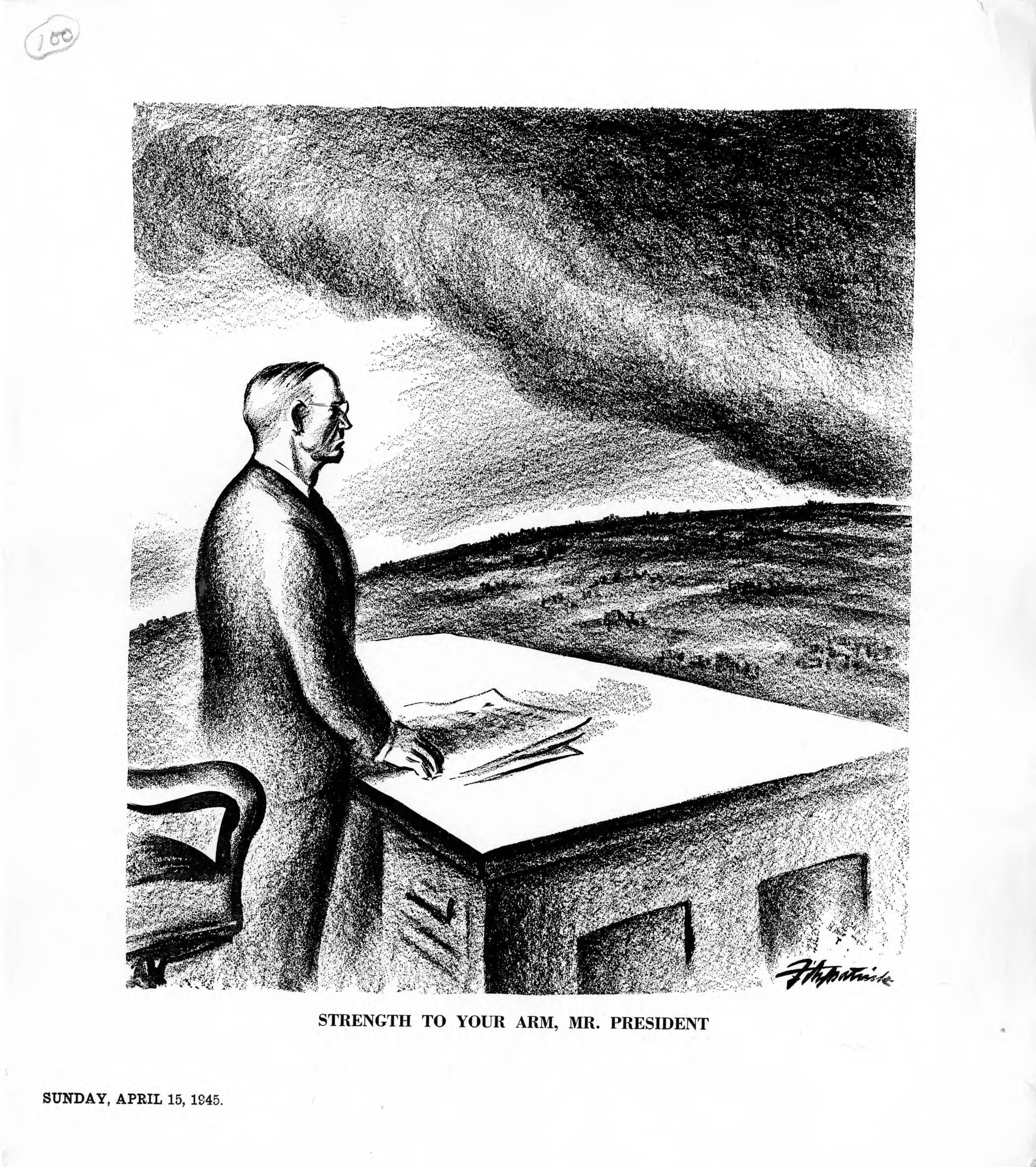
![Harry Truman became America’s thirty-third president after his predecessor Franklin Delano Roosevelt died on April 12, 1945. [State Historical Society of Missouri, The St. Louis Post-Dispatch Editorial Cartoon Collection, P0077]](/sites/default/files/styles/article_header_image/public/2026-09/4-fitzpatrick-stl-pd-editorial-cartoon-collection_0.jpg?itok=2jIPuLUy "Harry Truman became America’s thirty-third president after his predecessor Franklin Delano Roosevelt died on April 12, 1945. [State Historical Society of Missouri, The St. Louis Post-Dispatch Editorial Cartoon Collection, P0077]")
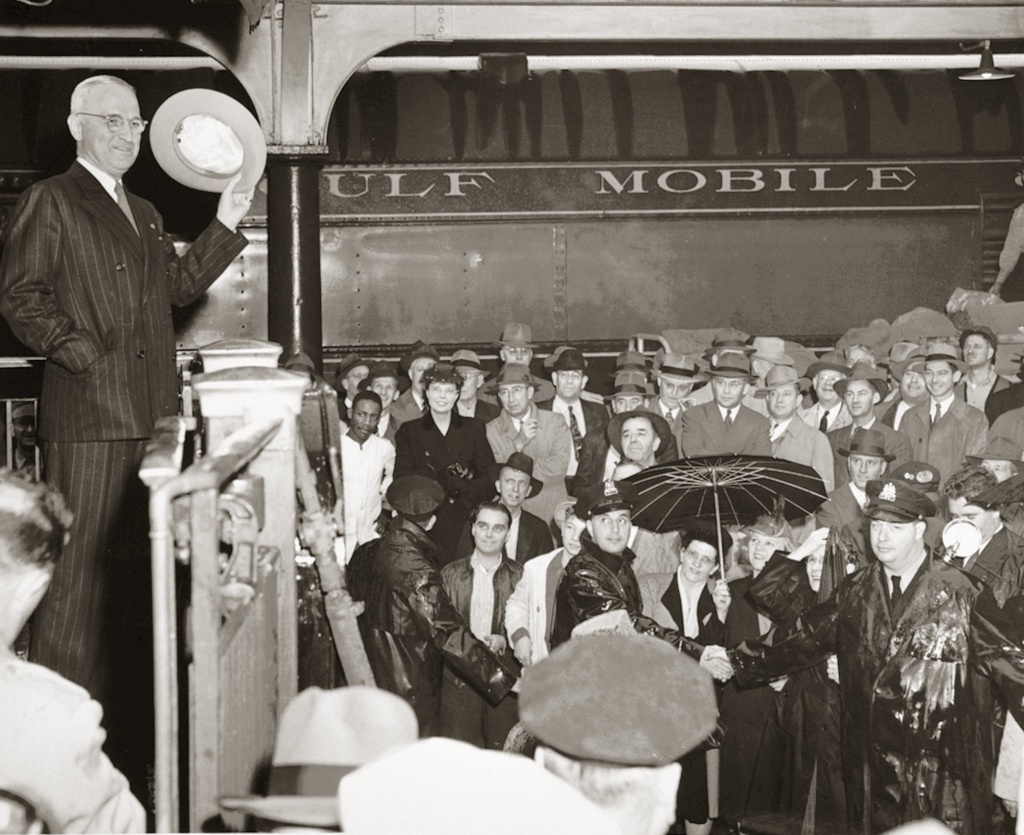
![Harry S. Truman waving from the back of a train on his 1948 whistle-stop tour across the US. He frequently criticized the “Do-Nothing” Republican Congress during campaign stops. [Missouri Historical Society, St. Louis, Pierce W. Hangge Collection, N20207]](/sites/default/files/styles/article_header_image/public/2026-09/5-truman-whistle-stop-1948-mhs-stl-n20207_0.jpg?itok=wKEndCah "Harry S. Truman waving from the back of a train on his 1948 whistle-stop tour across the US. He frequently criticized the “Do-Nothing” Republican Congress during campaign stops. [Missouri Historical Society, St. Louis, Pierce W. Hangge Collection, N20207]")
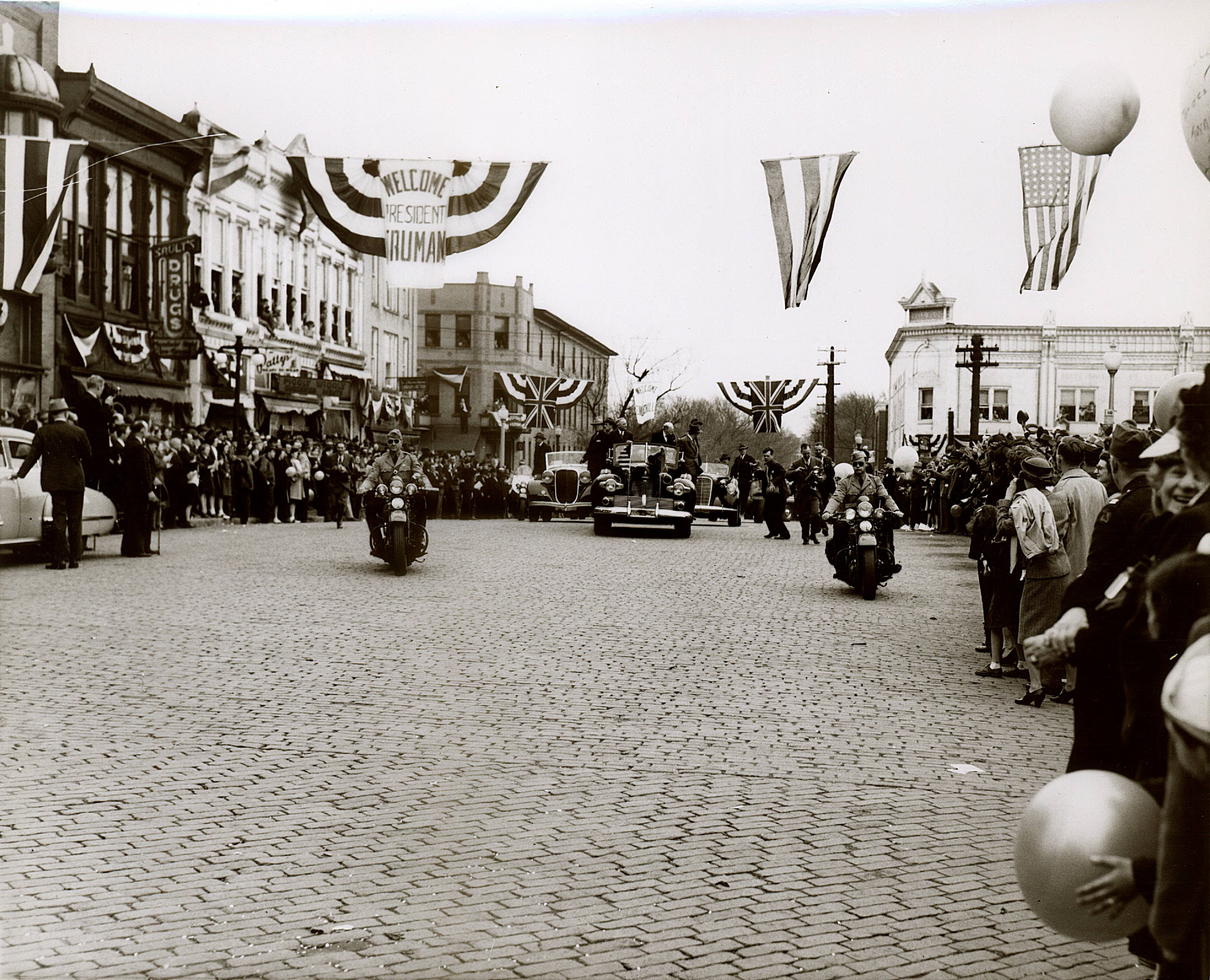
![Crowds greeted President Truman and former British prime minister Winston Churchill in Fulton, Missouri, on March 5, 1946, ahead of Churchill’s speech at Westminster College. [State Historical Society of Missouri, Gerald R. Massie Photographs, P0016]](/sites/default/files/styles/article_header_image/public/2026-09/6-crowd-in-fulton-shsmo-gerald-r.-massie-photographs-p0016_0.jpg?itok=pHubmv_d "Crowds greeted President Truman and former British prime minister Winston Churchill in Fulton, Missouri, on March 5, 1946, ahead of Churchill’s speech at Westminster College. [State Historical Society of Missouri, Gerald R. Massie Photographs, P0016]")
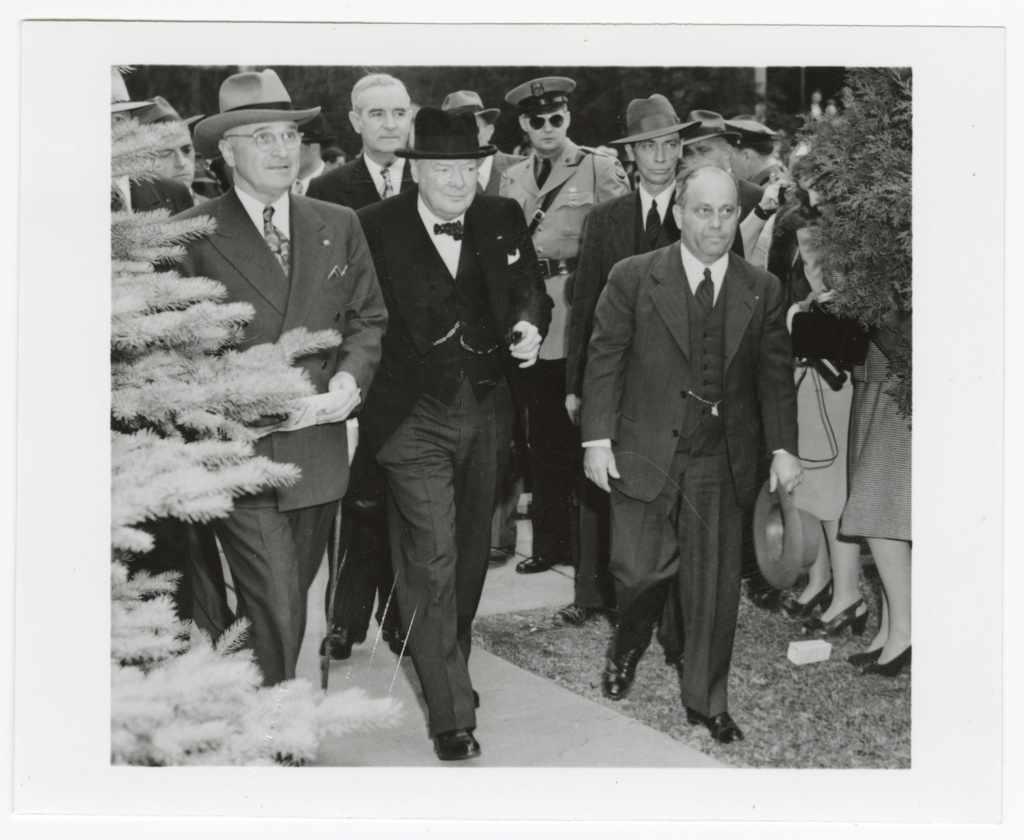
![Truman with former British prime minister Winston Churchill during his visit to Westminster College in Fulton, Missouri, where Churchill delivered his famous “Iron Curtain” speech. [Missouri Historical Society, St. Louis, P0095-00010]](/sites/default/files/styles/article_header_image/public/2026-09/7-truman-and-churchill-mhs-stl-p0095-00010_0.jpg?itok=cTCyktoZ "Truman with former British prime minister Winston Churchill during his visit to Westminster College in Fulton, Missouri, where Churchill delivered his famous “Iron Curtain” speech. [Missouri Historical Society, St. Louis, P0095-00010]")
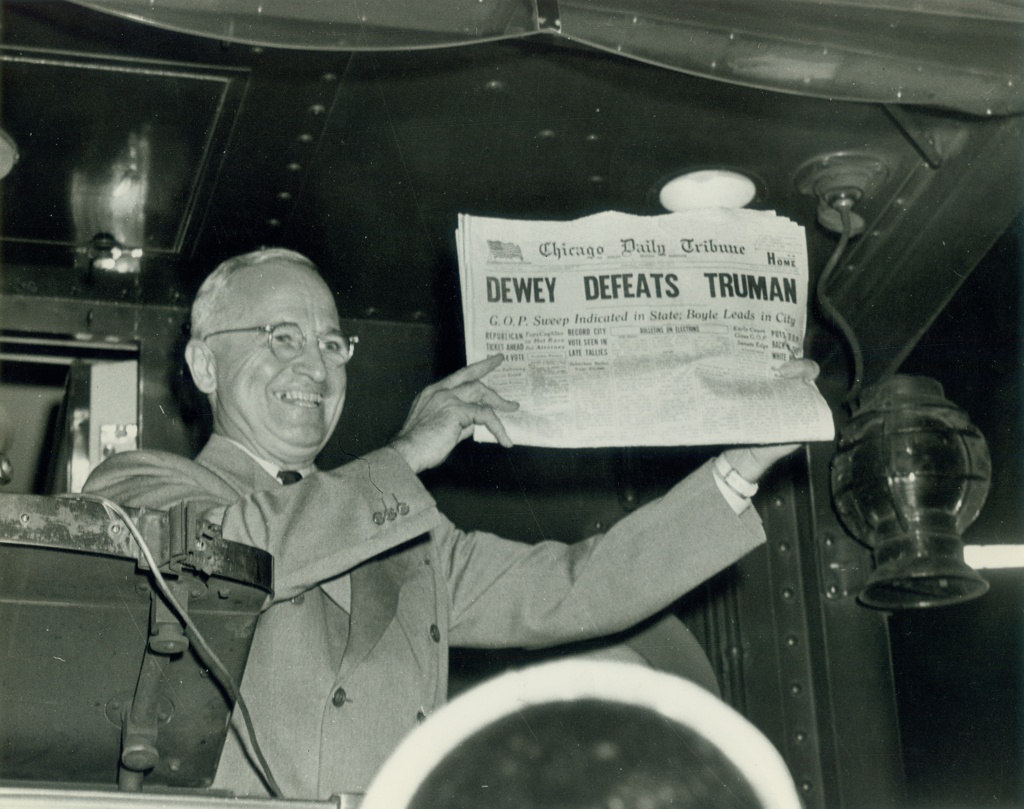
![Truman on the morning of November 4, 1948. The publishers of the Chicago Daily Tribune were confident in early polling results and called the race too soon. [Missouri Historical Society, St. Louis, MHS Photographs and Prints Collection, N13427]](/sites/default/files/styles/article_header_image/public/2026-09/8-dewey-defeats-truman-mhs-stl-n13427_0.jpg?itok=ZB3I1Pfw "Truman on the morning of November 4, 1948. The publishers of the Chicago Daily Tribune were confident in early polling results and called the race too soon. [Missouri Historical Society, St. Louis, MHS Photographs and Prints Collection, N13427]")
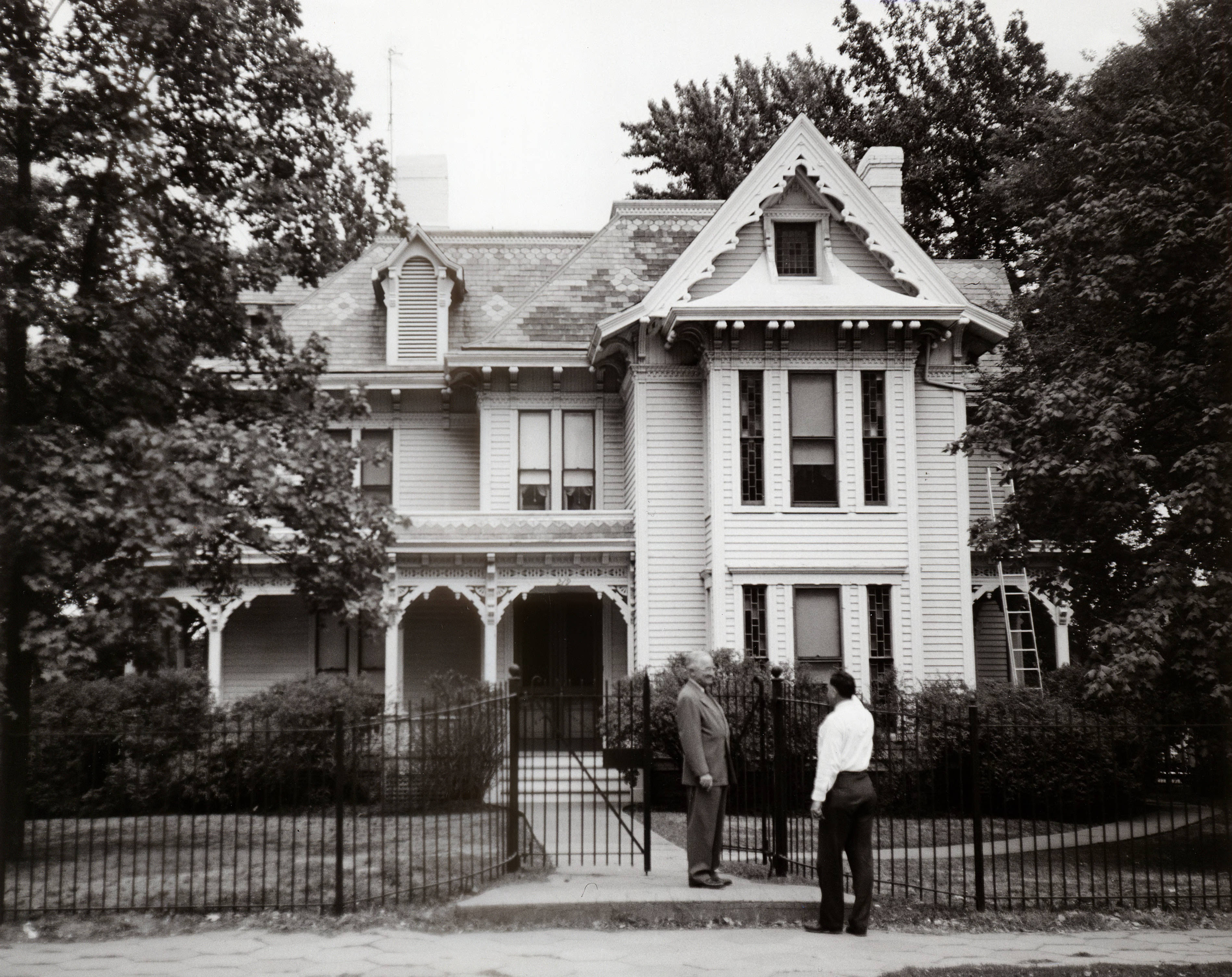
![After leaving the White House, Truman returned to his home in Independence, Missouri, and lived there until his death in 1972. [State Historical Society of Missouri, Gerald R. Massie Photographs, P0016]](/sites/default/files/styles/article_header_image/public/2026-09/9-truman-residence-independence-mo-shsmo-gerald-r.-massie-photographs-p0016_0.jpg?itok=P97DyzTR "After leaving the White House, Truman returned to his home in Independence, Missouri, and lived there until his death in 1972. [State Historical Society of Missouri, Gerald R. Massie Photographs, P0016]")
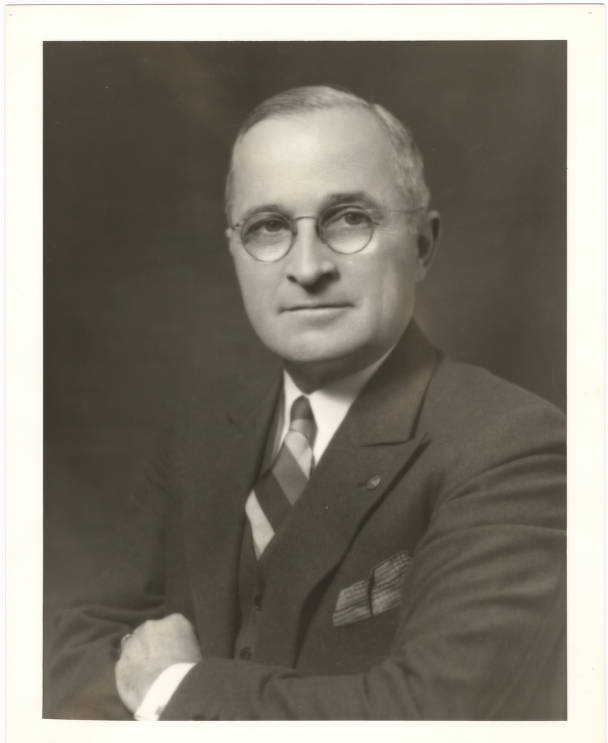
![While Truman was the subject of scrutiny during his two terms in the White House, his administration continues to be ranked highly by historians. [State Historical Society of Missouri, Harry S. Truman Photograph Collection, P0189]](/sites/default/files/styles/article_header_image/public/2026-09/10-truman-portrait-shsmo-p0189_0.jpg?itok=1HvZnXh6 "While Truman was the subject of scrutiny during his two terms in the White House, his administration continues to be ranked highly by historians. [State Historical Society of Missouri, Harry S. Truman Photograph Collection, P0189]")
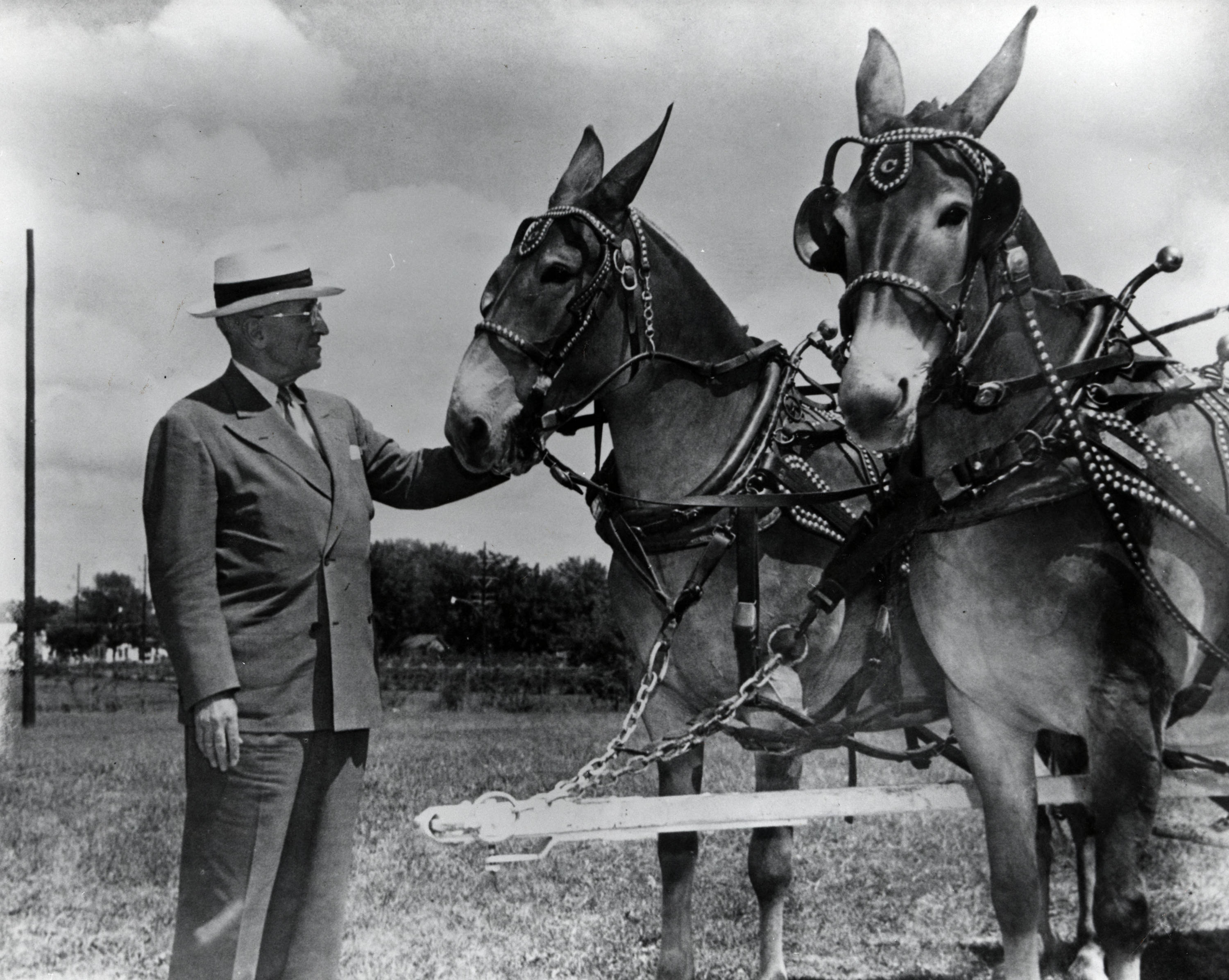
Harry S. Truman was born in Lamar, Missouri on May 8, 1884, the oldest child of John Anderson Truman, a farmer and livestock dealer, and Martha Ellen Young Truman. His middle initial, which does not stand for a name, was given to honor his grandfathers, Anderson Shipp Truman and Solomon Young. When he was just ten months old, the family sold the Lamar property and moved briefly to a farm near Harrisonville, Missouri, then to one near Belton, Missouri. In 1887, they settled on a 598-acre farm in Grandview, Missouri, that belonged to Solomon Young, who died a few months after their arrival. In 1890 the family, which now included Harry’s brother Vivian and his sister Mary Jane, moved to Independence, Missouri, where Martha Truman hoped her children could get a better education.
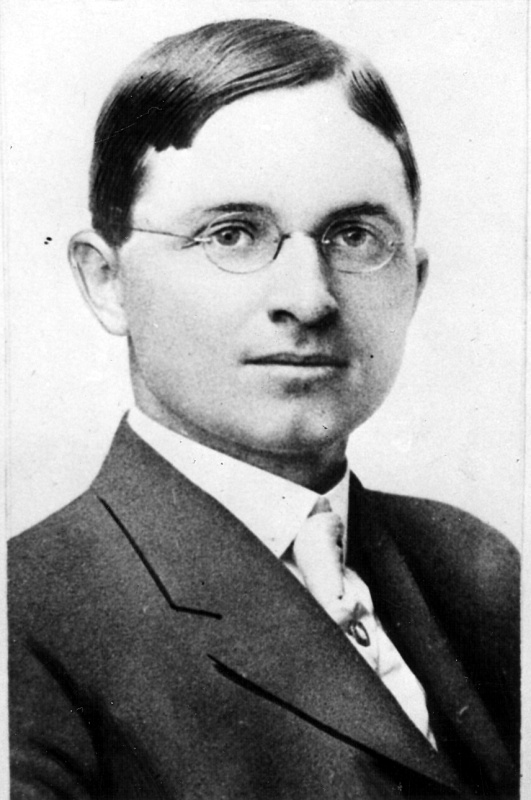
After graduating from Independence High School in 1901, Harry Truman took a year of coursework at Spalding’s Commercial College in Kansas City. Truman was the last president, and the first since William McKinley, without a college degree. His coursework may have helped him to secure employment, however briefly, with the Kansas City Star, the Santa Fe Railway, and the National Bank of Commerce in Kansas City. In 1905, Truman joined the Missouri National Guard, serving until 1911 and attaining the rank of corporal. In 1906 he returned with his father and brother to the Grandview farm, where he lived until 1917. It was during this time, in 1910, that he began his courtship with Elizabeth “Bess” Virginia Wallace, whom he had known in high school.
When the United States entered World War I in April 1917, Truman rejoined the Missouri National Guard. At this time, national guardsmen elected their officers at the battery level and Truman was chosen for the position of first lieutenant of Battery F in the Second Missouri Field Artillery Regiment. Before deployment, Truman went to Camp Doniphan, adjacent to Fort Sill, near Lawton, Oklahoma for training. At Doniphan, with the help of Edward Jacobson, he ran a successful camp canteen. In April 1918, Truman arrived in France. One of more than two million soldiers who would serve in the American Expeditionary Force. Now a captain, he became commander of Battery D, 129th Field Artillery, 35th Division. Truman’s battery saw its first combat in the Vosges Mountains, and then participated in the Meuse-Argonne campaign, the final Allied offensive of the war and, at the time, the largest offensive in American military history. Truman’s military record and the leadership experience he earned during the war made his future political career possible.
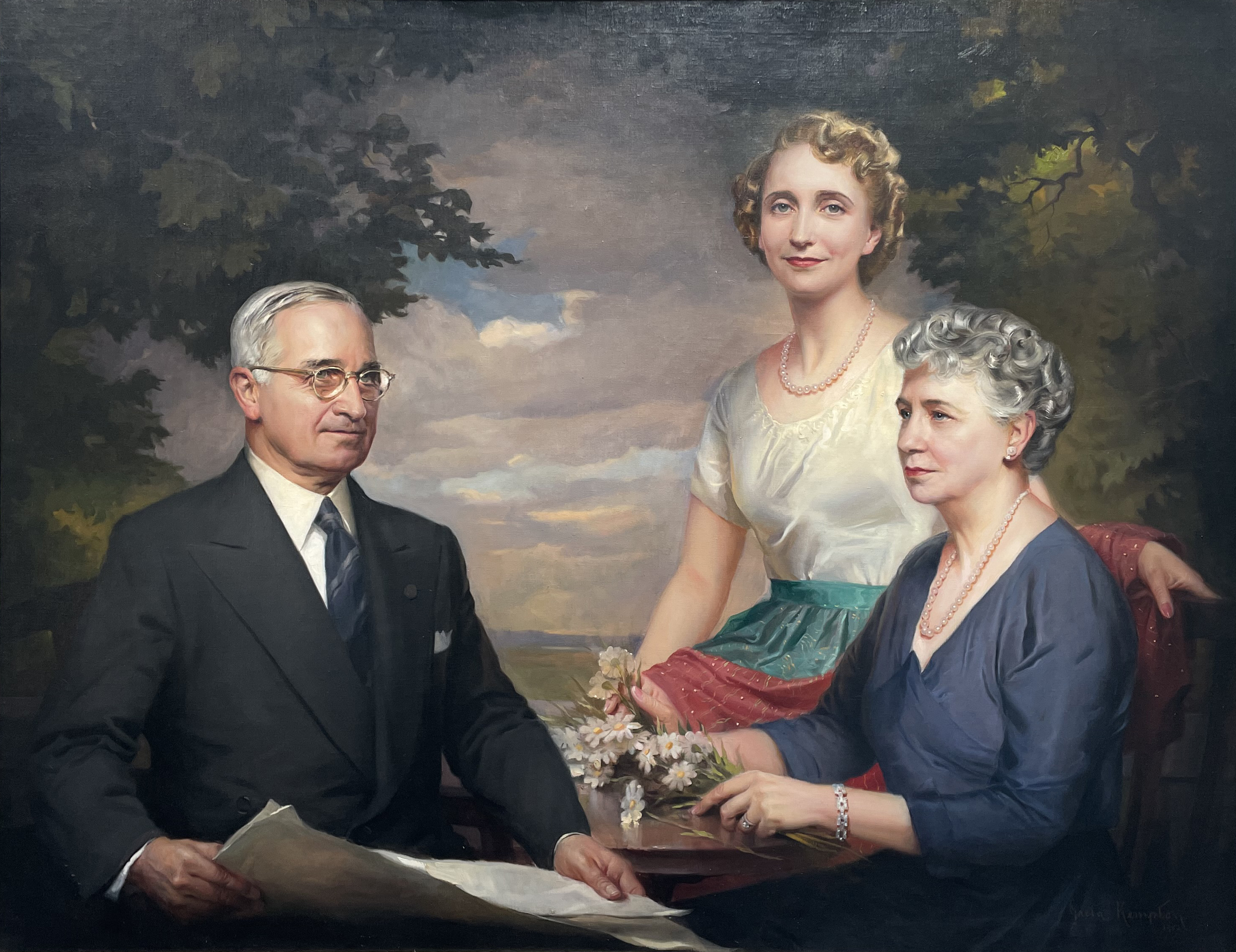
Before Truman departed for training, Bess Wallace had told him that she wanted to get married, but, uncertain of his future, he had asked her to wait until he returned. After the war, Truman returned to Independence and married Wallace on June 28, 1919. Mary Margaret Truman, Harry and Bess’s only child, was born on February 17, 1924. Just before the wedding, Truman had opened a haberdashery—a store selling men’s clothing and accessories—with his Camp Doniphan business partner, Eddie Jacobson. After an initial period of success, the store went bankrupt in 1921. Despite their failed business venture, Truman and Jacobson remained friends. Jacobson, who was Jewish, may have influenced Truman’s later position on Israeli independence.
In 1922, with the support of Tom Pendergast, Truman was elected county court judge of Jackson County, Missouri’s eastern district. Pendergast’s support was both a positive and a negative for Truman. While early support from Pendergast made Truman’s political career possible, as he became more prominent, Truman’s association with the Kansas City Democratic Party boss led many to believe that he was not his own man. Although he lost his 1924 reelection bid, he won the position again in 1926 and served through 1934. Truman’s time as county court judge made him ambitious for higher office, but he could not get Pendergast’s support for a gubernatorial or congressional campaign. After Pendergast’s top choices declined to run, however, he reluctantly backed Truman for the Democratic nomination for United States senator in 1934. After securing the nomination, he won the seat by easily defeating Republican candidate Roscoe Patterson. He was reelected in 1940 despite Pendergast having been imprisoned for income tax evasion the previous year.
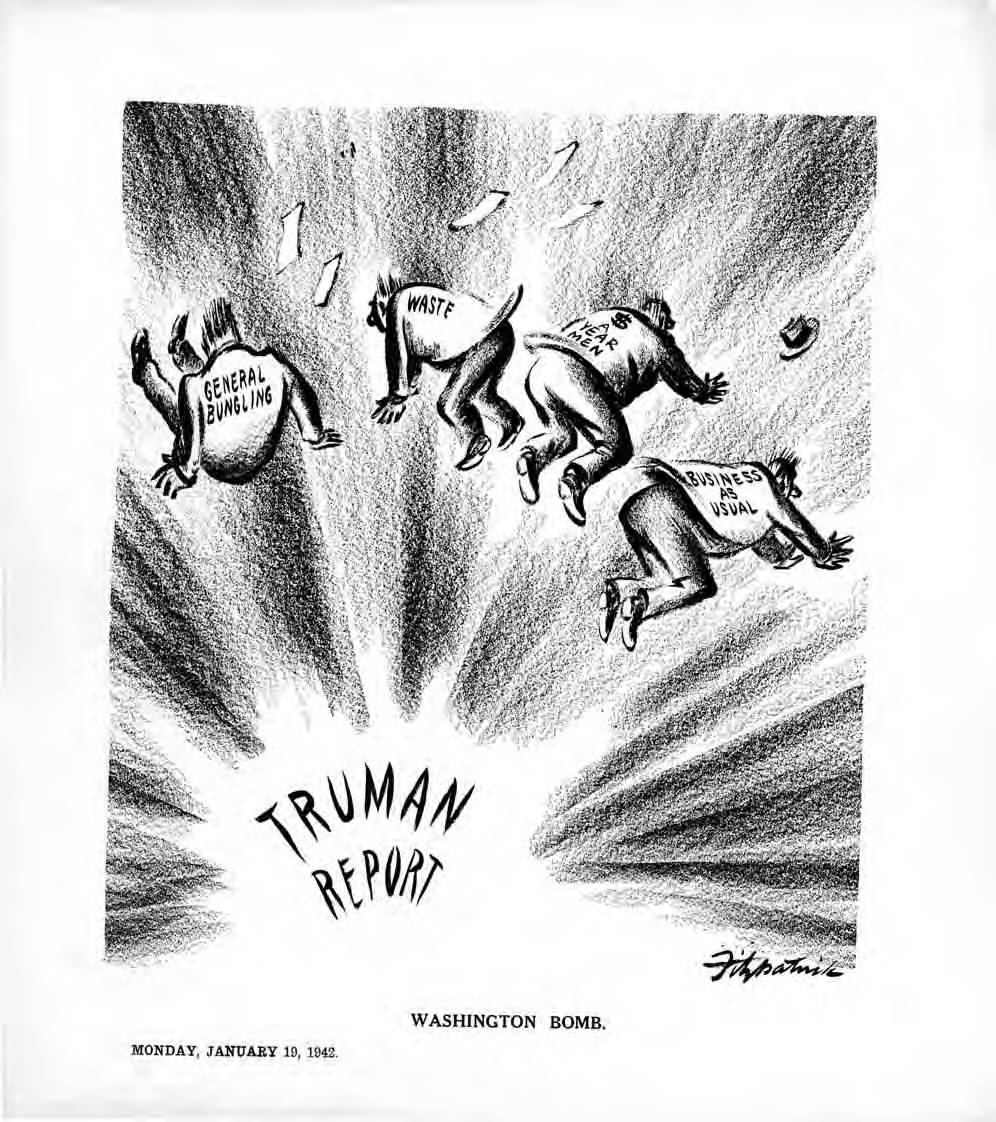
Truman distinguished himself during his second term in the Senate, using his chairmanship of the Subcommittee on War Mobilization (Committee on Military Affairs) to investigate waste and corruption in the fulfillment of government contracts. The “Truman Committee,” Truman himself claimed, saved the United States $15 billion (1940 US dollars) as it prepared for war. The prominence Truman earned put him on the cover of Time magazine and on the short list for the vice presidency. Truman’s notoriety had caught the attention of Franklin Roosevelt, who was running for his fourth term as president. Roosevelt wanted to replace George Wallace, his current vice president, and party leaders agreed that Truman, despite his lack of experience, would be acceptable. What made this choice remarkable is that Roosevelt’s closest advisors knew that he was unlikely to live through a fourth term. Roosevelt and Truman easily defeated the Republican ticket of Thomas Dewey and John Bricker.
Truman’s vice presidency was brief. Franklin Roosevelt died in Warm Springs, Georgia on April 12, 1945, just eighty-two days into his fourth term. Truman was at the Capitol when he received a call requesting that he come to the White House. Upon arrival he was escorted to the Roosevelts’ private quarters. Eleanor Roosevelt stepped forward and put her arm on Truman’s shoulder. “Harry,” she said, “the President is dead.” When Truman was able to speak, he asked, “Is there anything I can do for you?” Mrs. Roosevelt replied, “Is there anything we can do for you. For you are the one in trouble now.”
When Truman assumed the presidency, the war against Germany had nearly reached its conclusion, but the war against Japan was far from over. It was not until April 25, Truman’s twelfth day as president that Secretary of War Henry Stimson gave him a full briefing on the Manhattan Project, which was building the atomic bomb in Los Alamos, New Mexico. “Within four months,” Stimson wrote, “we shall in all probability have completed the most terrible weapon ever known in human history.” On May 7, 1945, Germany surrendered unconditionally to the Allied forces. Although the Manhattan Project began as a race to beat the Nazis in the production of atomic weapons, the project continued without hesitation after Germany’s defeat.
Meanwhile, plans for an invasion of Japan continued. The plan, presented to Truman by General Marshall on June 18, 1945, consisted of two phases. The first phase would be the invasion of Kyushu, the southern most of the Japanese islands, only 350 miles from Okinawa, on November 1, 1945. The second phase, the invasion of Honshu, would follow in March 1946. Casualty estimates for phase one ranged from 40,000–50,000 thousand Americans, while estimates for the invasion of Honshu varied more widely—from 250,000 to 1 million Americans.
After the first successful test of the atomic bomb on July 16, 1945, all of Truman’s closest advisors recommended he use it against Japan. Truman made the decision himself. “The final decision of where and when to use the atomic bomb was up to me,” he later wrote. “I regarded the bomb as a military weapon and never had any doubt that it should be used.” The first bomb was dropped August 6 on Hiroshima. On August 9, a second bomb was dropped on Nagasaki. That night Truman spoke to the American people, telling them he had ordered use of atomic bombs “to shorten the agony of war, in order to save the lives of thousands and thousands of young Americans.” Japan surrendered on August 14.
Unfortunately, the end of World War II did not bring about lasting peace. On March 5, 1946, while speaking in Fulton, Missouri, former British Prime Minister Winston Churchill declared that “From Stettin in the Baltic to Trieste in the Adriatic, an Iron Curtain has descended across the [European] continent.” On the other side of this “Iron Curtain” was the Soviet Union and the nations that it had occupied in the closing months of World War II. The Cold War which ensued between the Soviet Union and its former wartime allies in the West would occupy President Truman for remainder of his presidency.
The month before Churchill’s speech, the State Department had asked George Kennan, its chargé d’ affaires in Moscow, to offer his opinion on US relations with the Soviet Union. Kennan’s response, the so-called “long telegram,” outlined the concept of “containment.” The following year he elaborated further on the subject for an article in Foreign Affairs magazine. “The main element of any US policy toward the Soviet Union,” Kennan wrote, “must be that of a long-term and patient, but firm and vigilant containment of Russian expansive tendencies.” The Soviets would have to “be contained by the adroit and vigilant application of counterforce at a series of constantly shifting geographical and political points.” If the United States could commit to this long term, it would eventually lead to “either the break-up or the gradual mellowing of Soviet power.” Kennan’s views fit perfectly with the attitude of Truman and his top advisors.
On March 12, 1947, prompted by a communist insurgency in Greece and Soviet demands for access to the Turkish Straits, Truman issued a major foreign policy proclamation. Speaking before a joint session of Congress, Truman said that “It must be the policy of the United States to support free peoples who are resisting attempted subjugation by armed minorities or by outside pressures.” That support, he continued, “should be primarily through economic and financial aid.” This proclamation came to be known as the Truman Doctrine and, along with containment, provided a framework for waging the Cold War.
In keeping with the President’s belief that the objectives of the Truman Doctrine should be achieved primarily through economic and financial aid, on April 3, 1948, Truman signed the European Recovery Program, more commonly known as the Marshall Plan, into law. Over a period of four years, the Marshall Plan provided $13.3 billion (1948 US dollars) in foreign aid to Western European countries still struggling to recover from World War II. Secretary of State George Marshall outlined the plan in a commencement speech at Harvard University on June 5, 1947. “Our policy is directed not against any country or doctrine but against hunger, poverty, desperation and chaos,” he said. “Its purpose should be the revival of a working economy in the world so as to permit the emergence of political and social conditions in which free institutions can exist.” Despite Marshall’s emphasis on the humanitarian aspects of the plan, rebuilding Western Europe would make it strong enough to resist Communist expansion and solidify American economic hegemony in the region.
When it came to occupied Germany, Truman would not be able to contain Soviet expansionism with financial assistance alone. Following World War II, Germany was divided with the United States, United Kingdom, France, and the Soviet Union each occupying a zone. Berlin, the German capital, was likewise divided. On June 24, 1948, the Soviet Union blocked ground access to the three Western occupation zones in Berlin. Truman rejected General Lucius Clay’s proposal to send an armed column across the Soviet zone, believing it was too provocative. The risky alternative was the Berlin Airlift. Beginning June 26, the Western Allies made more than 275,000 flights delivering more than 2.3 million tons of food, fuel, and other supplies to West Berlin’s Tempelhof Airport. The Soviet Union relented and allowed ground access on May 12, 1949. Flights continued until September 1949.
As the Cold War came to define the postwar world, the United States and its allies took steps to maintain readiness. On July 26, 1947, Truman signed the National Security Act of 1947, restructuring American military and intelligence services. The law merged the Department of the Army, formerly the Department of War, the Department of the Navy, and the newly established Department of the Air Force into the National Military Establishment (NME), overseen by a secretary of defense. The Army Air Force was discontinued and a new service, the United States Air Force, was created under the Department of the Air Force. The United States Marine Corps was maintained as an independent service under the Department of the Navy. The law also created the Joint Chiefs of Staff, the Central Intelligence Agency, and the National Security Council. In 1949, amendments to the 1947 law changed the name of the NME to the Department of Defense and the secretary of defense began representing the three service-level departments on the president’s cabinet.
In 1949, twelve nations, the United States, Belgium, Canada, Denmark, France, Iceland, Italy, Luxembourg, the Netherlands, Norway, Portugal, and the United Kingdom, joined in creating the North Atlantic Treaty Organization (NATO). Article 5 of the North Atlantic Treaty states that an armed attack against one NATO member “shall be considered an attack against them all.” On August 24, after the Senate ratified the treaty, Truman hosted representatives of NATO’s founding members in the Oval Office, signing a proclamation that declared the treaty to be in force. The resulting system of collective security would provide a powerful deterrent to Soviet expansion and remains a key element of United States foreign policy.
As a result of the dissolution of the Ottoman Empire in World War I, the League of Nations had created the British Mandate of Palestine, giving Britain temporary control over the region. In 1946, the British granted full independence to Transjordan, the portion of the mandate east of the Jordan River. In the remaining territory, Britain ruled on behalf of the Arab majority while simultaneously facilitating Jewish immigration with the idea of creating a Jewish state. In 1947, the United Nations adopted a resolution to partition the territory, but opposition from Arab states prevented implementation. With the British mandate coming to an end, the Jewish National Council, representing Jewish interests in the Palestine Mandate, declared Israeli independence on May 14, 1948.Truman’s advisors were divided on the issue. Some believed that creation of a Jewish state was an appropriate response to the horrors of the Holocaust and would also promote American interests. Others believed it would create more conflict in an already troubled region. Truman’s decision made the United States the first country to recognize Israeli independence—just eleven minutes after it had been declared.
Following World War II, to avoid confrontation between US and Soviet occupation forces, the Allies established the 38th parallel as a dividing line in Korea. Over time two governments emerged: In the north, the Soviet Union helped Kim Il Sung establish a communist government. In the south, elections resulted in a US–supported right-wing government led by Syngman Ree.
On June 24, 1950, Truman received word that North Korean troops had invaded South Korea. Without hesitation, Truman decided that the United States would repel the invasion. On June 25, the United Nations passed a resolution condemning the invasion and calling for a ceasefire and withdrawal. An additional resolution requested that member nations help repel the attack. Truman, who had already mobilized air and naval forces, now committed combat troops under the command of General Douglas MacArthur. Truman did not seek a congressional declaration of war, but few senators raised objections as US ground forces grew steadily to one million men.
In September 1950, Truman decided that US strategy in Korea would not be limited to containment. Having successfully pushed North Korean forces out of South Korea, US forces would cross the 38th parallel and liberate North Korea from communist control. In October, the United Nations passed a US sponsored resolution supporting the move. As UN troops moved toward the Chinese border, Truman flew to Wake Island to confer with MacArthur. The general told the president that he was not fearful of Chinese intervention. Truman was satisfied. The first Chinese troops appeared on October 16. On November 26, 260,000 Chinese troops stormed UN positions, cutting MacArthur’s over-extended supply lines and driving UN forces back into South Korea. MacArthur demanded an air attack on Chinese bases, but Truman refused, fearing implementation of the Chinese–Soviet alliance, which he feared could lead to a nuclear war. By late December, Chinese and North Korean troops had been driven north of the 38th parallel. MacArthur continued to publicly criticize Truman’s war decisions until, in April 1951, after consulting with the joint chiefs, Truman recalled him and replaced him with Matthew Ridgway. Fighting in Korea would continue for another two years.
For the most part, Truman had bipartisan support for his Cold War foreign policy. The same cannot be said for his domestic policy. In the 1946 midterm elections, the Republicans won control of both houses of Congress for the first time since 1930. Although the Republican class of 1946 was unsuccessful in its primary goal of overturning the social welfare state created by Roosevelt’s New Deal, they did prevent passage of Truman’s own domestic agenda which included assistance for housing and education. They also succeeded in limiting the power of unions with the Taft–Hartley Act of 1947, which they passed over Truman’s veto. During the 1948 election campaign, Truman labeled the 80th Congress the “do-nothing” Congress and the Democratic Party won back control of both houses. Truman may have misconstrued the electoral victory of his party with support for his domestic agenda. His ambitious “Fair Deal,” announced the next year, included an increase in the minimum wage, expansion of Social Security, national health insurance, and many additional programs favored by liberals in his party. Opposition from Republicans and Southern Democrats, however, forced him to concede or scale back much of the Fair Deal.
One area where Truman did make a significant impact was in civil rights. On June 29th, 1947, he became the first president to address the National Association for the Advancement of Colored People (NAACP). Speaking from the Lincoln Memorial, Truman said, “There is no justifiable reason for discrimination because of ancestry, or religion, or race, or color.” Later that year, the President’s Committee on Civil Rights released its report entitled To Secure These Rights. In February 1948, Truman sent a special message to Congress requesting that it implement the committee’s civil rights recommendations including the end of segregation, the protection of voting rights, fair employment practices, and an end to lynching. Southern Democrats prevented congressional implementation of these provisions, but Truman used Executive Order 9980 to prohibit discrimination in the civil service, and 9981 to end segregation and prohibit discrimination in the United States Armed Forces.
The onset of the Cold War led to a second “Red Scare” in the United States as many Americans began to fear that communism was a threat at home as well as abroad. In 1948, Whittaker Chambers, an admitted former communist, accused State Department official Alger Hiss of being a Soviet spy. Under the leadership of Richard Nixon, the House Un-American Affairs Committee undertook a high-profile investigation. The following year the British government arrested Klaus Fuchs, a German émigré who had worked on the Manhattan Project. Fuchs was charged with passing American atomic secrets to the Soviet Union. This may have contributed to the Soviet Union’s subsequent testing of its own atomic bomb in 1949, well ahead of schedule. No one made more political headway from these events than Republican Senator Joseph McCarthy. Truman had attempted to get ahead of the problem by creating a government loyalty program in 1946 but made a dangerous enemy in McCarthy by dismissing his concerns as unfounded. When Truman vetoed Democratic Senator Patrick McCarran’s Internal Security Act, claiming it was a violation of civil liberties, Congress overrode the veto. Truman found it difficult to overcome the charge that his administration was “soft on communism.”
Truman had been accused of corruption since his early association with Tom Pendergast. Those accusations continued during his presidency. Many of those accusations revolved around his friend and military aide General Harry Vaughan. Although Vaughan committed plenty of misconduct on his own, his worst offense was bringing disreputable figures into the White House, most notably James Hunt. It was Hunt who opened the Truman White House to charges of influence peddling. Hunt’s services could be had for $1,000 down, $500 a month, and five percent of any government contract procured. The exposure of one of his deals precipitated the “Five Percenters” scandal. Truman stayed loyal to Vaughan throughout the media frenzy and congressional investigation that followed, even when Vaughan’s behavior crossed ethical and legal lines.
Despite Democratic Party gains in the 1946 midterm elections, Truman’s prospects for election to the presidency in 1948 looked bleak. He had managed to strengthen his relationship with key groups within the Democratic coalition: Labor appreciated his veto of the Taft–Hartley Act; Jewish Americans his recognition of Israeli independence; and African Americans his support for civil rights. Divisions within the party itself, however, threatened to throw the election to the Republicans. Prior to the Democratic National Convention, Secretary of Commerce Henry Wallace, Roosevelt’s second vice president, announced his intention to leave the party and run for president as the candidate of the Progressive Party. At the convention, after the party adopted a pro–civil rights plank for the platform, Southern delegates walked out. Later in the summer, they formed the States Rights’ Party, better known as the “Dixiecrats,” and nominated South Carolina Governor Strom Thurmond for President. The remaining delegates easily nominated Truman and Kentucky Senator Alben Barkley, his choice for vice president.
With the Democratic Party badly divided, the Republican ticket of New York Governor Thomas Dewey and his running mate California Governor Earl Warren were heavy favorites in the general election. Truman embarked on a “whistle-stop” tour of the nation. Between Labor Day and the election, Truman covered nearly 22,000 miles and made more than 350 speeches. Millions of Americans heard him defend New Deal liberalism and criticize the Republicans and their “do-nothing” Congress. “Give ‘em hell, Harry!” became a popular response from the crowd. Meanwhile Dewey, the clear favorite, took a more conservative approach. He made far fewer campaign stops, spoke in general terms, and sought to appear presidential. The national media remained convinced of a Dewey victory. The final preelection poll, taken in mid-October and released the day before the election, showed Dewey ahead of Truman 49.5 percent to 44.5 percent. The actual result was nearly the opposite. Truman won the popular vote 49.5 percent to 45.1 percent, and the Electoral College vote 303–189. Thurmond and Wallace each took 2.4 percent of the popular vote and Thurmond won four Southern states and their thirty-nine Electoral College votes. Although he had not won a majority of the votes cast, Truman had, for the most part, held the New Deal Democratic coalition together and pulled off the political upset of the century. The morning after the election, on his way back to Washington, he held aloft a copy of the Chicago Tribune, with the headline “Dewey Defeats Truman.” The paper’s editors had trusted the polls so completely that they committed to the headline before the results were in.
From November 21, 1948, to March 27, 1952, the Trumans lived across Pennsylvania Avenue in Blair House, the President’s Guest House, while the executive residence of the White House underwent a major renovation. The family was already aware of the building’s structural weakness, but the urgency of the problem became apparent in June 1948 when a leg of Margaret Truman’s piano fell through the floor of her sitting room. A comprehensive survey of the building was done during the 1948 campaign, and after the election the Trumans were told they would have to move out so that the interior could be demolished and rebuilt. Truman continued to use the West Wing, including the Oval Office, throughout the renovation. Congress created a commission to oversee the work and allocated the necessary funds to complete it—$5.7 million in 1952 US dollars.
Truman gave serious consideration to running for reelection in 1952. The Twenty-second Amendment to US Constitution prohibits anyone who has served “more than two years of a term to which some other person was elected president” from being elected to the office of president more than once. Because he was in office when the amendment was ratified in March 1951, however, Truman was specifically excluded from this term limitation. He allowed his name to be entered in the New Hampshire primary where he was soundly defeated by Tennessee Senator Estes Kefauver. He formally withdrew from the race eighteen days later and supported the candidacy of Illinois Governor Adlai Stevenson, who eventually won the nomination.
After leaving office, Truman and Bess returned to Independence, Missouri. He remained active in politics and dedicated much of his time to establishing his legacy. In 1955 he published Year of Decisions, the first volume of his memoirs. The second volume, Years of Trial and Hope, followed in 1956. The Harry S. Truman Presidential Library and Museum was dedicated in 1957. Truman spent much of his time there, working in his office and meeting with guests. Truman actively lobbied for the Former Presidents Act, enacted in 1958, which provided a $25,000 annual pension to former presidents. Despite popular belief, however, Truman was not destitute in his post-presidential years. Among other sources of income, he had received $670,000 (1955 US dollars) for his memoirs and sold most of the Grandview farm to developers in 1958.
Harry S. Truman died December 26, 1972, at the age of eighty-eight. Bess Truman declined a state funeral in Washington, holding a private service instead. A week later, a memorial service was held at the Washington National Cathedral. Truman is buried in the courtyard of the Harry S. Truman Library and Museum in Independence, Missouri. Bess Truman, who died in 1982, is buried next to him. Mary Margaret Truman, their only child, died in 2008 and is also buried at the presidential library. She and her husband Clifton Daniel gave the president four grandsons: Clifton Truman, Thomas Washington, Harrison Gates, and William Wallace.
Truman’s reputation has improved dramatically over the years since he left the White House. In February 1952, the last year of his presidency, his approval rating was a dismal 22 percent. In 1962, historian Arthur Schlesinger Jr. conducted a poll of seventy-five historians that placed him in the “near great” category. “Truman,” Schlesinger wrote in a New York Times article summarizing the results, “discharged impressively the awesome obligations devolving on the United States as the leader of the free world in the cold war with Soviet imperialism.” David McCullough’s biography Truman, published in 1992, was very influential in improving Truman’s reputation with the general public, while Alonzo Hamby’s Man of the People, published in 1995, had more scholarly influence. The most prestigious survey of US presidents, conducted by the Sienna Research Institute, ranked Truman seventh overall in its 2022 study.
Acheson, Dean. Present at the Creation: My Years in the State Department. New York: W.W. Norton, 1969.
Dunar, Andrew J. The Truman Scandals and the Politics of Morality. Columbia: University of Missouri Press, 1984.
Ferrell, Robert H. Harry S. Truman: A Life. Columbia: University of Missouri Press, 1994.
Ferrell, Robert H., ed. Off the Record: The Private Papers of Harry S. Truman. New York: Harper And Row, 1980.
Greene, John Robert. Little Helpers: Harry Vaughan, His Cronies, and Corruption in the Truman Administration. Columbia: University of Missouri Press, 2024.
Hamby, Alonzo. Man of the People: A Life of Harry S. Truman. New York: Oxford University Press, 1995.
Leffler, Melvyn P. A Preponderance of Power: National Security, the Truman Administration and the Cold War. Stanford, CA: Stanford University Press, 1993.
McCullough, David. Truman. New York: Simon and Schuster, 1992.
Truman, Harry S. Memoirs, Volume One: Year of Decisions, New York: Doubleday, 1955.
Truman, Harry S. Memoirs, Volume Two: Years of Trial and Hope, New York: Doubleday, 1956.
Published September 22, 2026
Creative Commons Attribution-NonCommerical-ShareAlike 4.0 International (CC BY-NC-SA 4.0)