 the State Historical Society of Missouri
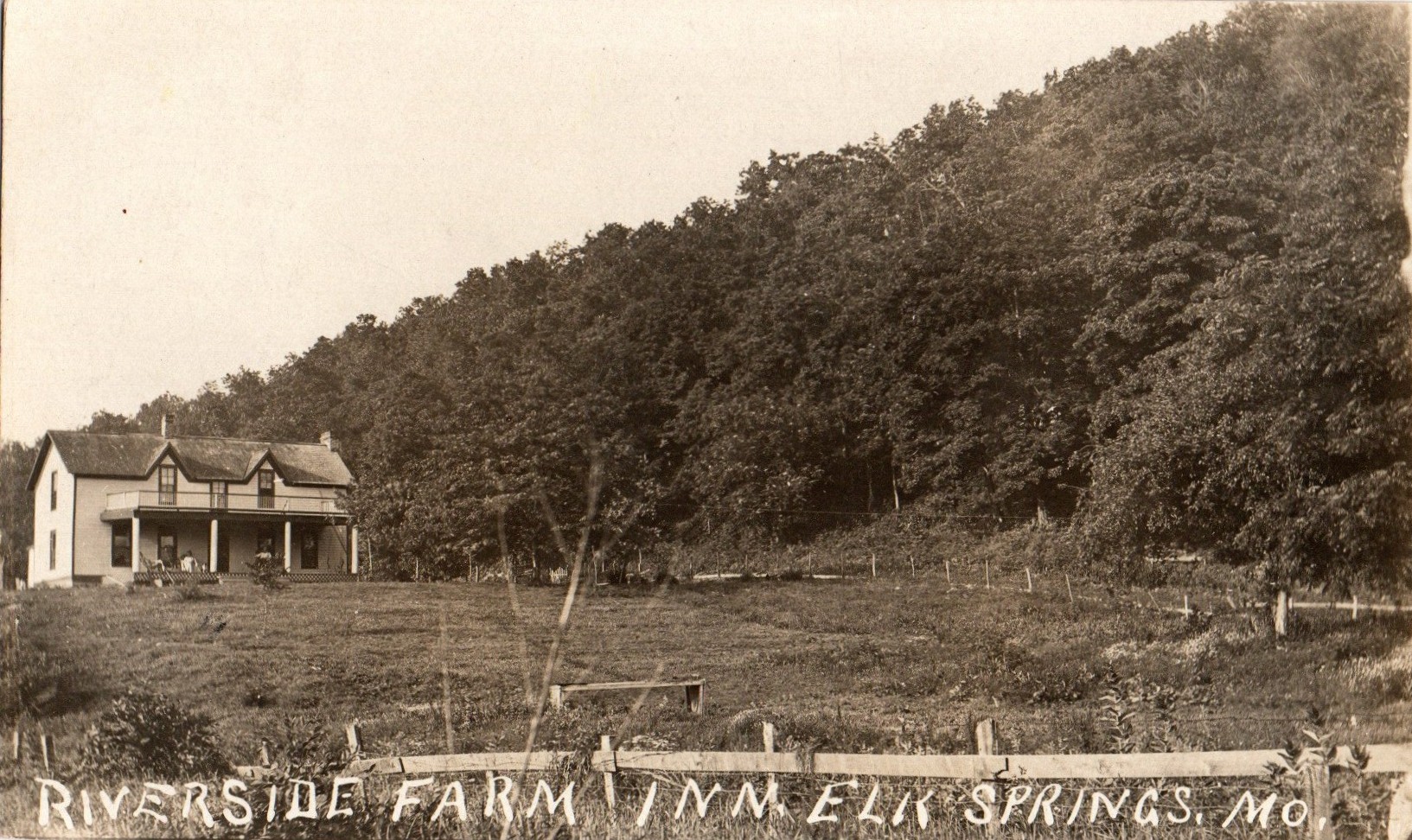
![Fleming’s Riverside Farm Inn, circa 1910. [Courtesy of Alan Banks]](/sites/default/files/styles/article_header_image/public/2026-06/1.-riverside-farm-inn-rppc-elk4f-from-alan-banks-dated-1910.jpg?itok=e5Yx9D3s "Fleming’s Riverside Farm Inn, circa 1910. [Courtesy of Alan Banks]")
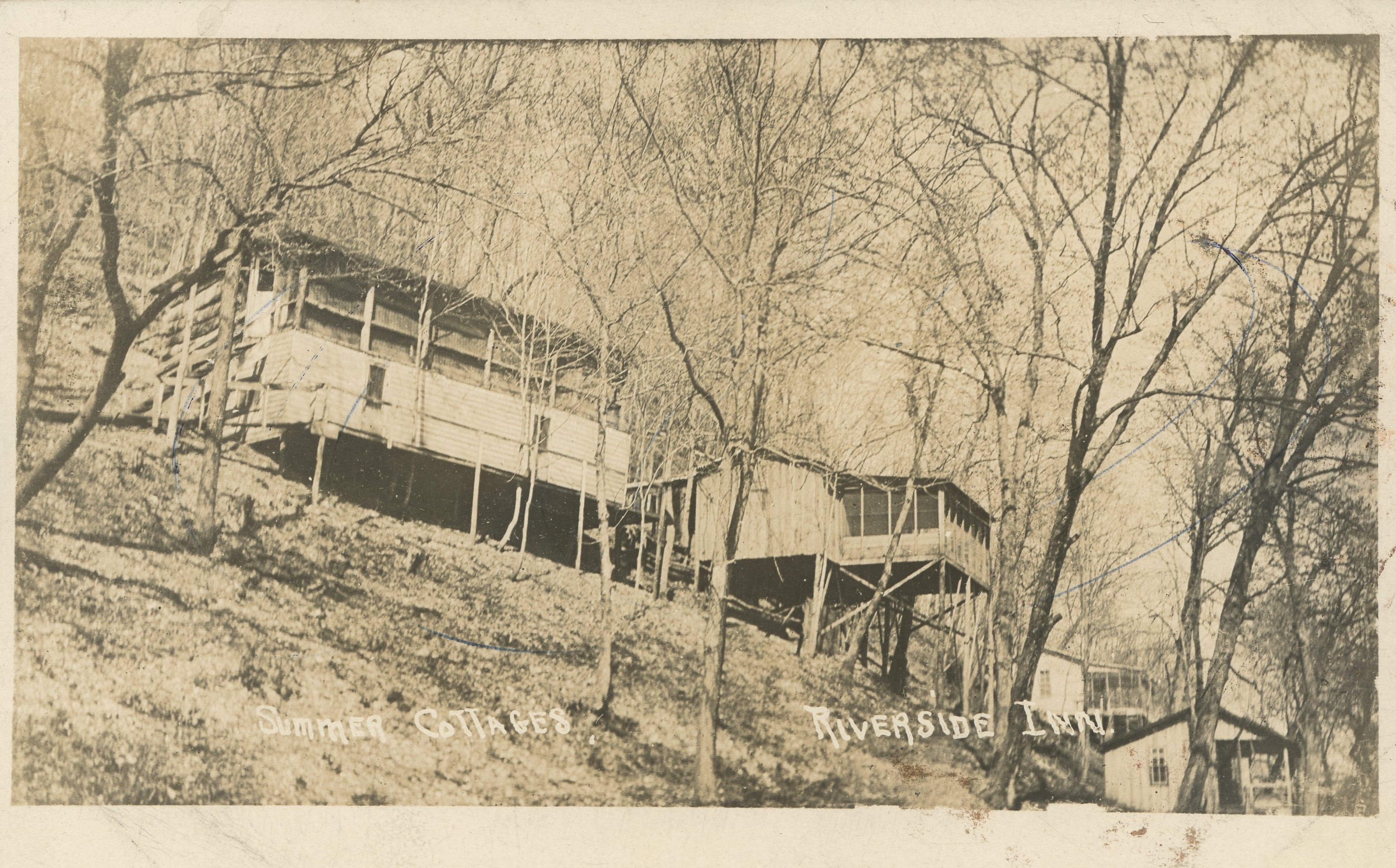
![Summer cottages perched on the hillside at Riverside Inn. [Courtesy of Kimberly Harper]](/sites/default/files/styles/article_header_image/public/2026-06/2.-summer-cottages-at-riverside-inn.jpg?itok=NB3WDjqT "Summer cottages perched on the hillside at Riverside Inn. [Courtesy of Kimberly Harper]")
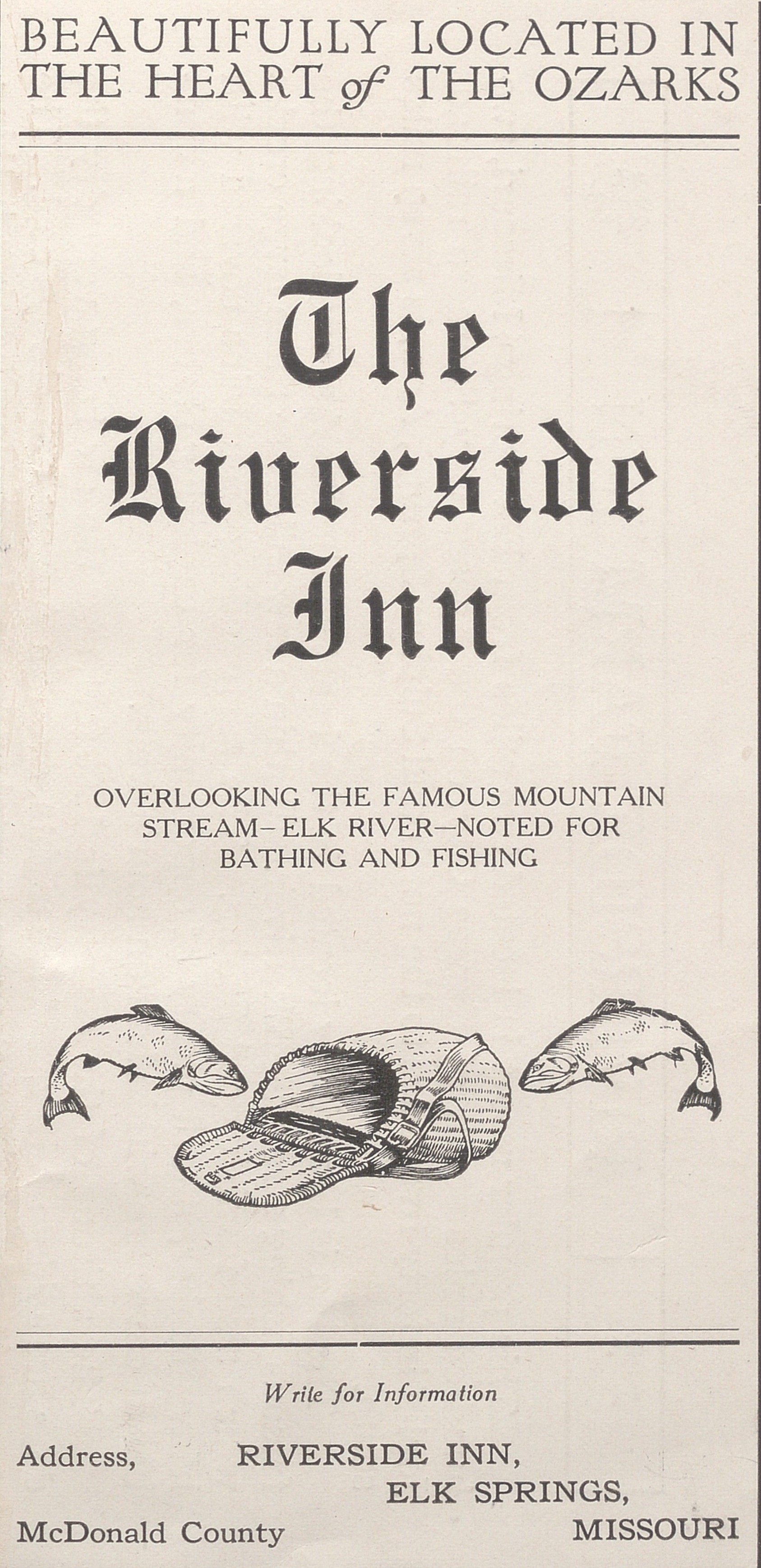
![Riverside Inn brochure, circa 1910–1914. [State Historical Society of Missouri, Rolla Research Center, Riverside Inn Brochure, R870]](/sites/default/files/styles/article_header_image/public/2026-06/3.-the-riverside-inn-brochure.jpg?itok=OPVGFoJO "Riverside Inn brochure, circa 1910–1914. [State Historical Society of Missouri, Rolla Research Center, Riverside Inn Brochure, R870]")
Fleming’s Riverside Inn overlooking Elk River in McDonald County opened in the summer of 1909. It was situated two miles east from Elk Springs, three miles downstream from Pineville, and two hundred miles south of Kansas City, Missouri. When it opened, Fleming’s establishment catered to hunters and fishermen, but as its popularly grew it also welcomed families in search of rest and relaxation on the banks of Elk River. William and LaDora Fleming’s enterprise was not the first commercial resort in McDonald County; in 1893 a group of Pittsburg, Kansas, sportsmen founded the O’Joe Club and built a clubhouse at the confluence of Elk River and Butler Creek in nearby Noel. But Riverside Inn became a magnet for tourists and sportsmen who arrived via the Kansas City Southern and, later, automobile. Its regional fame was instrumental in making McDonald County a popular outdoor recreation destination and helped launch the local commercial tourist trade.
The arrival of the Kansas City Southern in 1893 as well as the rising tourist trade encouraged the establishment of new resorts on Elk River. The Kansas City Southern not only promoted Ozarks tourism along its rail line; it also touted the region’s agricultural promise, which attracted the attention of land speculators, real estate dealers, and those looking for an affordable farm.
One of the individuals who capitalized on the Ozarks’ inexpensive land and natural beauty was William H. Fleming. Born in Ray County, Missouri, in 1845, he was the son of a Kentucky father and an Alabama mother. Sometime between 1850 and 1860 he moved with his family to Texas. During the Civil War, Fleming served in the Sixth Texas Cavalry (CSA). After the war ended, he relocated to southwest Missouri and worked as a real estate and insurance broker in Newton County. Fleming’s land deals likely led him to become quite familiar with the surrounding region. In 1905 he and his family moved roughly twenty-five miles south to McDonald County. Fleming purchased an ideally located farm on the Cowskin River, now known as Elk River. In time he transformed the property from a private farm into a public summer resort. In 1907 it was referred to in the local press as Riverside Terrace. By May 1909, however, it was called Wayside Inn on Riverside Farm. When Fleming launched his new summer resort soon after, it received its final appellation: Riverside Inn.
Fleming’s Riverside Inn overlooked a tranquil section of Elk River near the postal hamlet of Elk Springs. Some news accounts suggest that the inn may have once been a stagecoach stop. When it first opened, Fleming marketed his inn as a sportsman’s retreat. Guests could also stay in a clubhouse where everything was furnished except for bed and table linens. A stay at the inn was a dollar per day, and the clubhouse was fifty cents per day. An artesian well supplied fresh water. Since the inn was at a rail stop on the Kansas City Southern, it was unsurprising that many of its guests the first season were from Kansas City. The Pineville Democrat marveled, “This is a remarkable showing for the beginning of an enterprise of this nature.” Fleming, encouraged by the resort’s first season, made improvements over the winter to accommodate more guests.
Drawing heavily on the Arcadian myth of the countryside as an antidote to urban ills, Fleming promoted his inn as a rural retreat for those weary of the demands of city life. A brochure asked prospective guests: “Are you one of the ‘Tired Business Men,’ a lover of nature, a fisherman, one looking for an active vacation, or are you seeking rest? Do you wish solitude or the company of your fellow men?” Fleming soothingly encouraged potential visitors to “fish, swim, boat, climb a mountain, ride a horse, play tennis or croquet, dance, play the piano or Victrola. Do anything you wish. The only thing we ask is that you enjoy yourself.”
Americans needed little encouragement to take a vacation, as the upper and emergent middle classes embarked on rail and, in time, automobile excursions across the country in significant numbers. The O’Joe Club and the Riverside Inn were among the local resorts that boosted McDonald County’s reputation as a rural retreat across the Old Southwest and Midwest. With the Kansas City Southern offering connections to cities across the region, Fleming hosted guests from Little Rock, Arkansas; Bartlesville, Muskogee, and Oklahoma City, Oklahoma; and Kansas City and St. Louis. Residents from closer towns such as Neosho and Joplin also visited Riverside Inn.
If arriving by train, visitors departed at Elk Springs and were transported to the property by automobile for a twenty-five-cent fee. The two-story inn was perched on a knoll above Elk River, while cottages with screened-in porches dotted the nearby hillside. The inn boasted a large reception area, and guest rooms featured metal-framed cots with a simple mattress. It also had an on-site laundry and a barbershop. A livery stable on the property provided horses for the guests as well as a place to stable guests’ own horses. By the mid-1910s, guests paid $1.50 a day or $8 weekly; children under the age of five were $1 a day. Clubs of eight or more paid $1.25 a day.
Once guests settled in, they could fish, swim, wade, or go floating on their country vacation. Nearby creeks, hills, and caves offered endless opportunities for exploring parties. For those who wanted a more vigorous outdoor experience, Fleming rang a dinner bell at 3 a.m. to wake his guests for a long, scenic walk along the river to Noel. They could then board the northbound Kansas City Southern train in Noel, depart at Elk Springs, and walk back to the inn for an afternoon nap.
The resort’s dining hall could seat one hundred guests, who dined on fresh meat, fish, vegetables, iced tea, and water. Whether Fleming sourced local produce from neighboring farmers or was self-sufficient is unknown. Fried chicken was a specialty. Guest W. E. Newsom of Shreveport, Louisiana, wrote a song that stated,
You may, with tourist’s license, boast
Of clam-bakes on the Eastern coast,
Or dwell on some outlandish dinner
They stung you for in old Vienna—
Soft pedal, brother, till you’ve tried
A yellow-legged chicken fried
The way it’s done at Riverside
After dinner, guests led the evening’s activities; they entertained themselves with spontaneous oratory sessions, fudge parties, and dancing the Virginia reel on the inn’s veranda.
Riverside Inn continued to grow in popularity due to word of mouth, advertisements in Joplin and Kansas City newspapers, and Fleming’s self-serving, cheerful missives to local newspapers reporting his guests’ latest big catch. Before summer’s end in 1912, the inn had welcomed 694 guests, some from as far away as Florida. At least one guest leased a lot from Fleming to build his own three-room cottage. One year Kansas City, Sedalia, Lexington, and Brookfield Boy Scouts pitched their tents on Fleming’s property for their annual meeting. Other groups, like the Missouri Writers Guild, held meetings at Riverside. Like many resort operators, Fleming relied on employees to help carry out the resort’s day-to-day operations. It is unclear how many individuals he employed, but the Riverside Inn had at least one cook and waiter.
In 1918, Fleming suffered a severe stroke that left him partially paralyzed. Despite his poor health and the economic threat from World War I, he continued to run Riverside Inn, with assistance from others. After the war, Riverside was one of many resorts that benefited greatly from the Ozark Playgrounds Association, formed in 1919. The idea of Joplin businessmen and civic boosters, the association included members from towns and businesses across southwest Missouri and northwest Arkansas. Their annual membership fees paid for an array of advertisements, brochures, maps, pamphlets, and, in time, radio spots. As more travelers began to arrive by automobile, Fleming kept up with demand by building enough cottages to host up to seventy-five guests. The inn, its porches, and nearby hillside were equipped with an acetylene light system.
The Flemings sold Riverside Inn in the early 1920s and moved to Oklahoma to be closer to their daughters. William Fleming died on December 6, 1924. Ownership of the Riverside Inn then changed hands multiple times over the next few decades.
In 1955, Oliver and Evelyn Kyte of Coffeyville, Kansas, purchased Riverside Inn. They demolished the inn and dining hall but renovated the cottages. They later built a home where the inn once stood, leaving only Fleming’s old dinner bell to bear witness to the resort’s early years. In 1960 the road to the inn was paved and became State Highway H. Riverside Inn continued to operate into the 1980s. But eventually, one by one, the old McDonald County resorts, including Riverside Inn, fell out of favor as their age and the cost of maintenance caught up to them, and tourists began staying at campgrounds and spending weekends, rather than entire weeks, on Elk River. Today nothing remains of Fleming’s Riverside Inn.
Harper, Kimberly. “Snake County Sojourn: McDonald County, Joplin, and the Birth of the Ozarks Playground Association.” Missouri Historical Review 120, no. 4 (July 2026): 255–78.
Noel Centennial Book Committee. Noel Centennial, 1887–1987. N.p.: Noel Centennial Book Committee, 1987.
Published June 25, 2026; Last updated June 26, 2026
Creative Commons Attribution-NonCommerical-ShareAlike 4.0 International (CC BY-NC-SA 4.0)