 the State Historical Society of Missouri
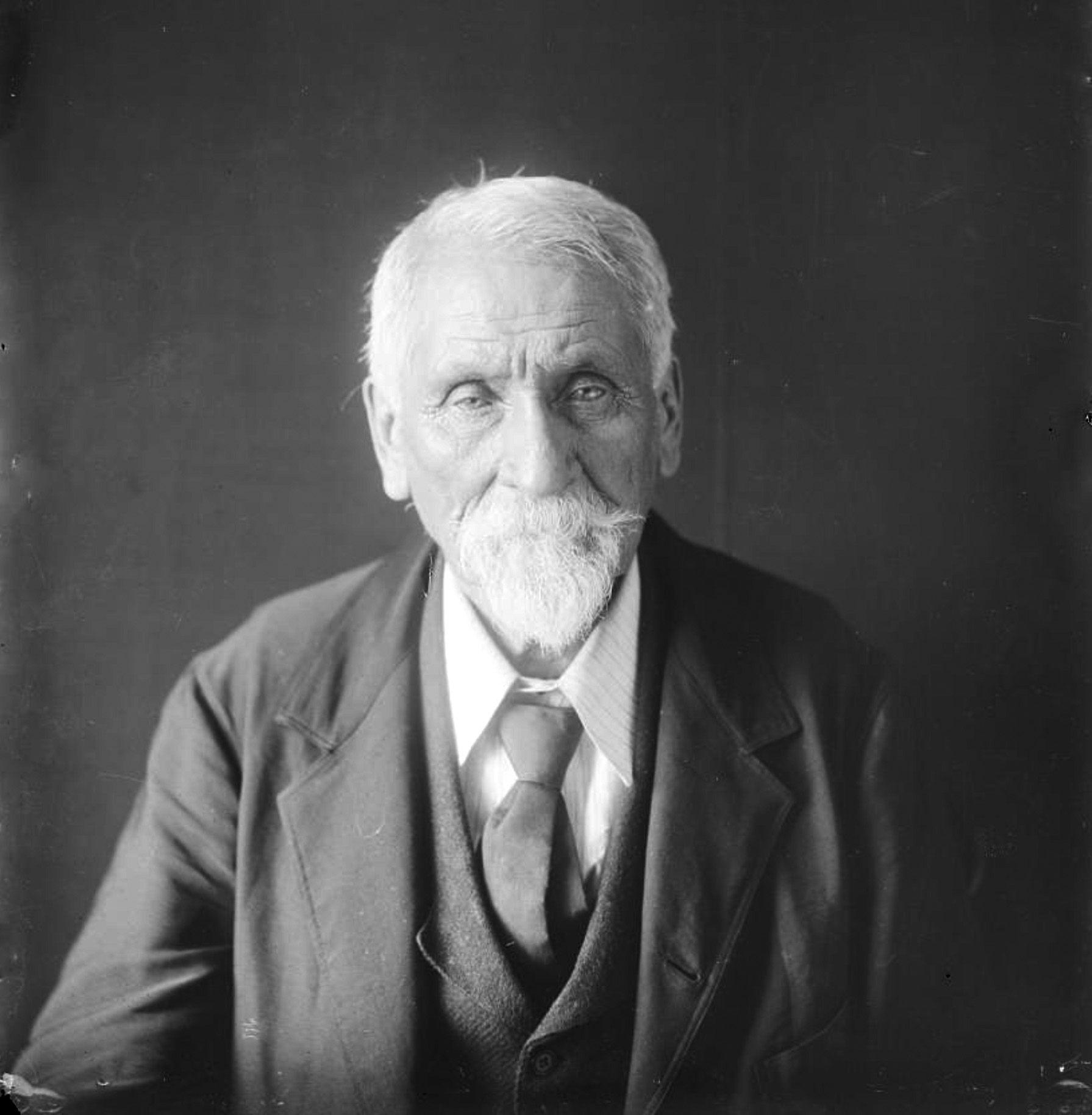
![Mathias Splitlog (Dyut-Ru-Tu-Re), Washington, DC, 1896. [Smithsonian Institution, NAA.PhotoLot.176, Item BAE GN 00976A, photo by William Dinwiddie]](/sites/default/files/styles/article_header_image/public/2026-04/1.%20Mathias%20Splitlog.jpg?h=ab7009da&itok=bgQTiSF4 "Mathias Splitlog (Dyut-Ru-Tu-Re), Washington, DC, 1896. [Smithsonian Institution, NAA.PhotoLot.176, Item BAE GN 00976A, photo by William Dinwiddie]")
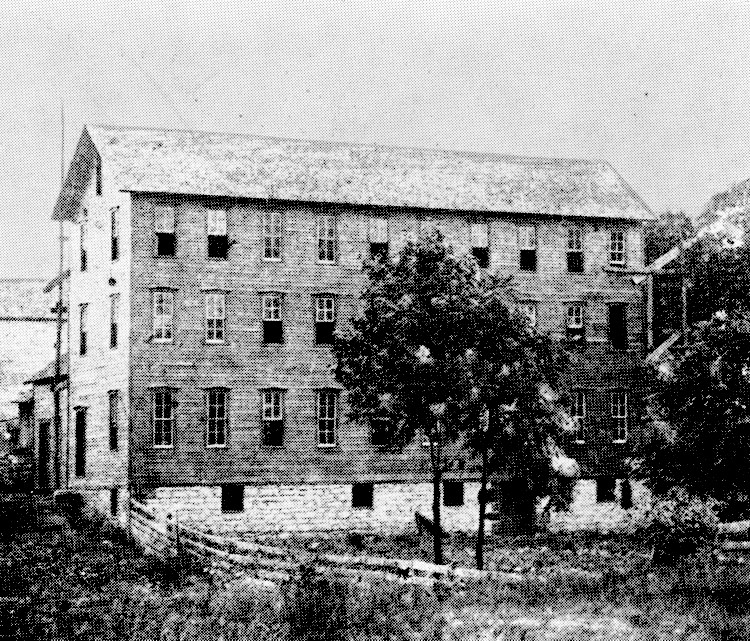
![Photograph of the buggy and wagon factory established by Mathias Splitlog in Cayuga Springs, Oklahoma, c.1880s. [Oklahoma Historical Society, Photograph Collection, 8561.B]](/sites/default/files/styles/article_header_image/public/2026-04/2.%20Mathias%20Splitlog.jpg?itok=WMZzITvj "Photograph of the buggy and wagon factory established by Mathias Splitlog in Cayuga Springs, Oklahoma, c.1880s. [Oklahoma Historical Society, Photograph Collection, 8561.B]")
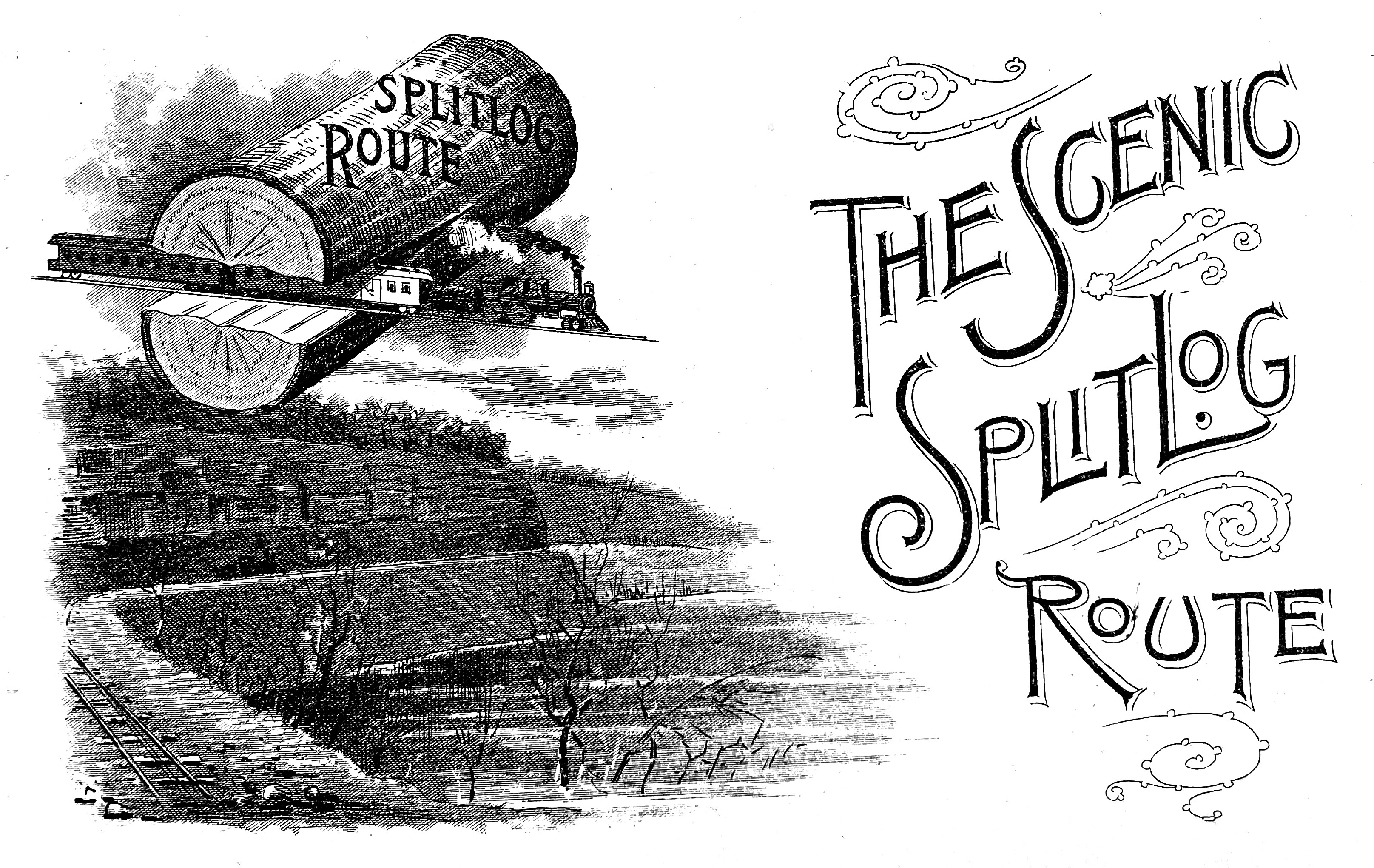
![The logo for the Splitlog Road, from Prospectus for the Kansas City, Ft. Smith & Southern Railway Company (1891). [State Historical Society of Missouri, Missouri Railroad Records, C2358, f. 222]](/sites/default/files/styles/article_header_image/public/2026-04/3.%20Mathias%20Splitlog.jpg?itok=blaL3Wxj "The logo for the Splitlog Road, from Prospectus for the Kansas City, Ft. Smith & Southern Railway Company (1891). [State Historical Society of Missouri, Missouri Railroad Records, C2358, f. 222]")
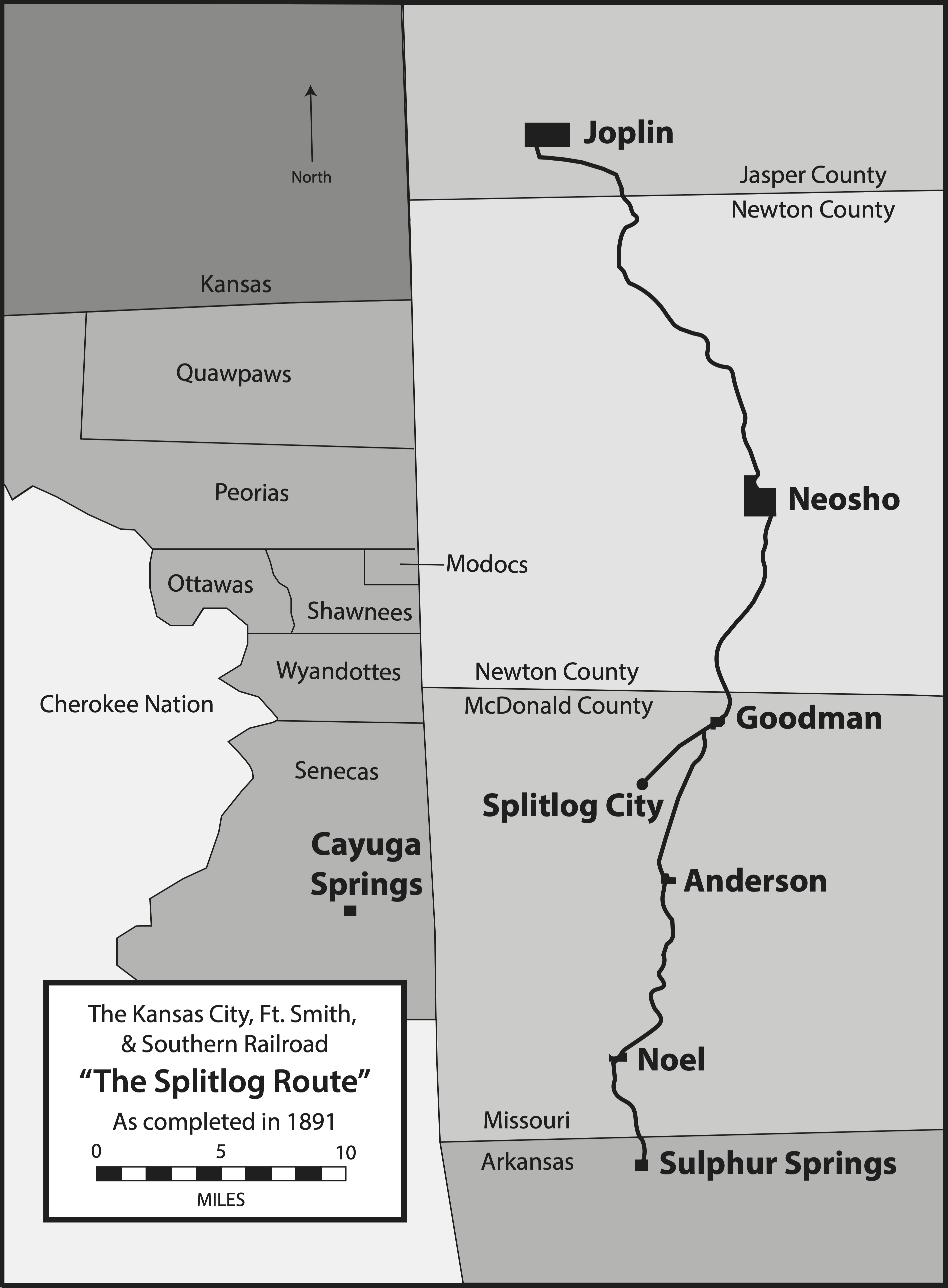
![The route of the Kansas City, Ft. Smith, & Southern Railroad, the “Splitlog Route,” 1891. [Map by Greg Olson]](/sites/default/files/styles/article_header_image/public/2026-04/4.%20Mathias%20Splitlog.jpg?itok=WvskkflG "The route of the Kansas City, Ft. Smith, & Southern Railroad, the “Splitlog Route,” 1891. [Map by Greg Olson]")
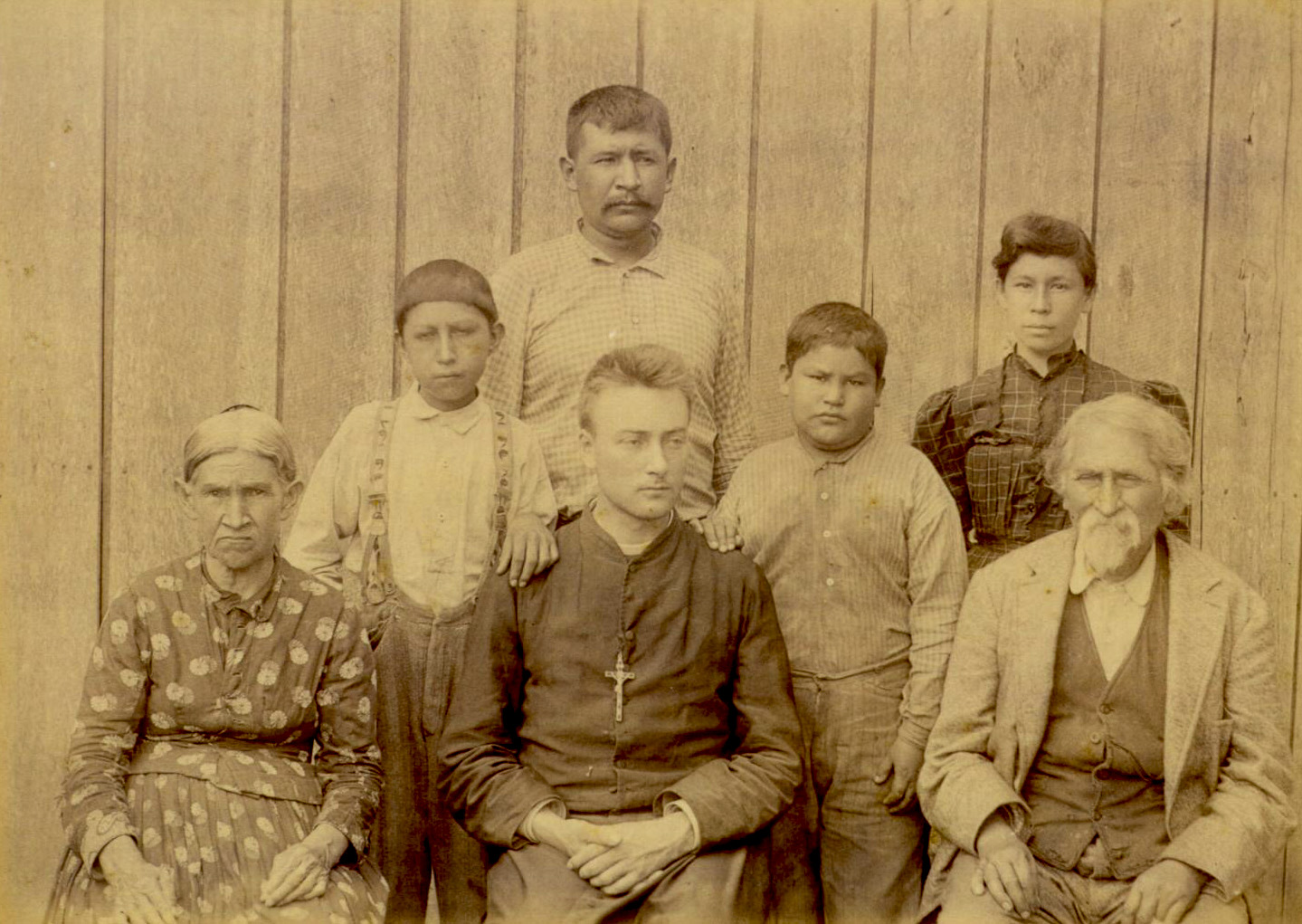
![Seated left to right: Eliza Splitlog, Father William Henry Ketcham, and Mathias Splitlog. Standing behind Father Ketchum may be the Splitlogs’ son Henry B. Splitlog, c. 1892. [Oklahoma Historical Society, Ella Ketcham Collection, 17497]](/sites/default/files/styles/article_header_image/public/2026-04/5.%20Mathias%20Splitlog.jpg?itok=5L56YC5D "Seated left to right: Eliza Splitlog, Father William Henry Ketcham, and Mathias Splitlog. Standing behind Father Ketchum may be the Splitlogs’ son Henry B. Splitlog, c. 1892. [Oklahoma Historical Society, Ella Ketcham Collection, 17497]")
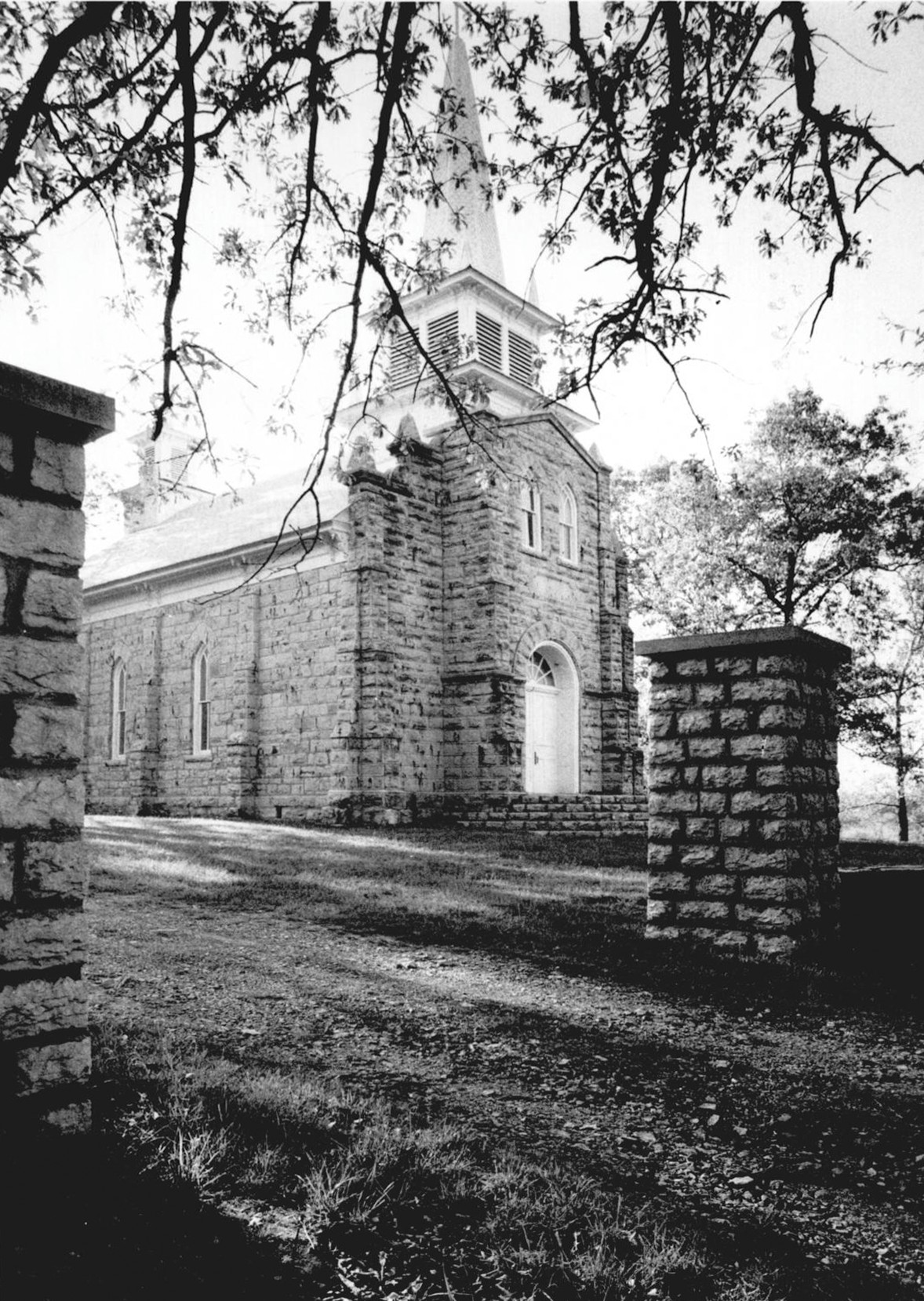
![Cayuga Mission Church (Splitlog Church), Cayuga Springs, Oklahoma. [Oklahoma Historical Society, Oklahoma Publishing Company Photograph Collection, 2012.201.b1433.0620]](/sites/default/files/styles/article_header_image/public/2026-04/6.%20Mathias%20Splitlog.jpg?itok=ljgmMLYE "Cayuga Mission Church (Splitlog Church), Cayuga Springs, Oklahoma. [Oklahoma Historical Society, Oklahoma Publishing Company Photograph Collection, 2012.201.b1433.0620]")
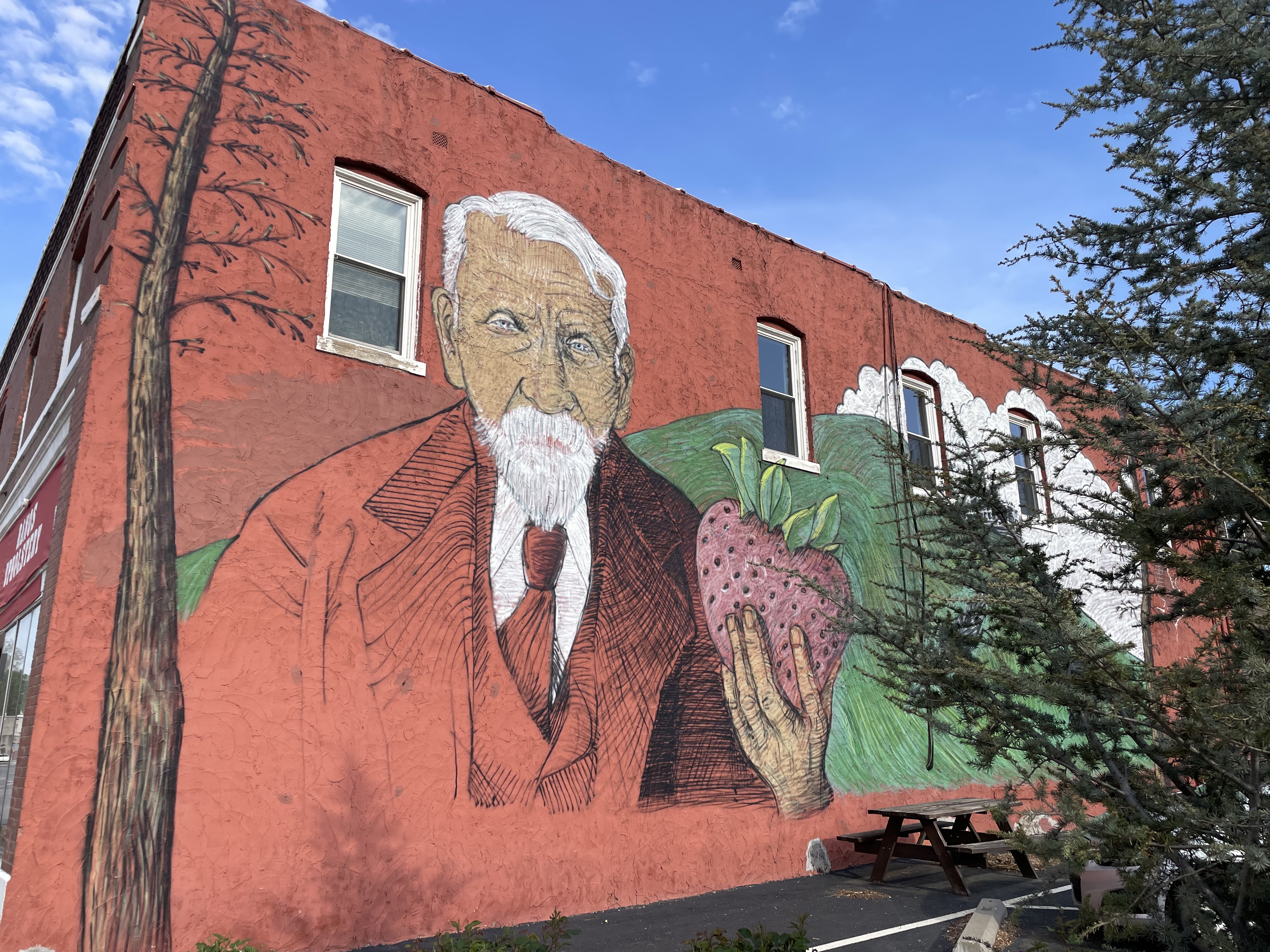
![A mural of Mathias Splitlog on Strawberry Hill in Kansas City, Kansas. [Photo by Greg Olson]](/sites/default/files/styles/article_header_image/public/2026-04/7.%20Mathias%20Splitlog.jpeg?itok=M2MoLFl- "A mural of Mathias Splitlog on Strawberry Hill in Kansas City, Kansas. [Photo by Greg Olson]")
The life of Mathias Splitlog is a classic story of a man who went from rags to riches. The son of a French father and a Wyandotte mother, Splitlog came to the area that is now Kansas City in July 1843 as a penniless twenty-one-year-old. Splitlog had a talent for mechanics, and he used his ability to become an inventor, real estate tycoon, and the owner of a railroad company. Through a combination of luck, imagination, and resolve, Mathias Splitlog became wealthy and was sometimes called the “Millionaire Indian.”
When Splitlog was a boy, the Wyandotte people lived in the Great Lakes region, near what is now the city of Detroit. That is where he was born around 1812. Oral history passed down through generations claims that the infant boy, first named Dyut-Ru-Tu-Re, received his unusual name “Splitlog” when his mother bound him in his cradleboard and leaned him against a tree. A fast-moving storm sent a bolt of lightning at the tree, splitting it in two. Though the baby was not hurt, he carried the name Split the Log, or Splitlog, for the rest of his life.
As European American settlers moved westward after the Revolutionary War, they pushed Wyandottes, who also spell their name Wyandot, and other tribes west as well. In 1842, the Wyandottes were forced to give up their claim to all land east of the Mississippi River. Even though the US government had not assigned them a new home, 664 Wyandottes were forced to move from their homes to the present-day site of Kansas City, Kansas. While some made the trip on steamboats, those who had livestock walked more than five hundred miles. Once they arrived, many Wyandottes had to camp on the banks of the Kaw River. Only after the Delawares, also known as the Lenae Lenape, sold the Wyandotte tribe thirty-six square miles of their reservation land did they have a permanent home.
Even before being forced to leave the Great Lakes, Splitlog and his brother Alex built a steam-powered boat named the Cayuga. They used the boat to fish on the St. Clair River between Detroit and Lake Huron and to ferry customers between Detroit and Windsor, Ontario. When Mathias arrived at the Kaw River, however, he was penniless and desperate to earn money. He talked a Wyandotte elder into loaning him money to buy an axe. With the new tool in hand, he chopped wood, which he sold to steamboat captains, who needed the wood for fuel. Through hard work, he was able to save enough money and find enough cast-off material to build a horse-powered sawmill.
In 1847, Splitlog married Eliza Charloe Barnett, a woman from a prominent Wyandotte family. Mathias and Eliza Splitlog would have ten children, only five of whom lived to reach the age of twenty. The family lived in a house on what was then called Splitlog Hill. That site in Kansas City, Kansas, is now known as Strawberry Hill. In 1854, the land on which the Splitlogs lived became part of the new state of Kansas. The next year, the US government decided to terminate the Wyandottes’ tribal government and divided their reservation land among tribal citizens. The Splitlogs received an allotment of 288 acres along the Kaw River. Because they had no tribal government, the Wyandottes were offered the chance to become US citizens. However, for unknown reasons, Mathias and Eliza Splitlog decided not to accept that offer.
The Wyandottes’ land quickly grew in value, and over time many of them sold their land to white settlers. As its population increased, Wyandotte County, Kansas, incorporated in 1859, and developers platted Kansas City, Kansas, on the site in 1872. Eight years later, the town had a population of more than three thousand people. The Splitlogs remained in the Kansas City area and bought several parcels of land. This is how they began to accumulate their fortune. In 1863 the Union Pacific Railroad wanted to build on the Splitlogs’ original allotment near the Kaw River. They paid what Mathias described as a “fabulous sum” for the property. He invested the money in a new grist mill and a lumberyard.
On the eve of the Civil War, Splitlog constructed a steamboat that he used on the Missouri River between Wyandotte County and Atchison, Kansas. The craft was said to have been difficult to keep running, and only he could coax it into operation. As war broke out in 1861, troops descended on the town of Lexington, Missouri. Union Colonel James A. Mulligan reportedly commandeered the boat, along with Splitlog and the captain, George Schreiner, to transport soldiers. According to one source, as soon as the boat landed at Lexington, Confederate Major General Sterling Price’s Missouri State Guard captured it, along with Schreiner and Splitlog. The men were soon paroled and had to walk back to Kansas City on foot.
In the early 1870s, Mathias and Eliza Splitlog moved to Oklahoma, which was then known as the Indian Territory. The government had reinstated the Wyandotte tribal government in 1867 and allowed Wyandottes who had not become US citizens to claim land it purchased for them in the Shawnee and Seneca nations. After the Senecas adopted the Splitlogs as members of their nation, the Splitlog family started a new settlement, which they named Cayuga Springs. Mathias quickly set about building a home, a dry goods store, a wagon and coffin factory, a grist mill, and a sawmill.
In 1886, Moses W. Clay, a long-time acquaintance of the Splitlogs, persuaded Mathias to invest in a gold and silver mining operation in McDonald County, Missouri. Clay claimed that a French geologist named Saturna Benna had already discovered several thousand dollars’ worth of gold and silver in the test shafts he had dug. Mathias, along with Clay and his son Joseph Splitlog, formed the Splitlog Mining Company in the winter of 1886. They hired Benjamin F. Raqua, who had previously prospected for gold in Colorado, to oversee the operation. Splitlog established a new settlement to support the mines, which he called Splitlog City. Within months, the town had a sawmill, lumberyard, blacksmith shop, post office, newspaper, and a twenty-two-room hotel, all at least partially paid for by Splitlog.
Splitlog knew that his mining town needed a railroad to transport workers and supplies. He planned a rail line that would connect with the closest existing railroad, which was fourteen miles away in Neosho, Missouri. He and Eliza sold some of the land they still owned in Kansas City, Kansas, and used the money to establish the Kansas City, Fort Smith and Southern Railroad Company. Mathias persuaded boosters in Neosho to invest the subscription money they had raised for another railroad in the Splitlog railroad instead.
When construction of the new railroad proved to be too slow for the impatient Splitlog, he started his own construction company to take over the work. In the summer of 1887, hopes for the quick completion of the new “Splitlog Line” ran high. On August 15 a thousand spectators gathered in Neosho at the spot where the new railroad intersected the St. Louis–San Francisco Railway. As the crowd cheered and a cornet band played, Mathias Splitlog, whom the press hailed as the “only Indian railroad man in the United States,” drove a ceremonial silver spike into an oak railroad tie.
However, the Splitlog empire soon suffered several setbacks. Moses Clay cheated Mathias and Eliza out of thousands of dollars. Clay was forced to resign from the board and sell his shares in the company, but court cases over Clay’s fraud continued until after the Splitlogs’ lifetime. In January 1888, twenty-eight-year-old Joseph Splitlog, who was the company’s secretary, died. Soon after, the Splitlogs discovered that their mining operation had not found any silver or gold. Some claimed that Clay and Saturna Benna had tricked Mathias by convincing him that the pyrite, or fool’s gold, they found on the site was genuine.
Finally, after lawyers managed to settle the Kansas City, Fort Smith and Southern Railroad’s debts, the railroad was complete from Neosho to Splitlog City in time for the Fourth of July 1889. The following year, Splitlog sold his shares in the company. In May 1893, the Kansas City, Pittsburg and Gulf Railroad purchased the Splitlog Line and completed the road to the Arkansas border. By the beginning of the twentieth century, the railroad that Mathias Splitlog started from scratch had become part of the Kansas City Southern Railroad and reached all the way to the Gulf of Mexico.
In 1890, the Seneca Nation elected Mathias Splitlog to be their chief. Though Splitlog was nearly eighty years old, the Senecas believed that he would use his business savvy and deep pockets to lobby for the nation in Washington, DC. Over the next few years, Splitlog made at least three trips to the nation’s capital at his own expense. The first of those trips, which he made with his son Thomas, lasted six months. Through his efforts, Splitlog was able to negotiate a settlement with the US Bureau of Indian Affairs in which the Senecas received a per capita payment of $372, a substantial amount for that time, the equivalent of roughly $14,000 in current dollars.
While he was working for the Senecas, Splitlog oversaw the construction of what was then known as the Cayuga Mission Church near his home in Cayuga Springs. Through both his French and Wyandotte heritage, Splitlog had been brought up in the Catholic church. Jesuit missionaries had worked to convert the Wyandottes and other nations in Canada since the seventeenth century. After being forcibly removed to the Indian Territory in the 1830s, many nations continued to receive visits from Jesuit priests stationed at the Osage Mission in what is now St. Paul, Kansas. In the early 1890s, the Splitlogs met Father William Henry Ketcham, who is said to have been the first ordained priest to live in the Indian Territory. Splitlog’s acquaintance with Father Ketcham reignited his commitment to Catholicism.
The church, which still stands today, has a rustic limestone exterior with arched Romanesque doors and windows. The interior features imported carved wood ornamentation, stained glass windows, and a pipe organ. Splitlog ordered a custom bronze bell that was cast in Belgium for the bell tower. When Eliza Splitlog died of cancer in September 1894, her funeral was held in the church, even though it was not complete. Mathias did not live to see the church finished either, though he did attend its dedication on November 25, 1896. Splitlog died in Washington, DC, on New Year’s Day 1897 at the age of eighty-five. His body was returned to Cayuga Springs, where he was buried next to Eliza and the mission church he built.
Divine Jr., Lloyd E. On the Back of a Turtle: A Narrative of the Juron-Wyandotte People. Columbus: Ohio State University Press, 2019.
Olson, Greg. “Mathias Splitlog: Missouri’s Indigenous Industrialist.” Missouri Historical Review 119, no. 4 (July 2025): 239–54.
“Our Story.” Wyandotte Nation, https://wyandotte-nation.org/culture/our-history/.
Published April 30, 2026
Creative Commons Attribution-NonCommerical-ShareAlike 4.0 International (CC BY-NC-SA 4.0)